26 September Net
Iran to the Gulf states: Not a drop of oil will exit from Hormuz
 8AM Media
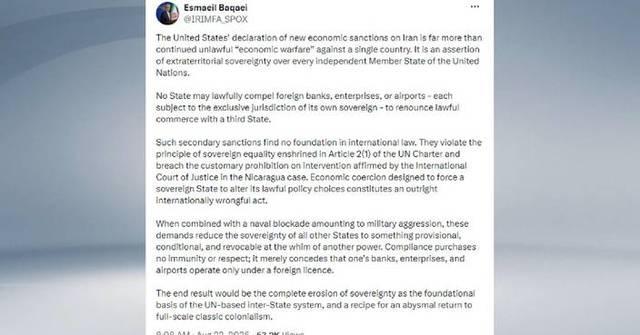
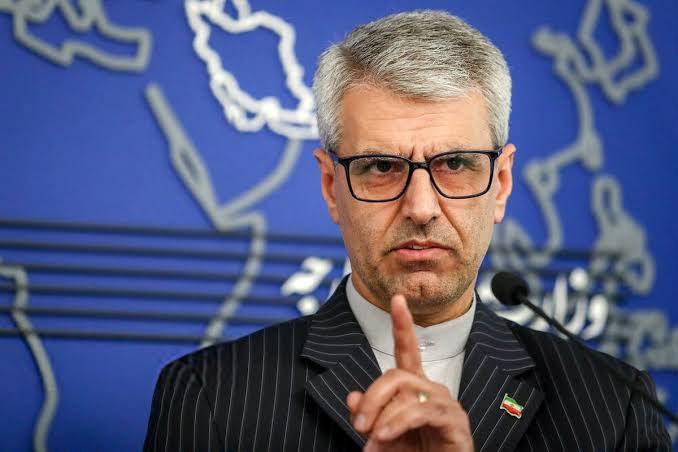
Baghai: US Sanctions Violate Countries’ Sovereignty
 95.5 WSB
Egypt speaks with Iran after Tehran claims victory, and other Middle East developments
 @globaltimesnews
Iran warns countries against joining US "economic pressure campaign" - Global Times
 A News
Iran says any country joining US sanctions considered 'enemy'
 Ain Libya
Trump intensifies pressure on Iran: military options are still on the table
 Al Jazeera
Iran says new US sanctions violate sovereignty of other states
 Al Jazeera
Iran warns nearby nations against joining US ‘economic war’ efforts
 Al Jazeera
Iran threatens countries that join US ‘economic D-Day’ | Conflict News
 Al-Jazeera Mubasher
Iran condemns the United States’ intention to announce new sanctions on it.
 Al-Mal
In response to plans to impose harsh sanctions on it... Iran: America is infringing on the sovereignty of every UN member state
 Al-Monitor
Iran condemns US plans to announce new sanctions
 Al-Quds Al-Arabi
Iran and America: A Settlement Is Less Costly Than Victory
 Al-Sharq al-Akhbar
From Tea Kettles to a Land Blockade… Trump’s Options in the Economic War Against Iran
 Al-Waqaʾiq al-Akhbariyya
Iran rejects the new U.S. sanctions and calls them an attempt to impose sovereignty beyond borders
 ANI News
Iran calls new US sanctions "economic terrorism", says "pressure are other side of same coin as war"
 AP News
Iran security chief threatens neighbors against economic measures, and other Mideast developments
 Arabii21
China reveals its stance on joining Trump’s economic campaign against Iran
 ASHARQ AL-AWSAT English
Iran Condemns US Plans to Announce New Sanctions
 ASHARQ AL-AWSAT English
Putin Says Ukraine Opened ‘Pandora’s Box’ with Strikes on Economic Targets
 BBC
BBCUS says sanctions will 'squash' Iran's economy and 'collapse' its regime
 BBC
BBCIran vows to target the interests of countries that assist the United States in waging an economic war against it.
 BBC
BBCBezhkian acknowledges worsening internal crises and Iran threatens countries participating in the American sanctions
 bernama
Iran Says New US Sanctions Violate Sovereignty Of Other States
 Cadena SER
Iran's security chief threatens to consider all countries that join the U.S. "economic war" as "enemies"
 Caracol Radio
Iran threatens to attack the interests of countries that support U.S. sanctions.
 CBS News
Live Updates: Iran says any country joining U.S. sanctions is considered an "enemy" as Trump seeks economic war
 CBS News
Why Dubai may be vital to the Trump administration's economic war on Iran
 CGTN
CGTNIran condemns the US plans to announce new sanctions.
 CGTN
CGTNIran warns against US economic pressure as Hormuz diplomacy continues
 CNBC
CNBCAhead of tough new U.S. sanctions, Iran criticizes 'extraterritorial sovereignty'
 CNBC
CNBCAhead of tough new U.S. sanctions, Iran criticizes 'extraterritorial sovereignty'
 CNBC Arabiyya
Ahead of a new round of stringent U.S. sanctions, Iran criticizes, while movement through the Strait of Hormuz remains weak.
 CNN
CNNUS-Iran war latest: Tehran vows to ‘neutralize’ economic war
 CNN Arabic
Ghalibaf: We Have Received Messages from Neighboring Countries About Security Arrangements
 Demócrata
Iran warns of retaliation against neighboring countries that support the US economic pressure
 Diario El Mundo
Iran threatens to attack the interests of neighboring countries that back the US economic offensive.
 Diario Público
Iran says it will consider as an "enemy" any countries that join the United States’ economic war against them.
 DW
DWIran warns countries against joining US 'economic war'
 eciks.org
Iran declares victory in war as Trump shifts to economic pressure
 Elonce
Iran warned that it would consider any country that helps the United States to be an “enemy.”
 Energy Update
Iran Condemns New US Sanctions as ‘Unlawful Economic Warfare’
 Filastin al-Aan
Iran: US sanctions violate sovereignty and the United Nations Charter
 FOX 7 Austin
Trump's economic pressure on Iran
 Fox News
Iran warns of ‘devastating’ response to US sanctions as America prepares for new phase of war
 France 24
Iran denounces the United States’ intent to tighten sanctions on its economy and warns the participating countries
 Gulf News
Iran warns any country joining US sanctions considered 'enemy'
 Haaretz
Tehran Says War With U.S. Must End, as World Now Recognizes Iran's Victory
 idnfinancials
Iran will destroy America if new sanctions are imposed
 International Business Times
US Sanctions Threat: Behind Iran’s Fresh Rallying Cry Against ‘Same Bull’
 Iran International
Live - US pressure builds on Iran as Trump says Tehran not ready for ‘right deal’
 Iran International
Iranian official: War conditions and rising prices hinder travel for citizens
 iranpress
Iran: U.S. Sanctions Violate UN Charter, Erode Sovereignty
 ISNA News Agency
Iran: US economic war violates sovereignty of all states
 Israel National News
Iran warns US allies: 'Do not join' Trump's economic war
 Kashmir Observer
Iran Declares Victory, Signals New Regional Order
 Kurdistan24
Iran Says US Economic War Violates International Law
 Kurdistan24
Bakayi: U.S. sanctions are an illegal economic war and an attempt to impose domination over countries.
 Los Angeles Times
Trump warns of an economic "D-Day" against Iran, but Tehran knows the sanctions well
 Los Angeles Times
Iran security chief threatens neighbors against joining U.S. in its economic pressure campaign
 Los Angeles Times
Iranian security chief threatens neighbors who join US economic measures
 Marine Insight
Iran Threatens ‘Devastating’ Response As New US Sanctions Raise Risks For Hormuz Shipping
 Masrawy
Iran Responds to Trump's Economic Victory: A Catastrophic Return to Colonialism
 Mawazin
Iran: Washington sanctions go beyond the "economic war" on us to imposing sovereignty over world countries
 Mehr News Agency
Tehran strongly slams US economic warfare against Iran
 Middle East Monitor
Iran says new US sanctions violate sovereignty of other states
 Middle East Monitor
Iran threatens neighboring countries against joining US ‘economic war’
 Muslim Network TV
Iran says new US sanctions violate sovereignty of other states
 NDTV Profit
'Classic Colonialism': Iran Slams US Sanctions As 'Economic Warfare', Calls It Attack On Sovereignty
 Noon Post
Iran’s Partners Under Pressure… How Do American Sanctions Threaten the Region’s Economies?
 NPR
NPRTop Iran official says U.S. focus on economic warfare shows it has failed militarily
 OkDiario
Iran Provokes Trump: “It’s Better to End the War Today, the Whole World Recognizes Our Victory”
 PressTV
Iran condemns new US sanctions as assault on state sovereignty
 Qanāh al-ʿĀlam
Baqai: U.S. sanctions on Iran are a violation of the sovereignty of all states
 Ratopati
Iran Warns Neighbors Against Joining US Economic Pressure Campaign
 Sada al-Balad
Iran: American economic sanctions violate the principle of equality of sovereignty
 Semafor
US presses China to join economic pressure campaign against Iran
 Sky News Arabia
Washington warns Iran of the “harshest sanctions in history”
 South China Morning Post
Iran condemns US plans to announce new sanctions
 Straight Arrow
Iran denounces planned US sanctions as economic warfare
 SWI swissinfo.ch
Iran Condemns America's Determination to Announce New Sanctions on It
 Tabnak
Iranian Foreign Ministry: No country has the right to compel other states to refrain from lawful trade with third countries
 Tehran Times
Iran condemns new US sanctions as ‘economic terrorism’
 Telifiziyun Safir
Iran: U.S. sanctions are a violation of national sovereignty of states
 The Detroit News
Trump wants more economic pressure on Iran. What are his options?
 The Express Tribune
Trump warns of economic consequences for any country that supports Iran
 The Guardian
Iran’s new security chief says neighbours who join US economic war will be considered ‘enemies’
 The Hill
Iran labels new US sanctions ‘unjust’
 The Hill
Iran says ‘world approved our victory’ over the US
 The Jerusalem Post
Iran’s Pezeshkian says war should end while Tehran holds 'position of power'
 The Korea Times
Iran warns any country joining US sanctions to be considered 'enemy'
 The Morning Call
Egypt talks with Iran after Tehran claims victory, and other Middle East news
 The Nation
Iran security chief threatens ‘earthquake-like’ retaliation against Trump
 The New York Times
Iran Must Plan to Overcome U.S. Sanctions After Trump’s ‘Economic D-Day’ Threats, Tehran Official Says
 The Telegraph
Iran threatens to strike US companies after Trump declares economic war
 The Times of India
Trump’s ‘D-Day’ economic war on Iran: Why Gulf states are most worried
 The Times of India
'Should end war now': Iran prez claims world 'acknowledges' Tehran's victory over US
 Turk Bidras
Will America choose the blockade instead of achieving a victory in Iran?
 U.S.-Iran Live Updates
U.S.-Iran Live Updates: Iran declares it has won the war
 Vietnam.vn
World News, August 23: Putin says he will strike Ukraine’s economic infrastructure; Canada responds to the United States.
 voz.us
Iran advocates ending the war and boasts of victory: "The United States is hated across the planet"
 WANA News Agency
U.S. Secondary Sanctions Violate the National Sovereignty of States
 WION
WIONLIVE Updates | Latest India & World News Today: Iran warns against US sanctions, hindu man shot dead in Pakistan and more
 www.taghribnews
Iran condemns new US sanctions as attack on state sovereignty
 ایرنا
ایرناSecondarily imposed U.S. sanctions on Iran; the claim of jurisdiction over the sovereignty of states around the world
 جماران
The Foreign Ministry spokesperson: America's economic war against Iran is a violation of national sovereignty of all countries and a declaration of war to all governments
 خبرآنلاین
Baghai: The US economic war against Iran is a declaration of war on the sovereignty of all countries / The result of US policy is a return to naked and outright colonialism.
 خبرپو
خبرپوU.S. sanctions on the President of the International Criminal Court enraged Japan; what is the story?
 خبرگزاری برنا
Statement of the Ministry of Foreign Affairs in response to the new US economic sanctions against Iran
 خبرگزاری دانشجو
Baghaei: the U.S. economic war against Iran is a violation of the national sovereignty of all countries and a declaration of war against all governments
 خبرگزاری فارس
Farsnews | Trump’s economic warfare difficulties from the perspective of BBC
 خبرگزاری فرات
Iran: U.S. “Economic War” plan violates international law
 ‘Ayn al-Libi’
The Iraqi President settles the debate: Iran did not ask to delay the “weapon monopoly”
 巴士的報
巴士的報Iran says planned U.S. sanctions lack basis in international law