Full story
UAE trade halt hits Iran
The United Arab Emirates halted all trade and financial transactions with Iran until further notice, a move that Iran International said threatens one of Tehran’s most important routes for imports, petroleum-product sales and access to international commercial and financial networks.
“halt all trade and financial transactions with Iran until further notice”
UAE Foreign Ministry director Afra Al Hameli said the decision came “in light of regional escalations that undermine regional and international peace and security.”

Iran International reported that in the first 10 months of the Iranian fiscal year that began in March 2025, Iran exported around $6.5 billion worth of non-oil goods to the UAE, equivalent to 14.3% of its non-oil exports, while importing approximately $14.8 billion worth of goods from the UAE, accounting for 30.2% of its total imports.
The same report said data from Kpler reviewed by Iran International showed Iran exported an average of around 256,000 barrels per day of fuel oil in 2025, with nearly 70% going to the UAE.
Iran International also said an internal Iranian Oil Ministry report previously reviewed by the outlet showed Tehran increasingly relied on barter arrangements to meet domestic fuel shortages, exchanging part of its mazut exports for gasoline and diesel, particularly through traders operating in the UAE.
Trump’s economic war expands
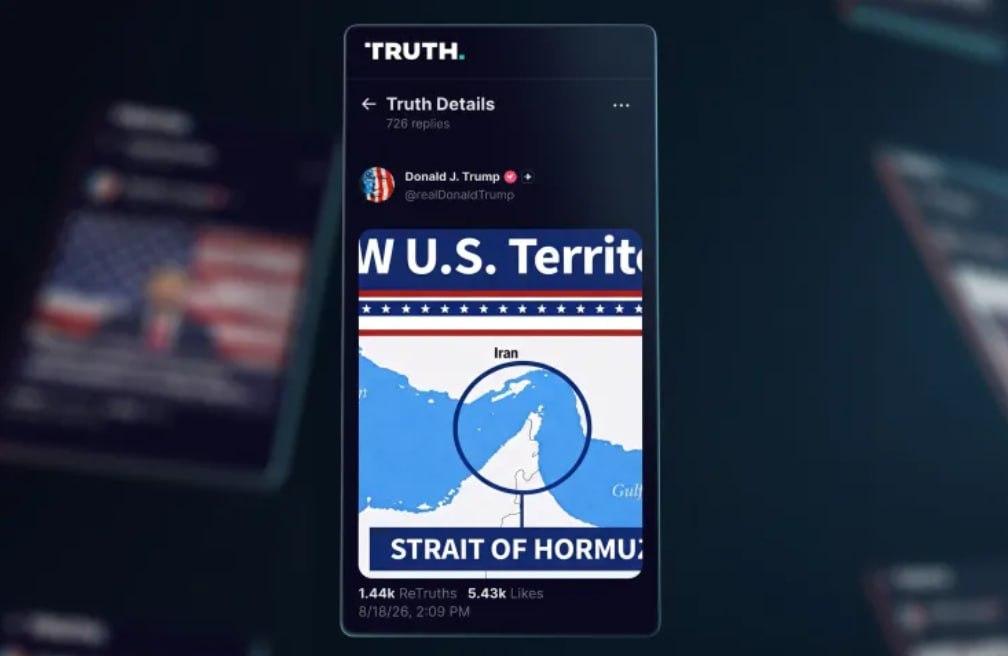
U.S. President Donald Trump warned that any country providing assistance to Iran would face economic consequences, writing on Wednesday evening that any country that allows its financial institutions, companies, airports or government entities to provide assistance of any kind to Iran will face “very severe economic consequences.”
The CNBC report said Trump described the campaign as “Economic Warfare and Isolation on an unprecedented scale” and warned that any country whose financial institutions, businesses, airports, or government entities offer Iran a “lifeline” will face what he described as tremendous economic consequences of their own.

CNBC reported that Trump named oil smuggling, currency swap lines, cash transfers, exchange houses, ship registries and front companies as channels he wants shut down immediately.
In response, Iran’s foreign minister Abbas Araghchi rejected Trump’s “Economic D-Day” threat, saying it was a diversion from America’s own crisis of mounting debt and rising interest costs, and he called it “economic terrorism.”
The BBC said the United States urges allies and China to join a broad campaign of economic pressure on Iran if there is a desire to “see the Strait of Hormuz reopened and energy prices fall again.”
Stakes: trade, sanctions, and access
Iran International said the UAE’s role as a re-export hub has long helped Iranian companies obtain products manufactured in countries with which direct trade is difficult, costly or restricted, while US sanctions and Iran’s exclusion from much of the international banking system have made this intermediary role particularly important.
“restricting access to the UAE could therefore affect not only export revenue”
The outlet also warned that restricting access to the UAE could affect not only export revenue but Iran’s ability to obtain products and refined fuels needed by the domestic market, citing Iran’s gasoline supply deficit and officials’ discussions of measures ranging from tighter rationing to higher fuel prices.
The BBC reported that Treasury Secretary Steve Mnuchin warned that “any country that maintains links with Tehran will push its economy toward the abyss,” and he invited China to “engage” in the campaign if it wished to “see the Strait of Hormuz reopened and energy prices fall again... This will succeed in Iran, and we will bring down this regime.”
Arab 48 reported Mnuchin said that if the United States applies maximum economic pressure, it is likely that there will be no return to wide-scale military actions, but he emphasized that this applies at the present time only.
Arab 48 also quoted Iran’s Foreign Ministry describing the tightened sanctions as “economic terrorism” and “crimes against humanity,” saying there is “no doubt” that economic sanctions targeting basic human rights are an example of such crimes.