Iran · 19 August, 2026 · 3 min read
Ali Abdollahi Warns Gulf States Against Assisting US Military After UAE Suspends Trade With Iran
Ali Abdollahi warned Gulf states that aiding US would amount to participating in US operations. UAE suspended all trade and financial transactions with Iran, escalating regional tensions.
27 outlets told this the same way.
Outlets did split on Trump Says Iran Will Be Hit Very Hard, Threatens Nuclear Defeat →
7 of 8 outlets skipped it: CB advisor disputes collapse claims; forecasts UAE sanctions deepen contraction.
Middle East Eye was read line by line by the Watchdog: 2.9. See the score →
27outlets compared
UAE suspends trade
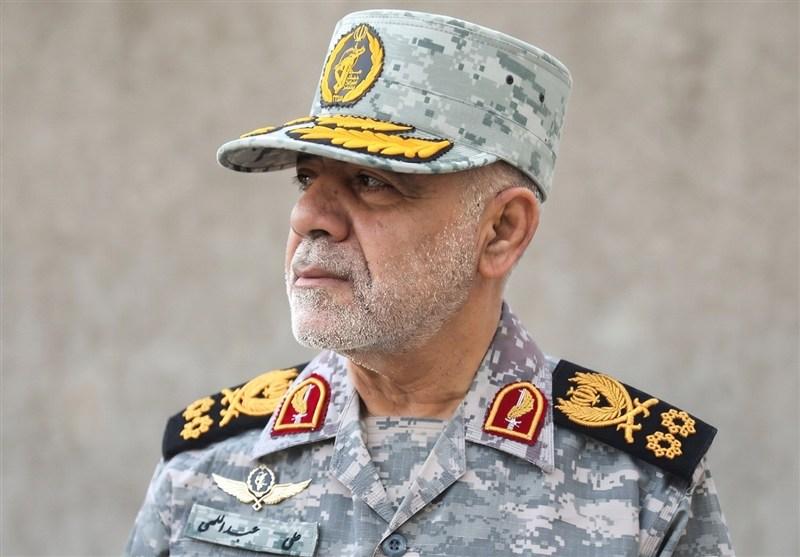
Iran’s armed forces chief of staff Ali Abdollahi warned Gulf countries against assisting the US military, saying “any assistance or facilitation provided to the aggressor US military amounts to participation in the US military operation.” The warning came hours after the United Arab Emirates suspended “all trade, commercial exchanges, and financial transactions with Iran… until further notice,” following Emirati reports that two ballistic missiles were launched from Iranian territory toward its maritime space. Anadolu Ajansı reported Abdollahi said countries on the southern shores of the Gulf that had publicly stated they would not allow Washington to use their territory against Iran “should know that nothing escapes our notice.”
The same Anadolu Ajansı account said Abdollahi argued the presence of a large number of US military aircraft, “particularly aerial refueling tankers,” at bases across the region was unlikely without the knowledge of host countries. The Anadolu Ajansı report also framed the moment as part of heightened regional tensions, with the UAE action tied to the missile incident and Iran’s warning aimed at preventing further Gulf involvement with US operations.

Iran rejects UAE claims
Iran rejected the United Arab Emirates’ accusation that it fired two ballistic missiles that fell in the Persian Gulf, as the speaker of Iran’s Parliament and its top negotiator, Mohammad Bagher Ghalibaf, arrived in neighboring Iraq for a three-day visit. Clarin reported that Iranian Foreign Ministry spokesperson Esmail Baghaei said the UAE’s accusation was “aimed at maritime navigation” but that the missiles “fell in the Persian Gulf,” and he criticized the conduct as contrary to “good neighborliness.” Clarin also said the Emirati Foreign Ministry suspended trade with Iran “in light of regional escalations that undermine regional and international peace and security,” while noting there was “no sign of new talks between Tehran and Washington.”
In parallel, Dawn described the Strait of Hormuz as a “flashpoint,” and said Abdollahi warned that “any assistance or facilitation provided to the aggressor US military amounts to participation in the US military operation.” Dawn further reported that the UAE announced it was suspending all economic dealings with Iran, quoting Afra Al Hameli saying “all trade, commercial exchanges, and financial transactions with Iran have been halted until further notice,” after Abu Dhabi accused Iran of firing two ballistic missiles toward the country and later clarified the salvo was directed at shipping.
Economic pressure and diplomacy
CNBC said a former adviser to Iran’s central bank, Mehrdad Sepahvand, pushed back against Donald Trump’s claim that Iran’s economy is on the brink of collapse, while warning the UAE’s decision to sever trade ties could deepen Iran’s contraction to about 5% this year. CNBC reported Sepahvand told Dan Murphy on “Access Middle East” that “We should be a little bit cautious about the view that the Iranian economy is simply on the verge of collapse,” and he argued that “Shops are still full of food and basic goods.” The same CNBC report said Iran’s gross domestic product was estimated to have contracted by 2.7% in the year ending March, and it cited World Bank figures for inflation surging to 62.2% in February and food price inflation reaching 99%.
CNBC also linked the UAE rupture to financial gateways, quoting Sepahvand saying “The UAE is one of the main Iranian financial gateways,” and he warned the rupture could pressure the exchange rate and feed inflation over the next two quarters. In the diplomatic track, Dawn said Trump insisted talks were off after a framework US-Iran deal aimed at reopening the Strait of Hormuz collapsed, while also noting that the strait remained a flashpoint as attacks on commercial ships continued.