Full story
Sanctions return, talks stall
The 60-day memorandum of understanding between Washington and Tehran expired on Monday, and the interim window for a breakthrough in the Gulf and the wider region closed without a solution in the Strait of Hormuz.
“The 60-day memorandum of understanding agreed by Washington and Tehran officially expired on Monday”
In London, Arab News reported that the 14-point Islamabad Agreement—brokered by Pakistan and Qatar and signed by US President Donald Trump and Iranian President Masoud Pezeshkian on June 17—was designed to provide 60 days for negotiators to address disputes including Iran’s nuclear program, the US naval blockade, sanctions, and the reopening of the Strait of Hormuz.
Al Jazeera said Treasury Secretary Scott Bessent told reporters last Thursday that the United States was planning to inflict more economic damage on Tehran as early as this week, using measures that would be “never been seen in the history of economic isolation on a country”.
Al Jazeera also reported that President Donald Trump echoed Bessent on Friday and said Iran would be hit hard economically, while the US Treasury’s Office of Foreign Assets Control said that since February 2025 Washington had sanctioned “more than 1,000 Iran-related persons, vessels, and aircraft”.
Arab News added that Iranian Foreign Minister Abbas Araghchi said on Saturday that Tehran had “not yet made a decision to restart negotiations,” leaving the diplomatic window “appears to have closed without a breakthrough.”
Iran’s response and rhetoric
As Washington prepares a new wave of restrictions, Iran’s parliament speaker and top negotiator Mohammad Bagher Ghalibaf told state media on Tuesday that the Strait of Hormuz would remain closed until the US meets the conditions of the now-expired MoU.
Ghalibaf said, “Until the commitments made by the United States in the memorandum of understanding, including the lifting of the blockade, the release of frozen assets, the lifting of oil sanctions, the end of threats and military operations on all fronts, and other conditions to which America agreed in the memorandum, are implemented, the strait will not be opened,” framing the dispute around sanctions relief and blockade lifting.

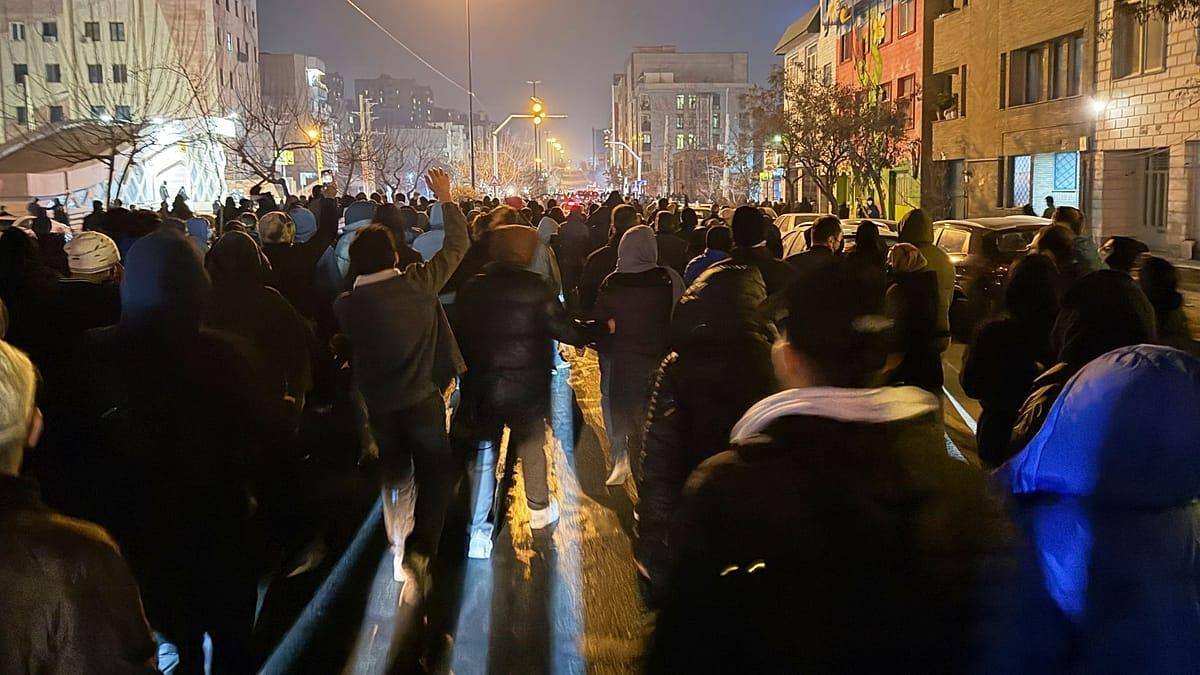
In a separate Reuters report carried by Red Lake Nation News, Iran’s leaders projected resilience in the war with the United States while worrying that Trump’s threat of new economic punishment could increase hardships, reignite unrest, and further erode the Islamic Republic’s legitimacy.
That Reuters piece quoted a resident of Isfahan, who said, “Estoy preocupado. Si Trump impone más sanciones, ¿cómo sobrevivirá la gente? No quiero que mi país sea castigado militar ni económicamente. Ya lo estamos pasando mal,” describing fear that additional sanctions would make survival harder.
The same Reuters report said Mohsen, 53, in Bandar Abbas had to close his import-export business and lay off 10 employees, adding that he now relies on his savings to support his family.
Economic pressure and what’s at stake
Multiple outlets tied the next phase of pressure to the Strait of Hormuz and to economic isolation, with Bloomberg Línea reporting that the United States was preparing a plan for “economic isolation” to pressure Iran to concede.
“preparing a plan for “economic isolation” to pressure Iran to concede”
Bloomberg Línea also said the ceasefire signed in June between the United States and Iran formally expires tomorrow, while it noted that control of the Strait—through which a fifth of the world’s oil and gas passed before the war—remains critical to stalled negotiations.
In a Reuters report carried by vijesti.me, Iran’s economic strain was described through household impacts, including an inflation rate of 66% in July and consumer prices 87.9% higher than a year earlier, alongside food inflation of 128% year over year.
That Reuters account quoted a civil servant in Yazd saying, “I’m ashamed in front of my children. My salary disappears in a few days. There is no meat or chicken on our table anymore. I have no idea how we’re going to get by,” linking sanctions pressure to daily purchasing power.
vijesti.me also reported that the appointment of Hossein Taeb to lead the Basij last week was seen as a sign authorities fear renewed unrest, with the Reuters piece adding that in January nationwide protests over economic hardships were crushed by the IRGC and the Basij force, with thousands killed.