Published

Finance

Washington Judge John McHale Orders Kalshi To Halt Event Contracts, Including Sports And Elections

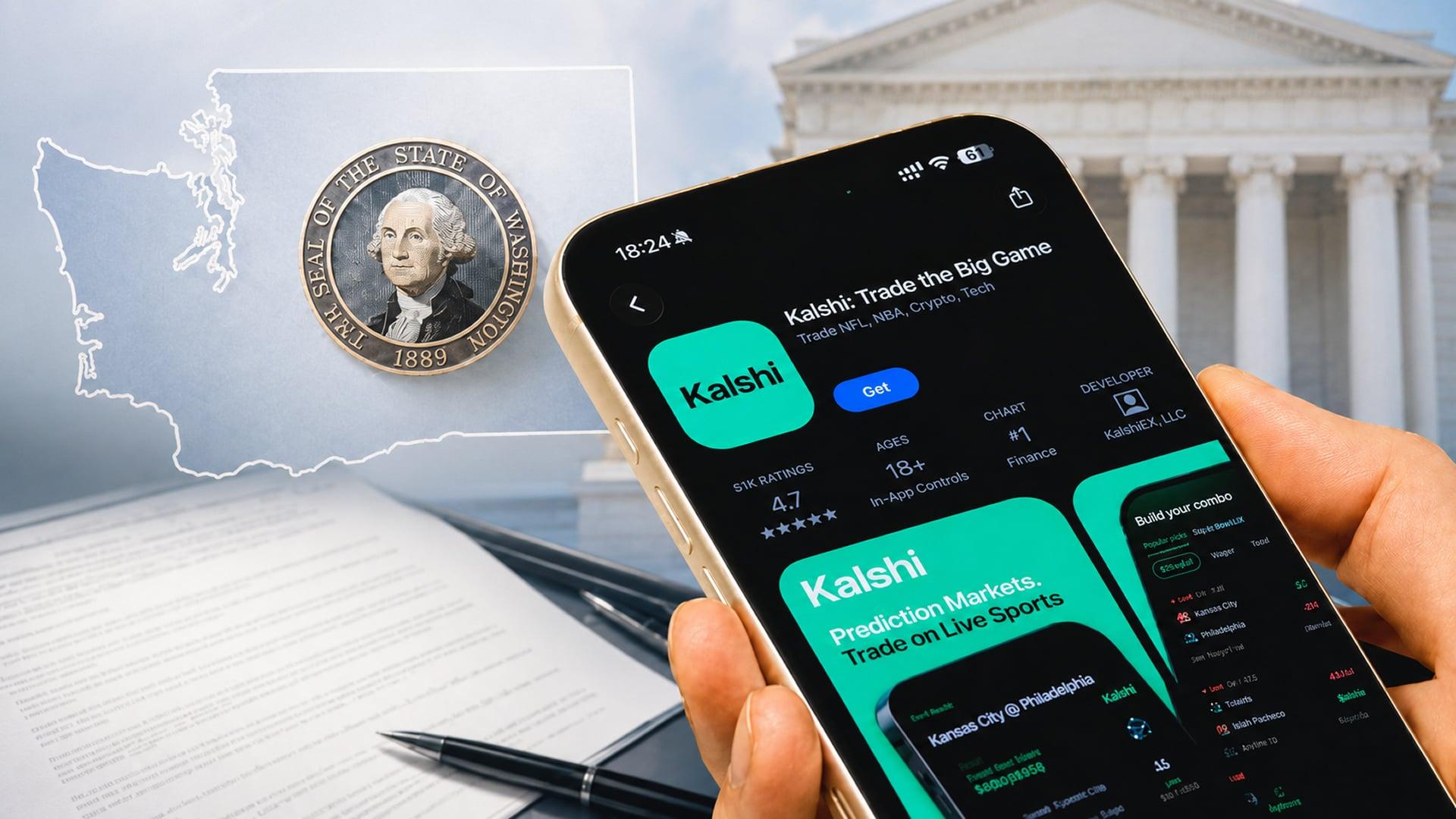
Image via Yogonet

At a glance

  1. Washington court ordered Kalshi to halt sports, elections, and other event contracts.
  2. Judge set imminent geofencing obligations and potential $120,000 per day fines.
  3. Ruling finds Kalshi's contracts likely illegal gambling under Washington law.

Kalshi halts in Washington

A Washington state judge ordered Kalshi to stop offering a broad range of event contracts in Washington, barring contracts tied to sports, elections, politics, entertainment, culture, tech and science, and “mentions.”

The order requires Kalshi to implement IP-address and residency-based geofencing by Aug. 19 and a GeoComply multi-source geofencing system by Sept. 2 to prevent people in Washington from purchasing contracts covered by the injunction.
Consistent coverage

Where the coverage agrees

Quartz, CryptoRank spotlight geofencing deadlines; Ars Technica emphasises daily penalties

King County Superior Court Judge John McHale rejected Kalshi’s argument that federal commodities law preempts Washington gambling law, finding the Commodity Exchange Act does not preempt Washington gambling law.

Washington Attorney General Nick Brown said Thursday on X, “We’re holding Kalshi accountable for running an illegal gambling operation,” as the amended order signed Wednesday set terms for a preliminary injunction granted in July.

Kalshi said it maintains that the Commodity Futures Trading Commission has exclusive jurisdiction over its exchange, and the Washington Court of Appeals denied its request to stay the injunction.

Court calls it gambling

The Washington order is described as a final halt that requires Kalshi to cease most of its operations in the state after the Washington Court of Appeals denied a request to stay the order.

A press release from Washington Attorney General Nick Brown said the order requires Kalshi to stop offering, accepting, or facilitating wagers on sports, elections, politics, entertainment, culture, tech and science, or mentions in Washington.

The court also found Kalshi ads claiming “that it offers ‘legal betting’ in Washington state are likely to mislead a reasonable consumer,” according to Ars Technica’s account of Judge McHale’s findings.

Ars Technica reported that under the court order, Kalshi could face penalties of up to $120,000 per day if it fails to complete the implementation of the ordered geofencing by September 2.

Kalshi is not licensed by the state Gambling Commission and is not registered to conduct business in Washington, the court order said, while the order still allows users to exit positions they already hold.

Deadlines and what’s next

The Washington ruling draws a line that still leaves some categories available, with Bloombergbit’s summary saying the court allowed contracts tied to commodities, climate, the economy and finance.

Quartz’s account of the order said it “does not include all the wagers offered on Kalshi,” but it includes a substantial part of business driven by sports wagers.

The order also sets a continuing compliance timeline, with geofencing deadlines of August 19 and September 2 and a requirement that Kalshi block Washington state users from accessing restricted products through geofencing.

Beyond Washington, the dispute is framed as part of a broader federal-versus-state fight, with TradingView’s account saying Kalshi maintains that the Commodity Futures Trading Commission has exclusive jurisdiction over its exchange.

In the background of the same legal pressure, TradingView reported that the Washington Court of Appeals denied Kalshi’s request to stay the injunction, leaving the amended order in effect while Kalshi’s next steps remain tied to the state court process.

Explore the original reporting

Compare all 10 sources

How each outlet frames it

Every outlet we compared, the headline it ran, and a link to the original article.

Western Mainstream

Ars Technica
Ars Technica

State judge orders Kalshi to stop offering sports bets and other wagers

14 August, 2026

Asian

bloomingbit
bloomingbit

Washington State Court Orders Kalshi to Halt Sports, Election Event Contracts

14 August, 2026

Western Alternative

Cointelegraph
Cointelegraph

Kalshi ordered to stop broad range of prediction markets in Washington

15 August, 2026

CryptoRank
CryptoRank

Washington State Court Orders Kalshi to Halt Event Contract Trading Over Illegal Gambling Concerns

14 August, 2026

DiarioBitcoin
DiarioBitcoin

Judge orders Kalshi to stop bets in Washington: fines of USD $120,000 per day

15 August, 2026

Oz Arab Media
Oz Arab Media

CFTC Reviews Mention Markets Prediction Contract Words

15 August, 2026

Quartz
Quartz

Juez de Washington ordena a Kalshi bloquear los mercados de deportes y elecciones.

14 August, 2026

TradingView
TradingView

Kalshi ordered to stop broad range of prediction markets in Washington

14 August, 2026

Other

Gaming America
Gaming America

Washington Court Calls Kalshi’s Event Contracts ‘Gambling’ and Orders Immediate Halt

14 August, 2026

Latin American

Yogonet
Yogonet

Kalshi has been ordered to scale back its operations in Washington.

14 August, 2026

Read stored source text: Ars Technica

A state court in Washington this week ordered Kalshi to stop offering sports gambling and a variety of other wagers on its prediction market. King County Superior Court Judge John McHale issued a preliminary injunction in response to a lawsuit filed against Kalshi by the state of Washington. “The order requires Kalshi to stop offering, accepting, or facilitating wagers on sports, elections, politics, entertainment, culture, tech and science, or mentions in Washington,” said a press release yesterday from Washington Attorney General Nick Brown. “Kalshi must implement an IP address and residency-based geofence by August 19 and a multi-source geofencing solution by September 2. This does not include all the wagers offered on Kalshi, but it includes a substantial part of their business, which in recent years has been increasingly driven by sports wagers.” Kalshi is not licensed by the state Gambling Commission and is not registered to conduct business in Washington, the court order said. McHale found that Kalshi ads claiming “that it offers ‘legal betting’ in Washington state are likely to mislead a reasonable consumer that such gambling activities are legal under state law.” Under the court order, Kalshi could face penalties of up to $120,000 per day if it fails to complete the implementation of the ordered geofencing by September 2. “Kalshi will not prohibit users from exiting positions they already hold. The State reserves, and does not waive, the right to seek recovery for fees and losses incurred by Washington consumers on or after September 2, 2026,” the order said.

Read stored source text: bloomingbit

Summary - A Washington state court issued a final order requiring prediction market platform Kalshi to halt event contracts tied to sports, elections and politics, among other categories. - The court ordered Kalshi to immediately stop accepting and brokering new sports, elections, politics, entertainment, culture, technology and science event contracts and to block Washington state users' access through geofencing. - The court still allowed contracts tied to commodities, climate, the economy and finance, while Baltimore, Maryland, also sued Kalshi and Polymarket alleging illegal gambling. Forecast Trend Report by Period A Washington state court has issued a final order requiring prediction market platform Kalshi to stop offering a broad range of event contracts, including those tied to sports and elections. The Block reported on Aug. 13 that the court found Kalshi was likely violating state gambling laws. It ordered the company to immediately stop accepting and brokering new event contracts tied to sports, elections, politics, entertainment, culture, technology and science. The court also ordered Kalshi to implement IP address- and residency-based geofencing by Aug. 19 and to build a multi-source geofencing system by Sept. 2 to block Washington state users from accessing those products. It also barred the company from advertising restricted products to consumers in the state. Washington Attorney General Nick Brown said Kalshi had profited from promoting wagers on events tied to sports, elections, natural disasters and war involving Iran. With the order, Kalshi can no longer offer most of those products in Washington state, he added. Brown also said his office would continue enforcing state law and hold Kalshi accountable for misleading consumers. The court, however, allowed Kalshi to continue offering contracts tied to commodities, climate, the economy and finance. The order extends a preliminary injunction issued in July. Kalshi had asked the Washington Court of Appeals to stay enforcement, but that request was denied. Legal pressure on Kalshi is also mounting outside Washington. Baltimore, Maryland's largest city, filed a lawsuit the same day against Kalshi and Polymarket alleging illegal gambling. Kalshi has maintained that its event contracts fall under the exclusive oversight of the Commodity Futures Trading Commission under the Commodity Exchange Act. YM Lee [email protected] Chatterbox_ tlg@Bloomingbit_YMLEE

Read stored source text: Cointelegraph

Kalshi ordered to stop broad range of prediction markets in Washington Kalshi must implement initial geofencing by Aug. 19 and a GeoComply multi-source geofencing system by Sept. 2. A Washington state judge has ordered prediction market platform Kalshi to stop offering a broad range of event contracts in the state, rejecting its argument that federal commodities law preempts Washington gambling law. King County Superior Court Judge John McHale barred Kalshi from offering contracts tied to sports, elections, politics, entertainment, culture, tech and science, and “mentions.” Contracts involving commodities, climate, economics and finance are exempt. “We’re holding Kalshi accountable for running an illegal gambling operation,” Washington Attorney General Nick Brown said Thursday on X, citing a recent court ruling. Kalshi must implement IP-address and residency-based geofencing by Aug. 19 and a GeoComply multi-source geofencing system by Sept. 2 to prevent people in Washington from purchasing contracts covered by the injunction. The amended order, signed Wednesday, sets the terms of a preliminary injunction McHale granted in July. The judge found that the Commodity Exchange Act does not preempt Washington gambling law and that the state had shown a likelihood of success on claims under three state laws. Kalshi maintains that the Commodity Futures Trading Commission has exclusive jurisdiction over its exchange. The Washington Court of Appeals denied its request to stay the injunction. Magazine: Why Argentina is blocking Polymarket despite its global growth

Read stored source text: CryptoRank

Washington State Court Orders Kalshi to Halt Event Contract Trading Over Illegal Gambling Concerns Share: A Washington state court ordered Kalshi to halt event contract trading in the state after finding its CFTC‑regulated prediction market contracts likely constitute illegal gambling, prompting an immediate pause that will affect Washington users and revenue. The ruling highlights state-level regulatory risk for prediction markets and crypto platforms, could set a precedent that complicates adoption and product design across the US, and may push Kalshi to appeal or negotiate with regulators. BitcoinWorld Washington State Court Orders Kalshi to Halt Event Contract Trading Over Illegal Gambling Concerns A Washington state court has ordered prediction market platform Kalshi to stop offering event contract trading within the state, according to a report from Cointelegraph. The court determined that these products are likely to constitute illegal gambling under Washington law, marking a significant legal setback for the platform. Background and Legal Context Kalshi, a regulated prediction market exchange, allows users to trade contracts based on the outcome of various events, ranging from economic indicators to political elections. The platform has positioned itself as a financial market rather than a gambling operation, but state regulators and courts have increasingly scrutinized such offerings. The Washington court’s ruling is based on the interpretation of state gambling laws, which prohibit wagering on uncertain events unless specifically exempted. The court found that Kalshi’s event contracts fall within this definition, leading to the immediate suspension of operations in the state. Implications for Kalshi and the Prediction Market Industry This ruling could have broader implications for the prediction market industry, which has been navigating a complex regulatory landscape across the United States. While Kalshi is federally regulated by the Commodity Futures Trading Commission (CFTC), state-level challenges like this one highlight the tension between federal and state oversight. For Kalshi, this means a halt to all event contract trading for Washington residents, potentially affecting its user base and revenue. The company may seek an appeal or negotiate with state regulators, but the immediate impact is a pause on operations in one of the more populous states. Why This Matters to Traders and Regulators For traders, this ruling underscores the legal risks associated with prediction markets, particularly in states with strict gambling laws. It also signals to regulators that these platforms may face increasing legal challenges, potentially leading to more uniform regulations or a crackdown on certain types of contracts. From a regulatory perspective, the case could set a precedent for how other states view event contracts. If more courts follow Washington’s lead, prediction markets may need to adapt their offerings or seek state-by-state approvals, complicating their business models. Conclusion The Washington court’s decision to halt Kalshi’s event contract trading is a notable development in the ongoing legal saga of prediction markets. It highlights the regulatory uncertainties that these platforms face and the potential for state-level interventions. As the situation evolves, stakeholders will be watching closely to see whether Kalshi appeals or adjusts its operations, and whether other states take similar actions. FAQs Q1: What are event contracts on Kalshi? Event contracts are financial derivatives that allow users to speculate on the outcome of specific events, such as elections or economic data releases. They are traded on Kalshi’s platform, which is regulated by the CFTC. Q2: Why did the Washington court rule against Kalshi? The court found that Kalshi’s event contracts likely constitute illegal gambling under Washington state law, which prohibits wagering on uncertain events unless explicitly allowed. The ruling is based on the interpretation of state gambling statutes. Q3: Can Kalshi appeal the court’s decision? Yes, Kalshi can appeal the ruling to a higher court. The company may also seek to negotiate with Washington state regulators to reach a resolution that allows it to resume operations, though the outcome remains uncertain. This post Washington State Court Orders Kalshi to Halt Event Contract Trading Over Illegal Gambling Concerns first appeared on BitcoinWorld. Read More

Read stored source text: DiarioBitcoin

A state court in Washington ordered Kalshi to stop sports betting and other wagers on its platform, imposing fines of up to USD $120,000 per day if it does not implement geoblocking. The company appeals to the federal jurisdiction of the CFTC, but the judge held that state gambling laws prevail. *** - A judge in Washington ordered Kalshi to stop sports betting, politics and others, for violating state gambling laws. - Kalshi faces fines of USD $120,000 per day if it does not geoblock the state by September 2, 2026. - The CFTC declared a market emergency in New York to defend federal jurisdiction, while the case is litigated in multiple courts. ⚠️ Washington judge orders Kalshi to halt bets on its platform. Claims the company operates without a state license. Fines of up to USD $120,000 per day if it does not implement geoblocking. The CFTC intervenes in Kalshi’s defense, arguing federal jurisdiction. The ruling… pic.twitter.com/ritgY64w50 — Diario฿itcoin (@DiarioBitcoin) August 15, 2026 Kalshi, the regulated prediction market platform overseen by the U.S. Commodity Futures Trading Commission (CFTC), received a preliminary court order from the state of Washington requiring it to stop offering sports, political, and other topic bets. King County Superior Court Judge John McHale issued the measure after a lawsuit filed by the state Attorney General, Nick Brown, who argued that Kalshi operated without a state license and misled consumers by advertising its bets as legal. The order requires Kalshi to implement an IP address- and residence-based geoblock by August 19, and a multi-source geoblocking solution by September 2, 2026. If the company fails to comply, it could face fines of up to USD $120,000 per day, according to the Washington Attorney General’s press release. Although Kalshi will not be prohibited from allowing users to exit open positions, the state reserves the right to seek recovery of fees and losses of Washington consumers from September 2. The order and its scope Judge McHale concluded that Washington is likely to show that Kalshi violated state gambling and consumer protection laws. In his ruling, he noted that “the provision, marketing and advertising of illegal gaming activities by Kalshi constitute unfair and/or deceptive acts or practices in commerce” under Washington law, as cited by Ars Technica. The platform, which calls itself a prediction market, allows users to wager on thousands of topics, from sports to political elections, entertainment, and whether public figures will say specific words or phrases. Brown hailed the ruling, stating that “Kalshi has enriched itself by promoting bets on sports, elections, natural disasters and more,” and that the order bans offering bets on most of those topics in the state. Kalshi has contended that it is not bound by state laws because the CFTC has exclusive jurisdiction over prediction markets, under the U.S. Commodity Exchange Act. The Trump administration has backed that argument on repeated occasions, suing states that attempt to regulate these platforms. However, McHale found that federal law does not contain a clear repugnancy clause that would supersede state gambling regulation. In his ruling, the judge cited a portion of the law stating: “Except as provided above, nothing in this section (I) shall replace or limit the jurisdiction conferred upon the United States courts or the courts of any State.” This indicates that Congress did not intend to displace states in gambling regulation, McHale explained. A Kalshi spokesperson told Ars Technica: “Respectfully we do not agree with the court’s decision and we are considering all legal options.” Kalshi’s argument and federal intervention The legal battle between Kalshi and the states is not an isolated case. The CFTC declared this week a “market emergency” in New York to prevent that state from enforcing its gambling laws against Kalshi, following a request by the company itself. CFTC Chairman Michael Seligman stated that “Congress did not intend derivatives exchanges to be regulated under a patchwork of state gambling laws.” Meanwhile, the Washington ruling adds to a string of judicial disputes in state and federal courts across the country seeking to define the boundaries between federal regulation of prediction markets and state gambling laws. Kalshi has argued that it has never offered markets on wildfires, war, death or terrorism, to avoid what it calls “perverse incentives,” according to its spokesperson. Judge McHale, however, held that Kalshi’s ads claiming to offer “legal bets” in Washington are likely to mislead a reasonable consumer into believing such activities are legal under state law. This finding was crucial to justify the court order, which also rests on Kalshi’s lack of licensing with the Washington State Gambling Commission and its lack of registration to do business in the state. Kalshi could seek help from the Trump administration, given that the CFTC has already intervened on its side in New York. However, states’ resistance to cede their gaming regulatory authority suggests the conflict could escalate to the Supreme Court. Kalshi itself is evaluating legal options, including appealing the order or seeking a federal declaration invalidating state laws applicable to prediction markets. Implications for prediction markets This ruling represents a significant blow to the prediction market industry, which has grown rapidly in the United States under CFTC oversight. Companies like Kalshi, Polymarket and others have used federal authorization to offer bets on events ranging from elections to natural disasters, arguing that they are futures contracts and not traditional gambling. However, states, led by attorneys general like Nick Brown, view these platforms as unregulated gambling that evades local laws. Washington’s case could set a precedent for other states to take similar measures, especially if the CFTC fails to curb state lawsuits with its emergency declarations. Kalshi, for its part, maintains that it complies with all federal regulations and that its markets are not bets, but hedging and prediction tools. But Judge McHale did not accept that distinction, at least in the Washington context, where sports and election bets are explicitly prohibited without a state license. The company now has a tight deadline to implement geoblocking, and any delay could cost it millions in fines. The outcome of this legal battle will not only affect Kalshi but the entire prediction market ecosystem, which relies on a clear regulatory framework to operate nationwide. In the meantime, the Washington court order is already in effect, and state residents will need to seek alternatives for making their forecasts, at least until Kalshi’s appeal is resolved or the Supreme Court intervenes. WARNING: DiarioBitcoin offers informational and educational content on various topics, including cryptocurrencies, AI, technology, and regulations. We do not provide financial advice. Investments in crypto assets are high risk and may not be suitable for everyone. Do your research, consult an expert, and verify applicable law before investing. You could lose all your capital."

Read stored source text: Gaming America

A King County Superior Court judge issued a final order yesterday requiring Kalshi to cease most of its operations in Washington state. After the Washington Court of Appeals granted a preliminary injunction in July, it denied Kalshi’s request to stay the order. The ruling is among the most sweeping state-level actions against the platform to date. The order bans Kalshi from offering, accepting, or facilitating wagers on sports, elections, politics, entertainment, culture, tech, and science. Kalshi must implement an IP address and residency-based geofence by August 19 and a multi-source geofencing solution by September 2. Washington Attorney General Nick Brown did not mince words. “Kalshi has gotten rich promoting wagers on sports, elections, natural disasters, events related to the Iran War, and more,” he said. The Iran War reference is a major talking point. It signals Washington is applying its gambling statute not just to sports contracts but to the full range of event-based markets that Kalshi offers, including geopolitical ones that the CFTC’s own rulemaking has never addressed as gaming-adjacent. The July 21 preliminary injunction was significant, but the August 13 final order is more so, because it survived an appellate challenge before it was finalized. Kalshi asked the Washington Court of Appeals to stay the injunction, and the court said no. That denial means Kalshi has now lost at the trial level and at the first appellate level in Washington without federal intervention. Judge McHale’s preliminary ruling found that “Kalshi has willfully ignored a Washington State Gambling Commission notice stating that offering event-based contracts is not authorized in Washington State.” Willful is the operative word here, and that word plays a major role in what comes next. A court finding of willful noncompliance forms the basis for contempt proceedings. It also signals how Judge McHale is likely to approach the trial on the merits. Washington’s gambling statute defines the activity as “staking or risking something of value upon the outcome of a contest of chance or a future contingent event.” The court found Kalshi’s activities fall squarely within that definition. That is not a close call in the court’s view. It is a plain language match. The most analytically interesting element of the Washington order is what it leaves unbanned. Washington state may still offer contracts related to commodities, climate, economics, and finance. Read that alongside the banned categories: sports, elections, politics, entertainment, culture, tech, and science. Washington is effectively sorting Kalshi’s product catalog into two bins. The first bin contains contracts that resemble traditional derivatives with genuine price discovery and hedging value. The second contains contracts that resemble gambling by any reasonable plain-language definition. The court is allowing the first bin and banning the second. This is the most precise judicial articulation yet of what states actually want from prediction market regulation. Nobody is trying to ban weather derivatives or inflation swaps. The fight is about sports contracts, election markets, and entertainment bets. The Washington order draws that line with more specificity than any prior state court ruling. Kalshi’s continued argument is that the CFTC’s jurisdiction does not permit state courts to draw any line at all. The CFTC has filed emergency orders in Michigan and New York to that effect. Now we can expect a third in Washington. The CFTC’s Section 8a(9) emergency authority has now been invoked twice this summer:once against Michigan and once against New York. Both times, the trigger was Kalshi notifying the agency that a state court action threatened its continued operation as a federally licensed exchange. The Washington final order is now in effect, banning most of Kalshi’s product catalog in the state. The Court of Appeals has declined to stay it. The geofencing deadlines are August 19 and September 2. The CFTC’s established pattern is to respond to exactly this kind of final, unresolved state court order with an emergency directive telling Kalshi to keep operating under the Commodity Exchange Act’s Core Principles regardless of what state courts say. Two former CFTC counsels called the first Michigan emergency order extraordinary and unprecedented. Just as we predicted, it is now becoming a standard agency response. The question is not whether the CFTC will invoke emergency powers in Washington. The question is whether any federal court will eventually tell the agency it cannot. That question is heading to Judge Marrero in the Southern District of New York, then to the Sixth Circuit in Cincinnati, and eventually to the Supreme Court. The Washington order adds another state to the enforcement map, another data point in the circuit split, and another reason for nine justices to take the case before year’s end. Colin Lynch is a sports betting, iGaming, and prediction markets journalist covering the intersection of sports, wagering, and regulation across the global gambling industry. Colin Lynch is a veteran gambling industry journalist with more than a decade of experience covering the rapidly evolving sports betting... Players trust our reporting due to our commitment to unbiased and professional evaluations of the iGaming sector. We track hundreds of platforms and industry updates daily to ensure our news feed and leaderboards reflect the most recent market shifts. With nearly two decades of experience within iGaming, our team provides a wealth of expert knowledge. This long-standing expertise enables us to deliver thorough, reliable news and guidance to our readers. Our expert editorial team is here to provide trusted, research-driven content on all things online gambling in the Americas. We cover news, reviews, guides, and recommendations, all driven by strict editorial standards.

Read stored source text: Oz Arab Media

English version: CFTC Reviews Prediction Market Mention Contracts According to CNBC, the Commodity Futures Trading Commission is conducting an internal review of the “Mention Markets” offered by prediction platforms. These contracts allow traders to speculate on whether certain words will be used in speeches, company earnings call announcements, or televised broadcasts. People familiar with the matter said the regulator notified Kalshi for the first time a few weeks ago. A person briefed on the matter said Kalshi removed the sports-related Mention Markets at the time the review was disclosed. It remains unclear whether the investigation is limited to sports-related contracts or covers Mention Markets across all topics. Kalshi and the CFTC declined to comment. PoliMark doesn’t offer Mention Markets on its U.S.-regulated platform under the CFTC, but it offers them abroad. Mention Markets traded about $3.3 million on Kalshi last month, according to Don Analytix. Critics say such markets can be easily manipulated by a single individual. In July, the CFTC said it was investigating a former operator of a Trump tweet-tweeting device who allegedly earned about $90,000 by betting on Trump speech content. Arjun Sawai, Kalshi’s Head of Market Operations, said in a public comment that these markets add a regulated, transparent, and closely monitored element to the existing incentives. The review comes ahead of the CFTC’s Innovation Advisory Committee discussion on prediction markets, AI, and cryptocurrencies on August 20. Separately, the agency has filed lawsuits against nine states over their claimed exclusive authority to regulate event contracts, warning platforms against self-referential contracts phrased broadly or offering casino-like odds. Separately, a judge in Washington state blocked several Kalshi markets, including Mention Markets, and said the company is likely violating state law. The Financial Times also reported that J.P. Morgan stopped providing financial services to PoliMark in October due to regulatory concerns; PoliMark said it maintains a close and active relationship with the bank. Subscribe to get the latest news to your inbox.

Read stored source text: Quartz

Mercados Juez de Washington ordena a Kalshi delimitar las apuestas deportivas y electorales. Un juez del Tribunal Superior del Condado de King fijó el 2 de septiembre como fecha límite y una multa de $120,000 diarios por incumplimiento. Por Cris Tolomia·3 min de lectura·Actualizado 14 de agosto de 2026 !Juez de Washington ordena a Kalshi delimitar las apuestas deportivas y electorales. MARTIN LELIEVRE / Getty Images Kalshi debe dejar de ofrecer mercados de predicción sobre deportes, elecciones, política, entretenimiento, cultura y tecnología a los residentes del estado de Washington después de que un juez de la Corte Superior del Condado de King La orden del juez John McHale, emitida el miércoles, requiere que Kalshi implemente una geovalla basada en la dirección IP y la residencia para el 19 de agosto y una solución de geovalla más completa para el 2 de septiembre, según La orden también prohíbe a Kalshi publicitar a los consumidores de Washington sobre los mercados cubiertos y prohíbe los contratos de "menciones", que permiten a los usuarios apostar sobre si una figura pública dirá palabras específicas, dijo la oficina del Fiscal General de Washington. Según GeekWire, McHale determinó que Kalshi "ignoró intencionalmente" un aviso de diciembre de 2025 de la Comisión de Juegos de Azar del Estado de Washington que indicaba que los contratos basados en eventos no están permitidos en el estado. El Fiscal General de Washington Nick Brown, quien presentó el caso en marzo, dijo en un comunicado que Kalshi "se ha enriquecido promoviendo apuestas sobre deportes, elecciones, desastres naturales, eventos relacionados con la Guerra de Irán, y más." Kalshi disputó esa caracterización, diciendo que su plataforma no ofrece mercados sobre incendios forestales, guerra, muerte o terrorismo. La portavoz de Kalshi, Jacki McGavick, dijo en un comunicado que la empresa "respetuosamente no está de acuerdo con la decisión del tribunal y está considerando todas las opciones legales", reiterando que la Comisión de Comercio de Futuros de Productos Básicos de EE.UU. "tiene jurisdicción exclusiva" sobre el intercambio. La empresa había buscado pausar la orden judicial en dos niveles: McHale denegó la solicitud el miércoles junto con su orden más amplia, y un comisionado del Tribunal de Apelaciones había denegado una suspensión de emergencia el lunes. Kalshi aún puede pedir a un panel completo del Tribunal de Apelaciones que revise la decisión del comisionado o buscar una revisión de emergencia en la Corte Suprema de Washington. Kalshi contrató al ex Procurador General Interino de EE.UU., Neal Katyal, para argumentar su caso. La exposición legal de Kalshi se extiende más allá de Washington. Nevada se convirtió en el primer estado en imponer restricciones similares a la plataforma en julio, y los reguladores de Nevada presentaron una moción de desacato en junio solicitando $120,000 diarios por presunto incumplimiento de una orden judicial allí. El fiscal general de Nueva York demandó a Kalshi a finales del mes pasado, según Las batallas legales surgen después de que Kalshi agregara 3 millones de nuevos usuarios durante la Copa Mundial de la FIFA 2026, con un volumen total de comercio durante el torneo en la plataforma que superó los $12 mil millones. Los mercados deportivos han sido un motor creciente del negocio de Kalshi en los últimos años, dijo la oficina del Fiscal General de Washington. Las noticias empresariales esenciales, frescas cada mañana. Únete a más de 500.000 lectores que comienzan su día con Quartz. Al suscribirte, aceptas nuestros Términos de servicio y Política de privacidad. Related A.I.La tecnología ha prometido eliminar empleos durante un siglo. La realidad es más complicada.Cloud ComputingGoldman Sachs está cortejando a los inversores para su papel principal en el impulso de financiamiento de IA de $500 mil millones de Nvidia.Aire y EspacioEl Pentágono firmó acuerdos con Boeing y RTX para aumentar la producción de interceptores de misiles.MercadosRiot Platforms vendió 4,300 bitcoins ya que los costos de minería superaron el valor de producción.FarmacéuticaEl tribunal de apelaciones respalda a Gilead en un fallo que amenaza los programas de medicamentos recetados en el extranjero.

Read stored source text: TradingView

Kalshi ordered to stop broad range of prediction markets in Washington A Washington state judge has ordered prediction market platform Kalshi to stop offering a broad range of event contracts in the state, rejecting its argument that federal commodities law preempts Washington gambling law. King County Superior Court Judge John McHale barred Kalshi from offering contracts tied to sports, elections, politics, entertainment, culture, tech and science, and “mentions.” Contracts involving commodities, climate, economics and finance are exempt. “We’re holding Kalshi accountable for running an illegal gambling operation,” Washington Attorney General Nick Brown said Thursday on X, citing a recent court ruling. Kalshi must implement IP-address and residency-based geofencing by Aug. 19 and a GeoComply multi-source geofencing system by Sept. 2 to prevent people in Washington from purchasing contracts covered by the injunction. The amended order, signed Wednesday, sets the terms of a preliminary injunction McHale granted in July. The judge found that the Commodity Exchange Act does not preempt Washington gambling law and that the state had shown a likelihood of success on claims under three state laws. Kalshi maintains that the Commodity Futures Trading Commission has exclusive jurisdiction over its exchange. The Washington Court of Appeals denied its request to stay the injunction.

Read stored source text: Yogonet

The Predict Market operator Kalshi is sharply reducing its operations in the state of Washington after a judge found that the company is likely violating the state's gambling laws. This has escalated a legal battle over whether its event contracts are financial products or bets. King County Superior Court Judge John MacKail ordered Kalshi to stop accepting contracts in Washington. In the realm of sports, elections, politics, entertainment, culture, technology, and science. The company may continue to offer contracts related to commodities, climate, economy, and finance. In his preliminary judicial order, MacKail wrote: “Kalshi runs an online betting platform.” It is likely that the company is violating multiple provisions of Washington state law. Kalshi must implement an initial geolocation system by August 19 and a more advanced system by September 2 to prevent Washington users from entering restricted contracts. Failure to comply could result in penalties of up to $120,000 per day, unless the company explains why the required system was not completed. The judge also barred Kalshi from announcing or marketing restricted bets to consumers in Washington. The company must continue to allow residents to close their accounts and withdraw funds. The Washington State Attorney General, Bob Ferguson, filed suit against Kalshi in March, alleging that their prediction markets rise to the level of gambling despite being organized as financial contracts. MacKail also noted concerns about gambling addiction and found that Kalshi had “deliberately” disregarded directives from the Washington Gambling Commission stating that event-based contracts are not licensed in the state. Ferguson said, “Kalshi has become rich by promoting wagers on sports, elections, natural disasters, and war-related events in Iran, among others.” “As this case progresses, we will continue to enforce Washington state law and hold Kalshi accountable for misleading consumers.” Kalshi appealed the court’s injunction stopping the judgment and said it is considering further legal action. Jackie McGavick, a Kalshi spokesperson, said: “The CFTC has exclusive jurisdiction over our exchange. We respectfully disagree with the court’s decision and are reviewing all legal options.” This dispute is part of a broader legal battle between prediction market operators and government regulators. Kalshi faces challenges in several states, while the commodities futures trading is a paradise and has argued that federal law bars state efforts to regulate such markets. Michael S. Celleg, chairman of the Commodity Futures Trading Commission (CFTC), stated: “Congress did not intend for derivatives trading platforms to be regulated under a disparate set of gambling laws at the state level. These are financial exchanges that offer financial instruments and operate across state borders.” The Washington case will go to trial. Ferguson is also seeking to recover funds that Washington bettors lost on Kalshi and to impose civil penalties.