Finance · updated 2h ago · 2 min read
Freddie Mac Data Shows Average 30-Year Mortgage Rate Hits 7.03%
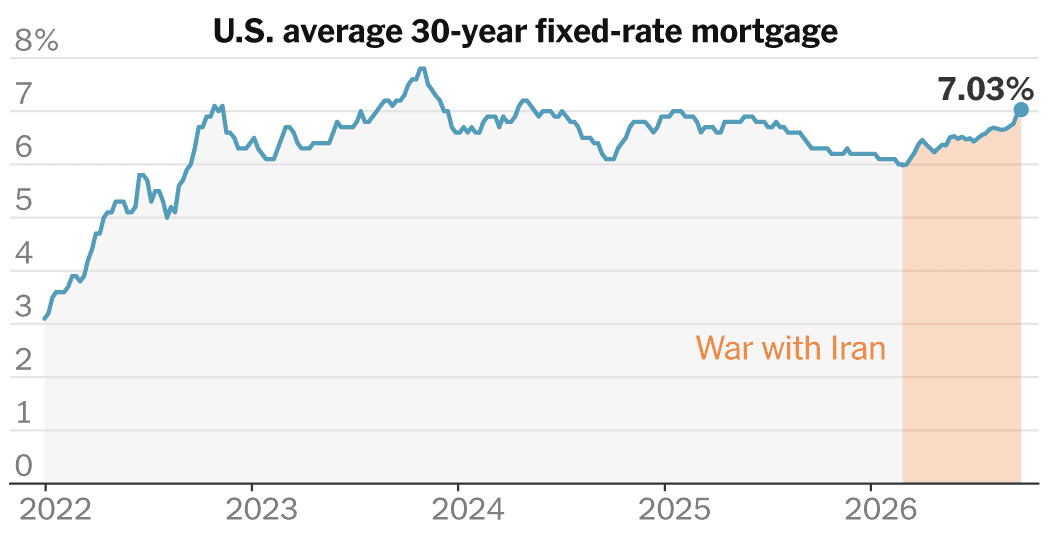
Average 30-year fixed mortgage rose to 7.03% per Freddie Mac. This marked the fifth straight weekly increase.
Whether the 7% milestone is treated mainly as a psychological barrier.
9 of 10 outlets skipped it: mortgage rates could dip to 6.7% by year end, per Zillow.
13outlets compared
Same story, two versions
tap a side to read it in full
CNN
“Beyond the immediate financial constraints, the 7% threshold is a foreboding psychological barrier,”Read the original ↗
CNN stresses market psychology while The Hill normalises the rate level.
Rates Above 7%
Freddie Mac data put the average 30-year fixed mortgage rate at 7.03% this week, marking the first time it has passed 7% since January 2025. Realtor.com senior economist Jake Krimmel said rates are "far more likely to go up than down by the end of the year or in the next month or two," as house hunters face a fresh affordability crunch. Freddie Mac’s 7.03% figure came as the 10-year Treasury yield hit 5.1% on Thursday, a level Zillow Home Loans senior economist Kara Ng called "the highest level in roughly two decades."
CME Group interest rate traders priced in a 66% probability of a rate hike at the Fed’s next meeting in October, adding pressure to an already expensive housing market. Mortgage Bankers Association vice president and deputy chief economist Joel Kan said "Higher inflation, the prospect of tighter monetary policy, potentially stronger economic growth and ballooning federal debt have pushed up mortgage rates."

Bond Market Drives
Bright MLS chief economist Lisa Sturtevant warned that "Crossing this mark could create a chilling effect on the market, leading to home sales transactions to slow considerably this fall." Lawrence Yun, chief economist at the National Association of Realtors, said the direction of mortgage rates depends on the inflationary impact of the Iran war, adding that if a deal is reached to end the war, oil prices and mortgage rates could tumble. CBS News tied the climb to bond-market moves, noting that mortgage rates tend to track yields on the 10-year Treasury note as bond buyers seek higher yields to compensate for risk.
The average 30-year fixed mortgage rate climbed to 7.03% this week, up from 6.95% last week, and it was the fifth straight week of rising mortgage rates. The Federal Reserve raised its benchmark interest rate by a quarter percentage point last week, its first move this year, and investors braced for potentially even more rate hikes.

Housing Market Fallout
NPR reported that higher mortgage rates contributed to a 2% decline in existing home sales in August from the previous month, and it put the median sale for an existing home at about $429,000. The average 30-year, fixed-rate mortgage rate rose to 7.03% and the New York Times warned that a move from 6 to 7 would "further dampen an already weak housing market." The latest move in rates on 15-year fixed-rate mortgages discouraged some homeowners eager to refinance, with the average rate increasing to 6.42% from 6.26% last week.
The increase comes after the Federal Reserve hiked interest rates, and it described the move as aggravating a housing market that has endured years of high interest rates and low supply. CBS News said home-buying activity tends to slow after the peak summer season, and it quoted Zillow Home Loans senior economist Kara Ng saying "Less competition means more negotiating power, and the ability to be more selective and deliberate about the right home."