Asia18 July, 20263 min read
Hideki Makihara Criticizes India Over Mumbai-Ahmedabad High-Speed Rail, India Rejects Remarks
This article is an automated aggregation of coverage from news outlets. Our editorials offer in-depth analysis curated by the NewsCord team.
Former Japanese minister Hideki Makihara criticized India for delays in MAHSR project. India rejected Makihara's remarks as an individual opinion, claims project is progressing well.
Rift Over Bullet Train
India and Japan renewed rifts over India’s first high-speed rail project, the Mumbai-Ahmedabad High-Speed Rail corridor, after former Japanese Justice Minister Hideki Makihara criticized senior Indian officials and said their actions were "utterly absurd". The Global Times said Tokyo Keizai reported on July 14 that Japan was excluded from the crucial signaling system, and Makihara posted on X on July 15 that "The Shinkansen project in India is something I was involved with myself." India’s Ministry of External Affairs spokesperson Randhir Jaiswal dismissed the remarks on Friday, saying they were "an individual opinion" that is "at considerable variance with facts," and said discussions are progressing well.
“‘The Shinkansen project in India is something I was involved with myself.”
The corridor is described as a 508-kilometer project connecting Mumbai with Ahmedabad, and the cooperation framework says Japan provides financial aid, core technologies and engineering instructions. Global Times quoted Qian Feng, director of the Research Department at Tsinghua University’s National Strategy Institute, saying the crux was "not about technologies, but about trust and balance of interests."
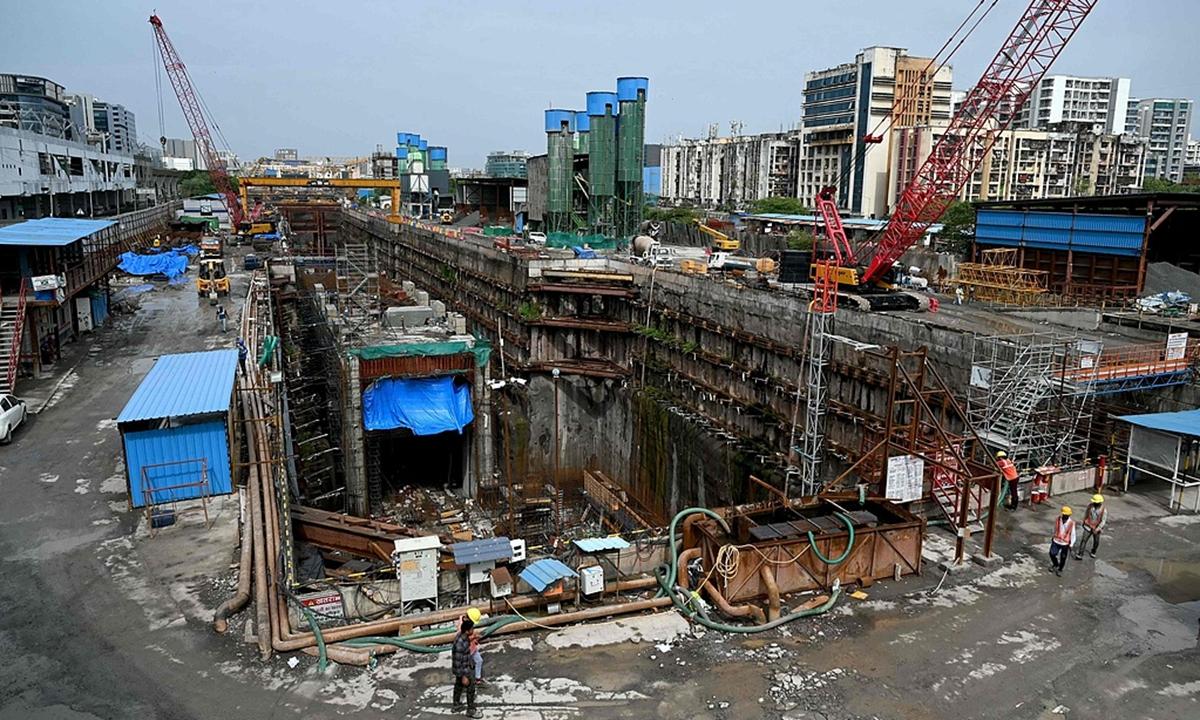
India Rejects Criticism
In response to Makihara’s criticism, the Economic Times quoted Randhir Jaiswal saying, "We have seen the post that has been referred to. It is an individual opinion and at considerable variance with facts."
The NDTV report also quoted Jaiswal rejecting the concerns, saying, "The signalling equipment has been ordered accordingly and is in line with international specifications."
NDTV said Makihara alleged Japan was "excluded from the signalling system" and that he felt "100 per cent" the reason the project had not moved forward was "entirely on the Indian side."
The Times of India reported that government sources told ANI that India and Japan agreed to begin operations with an Indian high-speed train so services can start at the earliest, with the first section expected to open in 2027.
The Hindu said Japan will provide its next-generation E10 series Shinkansen trains in the early 2030s, while construction work is rapidly progressing and the first section will be opened in 2027.
What Comes Next
The Times of India said the first operational stretch will use indigenously built high-speed trains, while Japan’s next-generation E10 trains will be introduced later, after 2030, and it described the project as a Prime Minister Narendra Modi flagship infrastructure initiative. The Hindu reported that railway officials said India and Japan agreed to start operations with an Indian high-speed train slated to run at an operational speed of 280 kmph, with the indigenous train being used so the Surat-Bilimora section can be operational by August 2027. The Hindu also said the Railway Ministry awarded a tender to German multinational Siemens for installation of signalling systems along the corridor stretch, and it quoted the MEA spokesperson stating, "No Japanese offer was received in this context."
“No Japanese offer was received in this context.”
Global Times added that Japan looks to long-term cooperation and market access when it promises technological transfer and loans, while India hopes to take advantage of Japan’s money and technology to boost its own tech system and manufacturing. The Federal said the first operational section is expected to begin phased passenger services on August 15, 2027, and it described the project as being built with Japanese Shinkansen technology and financial assistance from the Japan International Cooperation Agency (JICA).