
China · 21 August, 2026 · 3 min read
Hong Kong Court Convicts Lee Cheuk-yan and Chow Hang-tung of Inciting Subversion
Lee Cheuk-yan and Chow Hang-tung convicted of inciting subversion under Hong Kong's national security law. They organized the annual Tiananmen vigil, tied to leadership of the defunct Hong Kong Alliance.
Attribution of the case’s meaning and the state of the legal system.
10 of 12 outlets skipped it: chow described being restrained and led “like a dog”.
15outlets compared
Same story, two versions
tap a side to read it in full
Al Jazeera
“Hong Kong’s ‘twisted’ judicial system had already decided the pair were guilty in 2021, he said.”Read the original ↗
CNN
“The HKSAR Government strongly condemns any biased remarks and smears against the HKSAR’s effort for safeguarding national security”Read the original ↗
Al Jazeera calls the judiciary “twisted”, while CNN foregrounds the HKSAR government’s rebuttal.
Conviction in Hong Kong
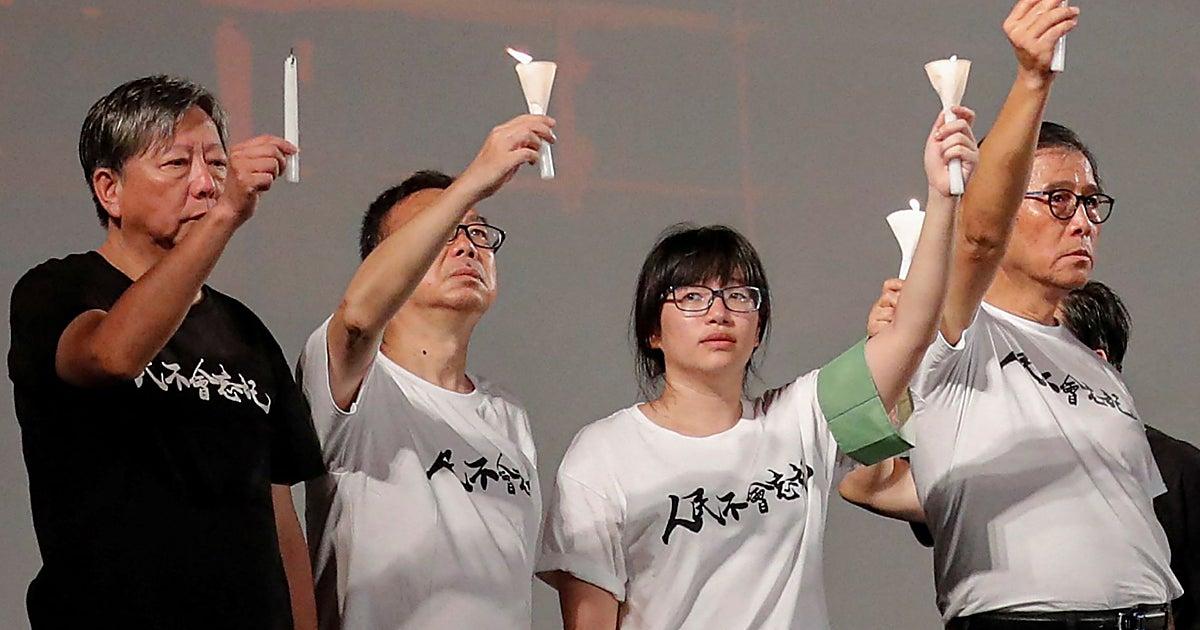
A Hong Kong court convicted pro-democracy activists Lee Cheuk-yan and Chow Hang-tung of inciting subversion for their role in organising candlelit vigils marking Beijing’s deadly 1989 Tiananmen crackdown, and the pair face a maximum penalty of 10 years in prison. The court said Lee and Chow “incited others to organize, plan, commit or participate in acts by illicit means with the purpose of subverting state power,” according to a press summary of the ruling. AFP reported that Lee Cheuk-yan, 69, and Chow Hang-tung, 41, were leaders of the now-defunct Hong Kong Alliance, which organised annual vigils in Victoria Park in Hong Kong.
The BBC said the verdict was delivered in a national security case under a China-imposed law imposed on the city by Beijing, with sentencing expected at a later date. The conviction followed charges brought in 2021, and the activists have remained imprisoned since then under the Beijing-imposed national security law, the ABC report said.
Condemnation and courtroom claims
Mark Clifford, president of the Committee for Freedom in Hong Kong Foundation, said the verdict was “no surprise,” arguing Hong Kong’s “twisted” judicial system had already decided the pair were guilty in 2021. Human Rights Watch Asia director Elaine Pearson said the convictions showed “how public displays of mourning have become a crime in Hong Kong,” while the BBC reported that Chow told the court in May the law itself was on trial. Chow Hang-tung, who represented herself, told the court in May that “Speaking the truth has become inciting hatred, seeking justice has become exploiting suffering,” according to the AP explainer.
The BBC reported that Amnesty International said the case “relies on vague, overly broad and arbitrary definitions of 'subversion'.” In response to international criticism, the BBC noted that France and Germany said they “deeply regret” the conviction and called for immediate release, while the Al Jazeera report described the ruling as exemplifying the erosion of freedom of expression in Hong Kong.A

What comes next
The court’s findings centered on the alliance’s demand to “end one-party dictatorship,” with the BBC reporting that Lee and Chow were found guilty of inciting others to subvert state power under Hong Kong’s controversial national security law. The AP said the national security trial focused on the alliance’s core demand of “ending one-party rule,” while the CBC described the case as a national security case brought under a China-imposed law that has effectively crushed Hong Kong’s previously thriving pro-democracy movement. The AP reported that Lee Cheuk-yan said, “I have no enmity in my heart, only love,” and that he was detained after being asked to leave a plane by police before it took off.
“The national security trial has focused on the alliance’s core demand of ‘ending one-party rule.’”
Chow Hang-tung told the court in her closing statement that “returning power to the people has become subverting the state,” and the BBC reported that she smiled as the verdict was read out while Lee made a heart gesture and folded his hands. The Guardian reported that the UK Foreign Office’s Indo-Pacific minister Rosie Winterton said the verdict was “a further demonstration that even peaceful acts of remembrance in Hong Kong are now treated by the authorities as threats to national security,” as sentencing was still expected at a later date.