Full story
House advances $95B Iran plan
The U.S. House adopted a Republican-only $95 billion budget proposal to fund the Iran war and other White House priorities in a 216-214 vote on Wednesday, in a final push before the midterm elections.
“House Republicans adopt $95 billion package for the Iran war and Trump’s priorities House Republicans adopt $95 billion package for the Iran war and Trump’s priorities WASHINGTON (AP) — The House adopted a Republican-only $95 billion budget proposal Wednesday, a long-shot effort to fund the Iran war and other White House priorities over objections from Democrats and a few GOP holdouts in a final push before the midterm elections”
The AP reported that House Speaker Mike Johnson “plunged ahead” despite objections from Democrats and some GOP holdouts, and that the vote tally included two Republicans and one independent joining Democrats in opposition.
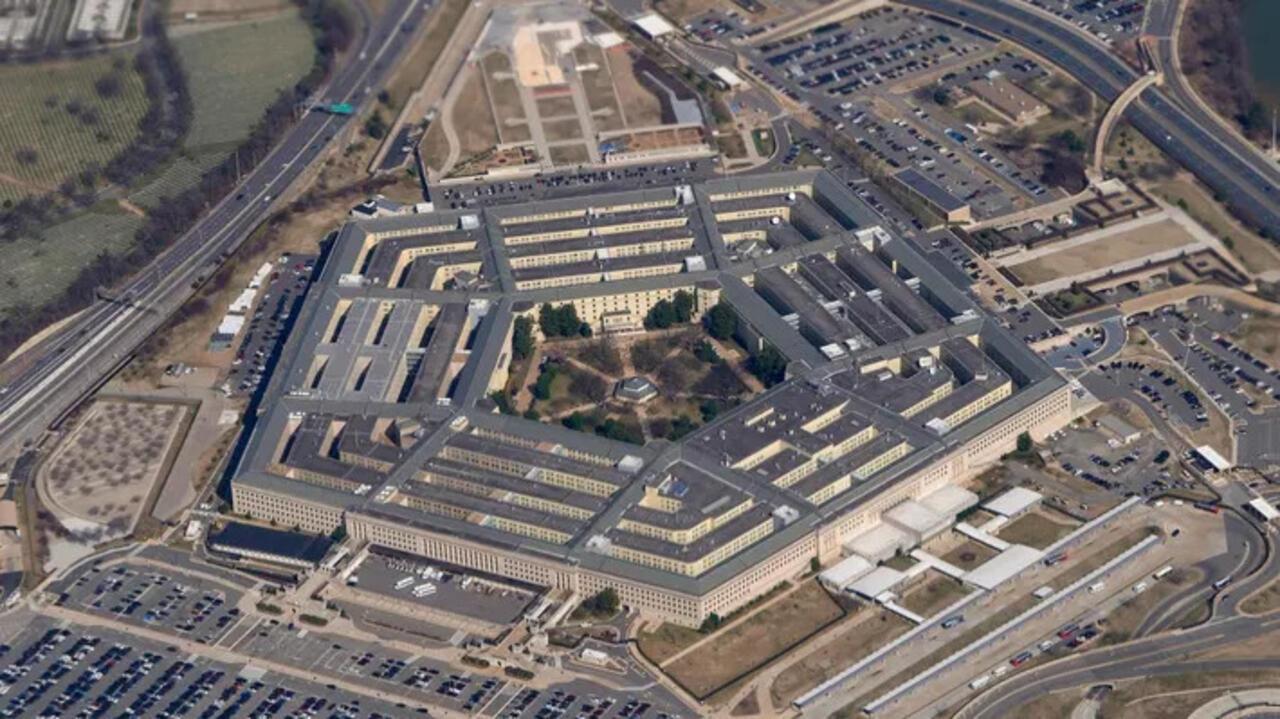
The Hill said the framework would boost funding for the Pentagon, provide agriculture aid, and provide money to encourage states to adopt voting restrictions, with the lower chamber voting 216-214 to approve the budget blueprint.
CBS News reported that the House adopted the budget resolution in a 216 to 214 vote, with all Democrats, two Republicans and one independent who caucuses with Republicans voting in opposition, and that the Senate still needs to approve the resolution.
NPR reported that the House also passed a $1.1 trillion National Defense Authorization Act by a vote of 216 to 212, and said it now heads to the Senate for an uncertain path forward.
Johnson, Thune, and dissent
House Speaker Mike Johnson framed the vote as a win for his agenda, telling reporters in a statement, “Republicans support our troops, our farmers, and election security. We’re the only team in Washington that does,” while the Senate Majority Leader John Thune said he would “hold” reconciliation as a backup until the chamber works out a plan to avoid a government shutdown later this year.
The Hill reported that Senate Majority Leader John Thune said he would “hold” reconciliation as a backup, and that other Senate Republicans expressed resistance to the budget framework as-is.

CBS News said Democrats remained vehemently opposed to continuing the war in Iran as well as strict new voting requirements championed by President Trump, and it described the House vote as the first step in the party-line reconciliation process.
AP News quoted Rep. Jodey Arrington, R-Texas, saying, “Just bullets and bombs to finish the job,” while Rep. Pete Aguilar of California argued, “Republicans plan to spend tens of billions of dollars on Trump’s failed war in Iran.”
Money, rules, and what’s next
The framework directs committees to draft legislation that would increase spending by up to $60 billion and $13 billion, with a $12 billion limit for agriculture aid and a $10 billion cap for a fund aimed at incentivizing states to adopt Trump-backed voting restrictions, for a total of $95 billion.
“The House of Representatives on Wednesday took the first step toward funding President Donald Trump’s war with Iran, as well as approving tens of billions in additional Pentagon money and aid for US farmers”
CBS News said the plan faces major hurdles in the upper chamber, where the SAVE America Act has been stuck for months and lacks even a simple majority of support, and it said it was unclear whether voting regulation provisions such as proof of citizenship and a photo ID would survive Senate rules governing reconciliation.
NPR reported that the war has already cost taxpayers $37.5 billion, according to Defense Secretary Pete Hegseth, and said at least four U.S. service members have been killed, bringing the nation’s death toll from the conflict to 18.
AP News added that Congress is at a standstill over the U.S. war against Iran—unable to stop Trump’s military strikes, but not having authorized the use of American military force—and that House action advanced despite uncertainty in the Senate.
NPR also said the timeline for Senate action on the reconciliation framework is an open question, and that Thune wanted to prioritize negotiations to extend funding for the government beyond the midterm elections, with government funding set to lapse at the end of September.