Yemen · 14 September, 2026 · 3 min read
Houthi Offensive Sends 3,400 Yemenis Fleeing to Djibouti in 48 Hours
Djibouti received over 3,400 Yemenis in 48 hours amid renewed fighting. Internal displacement in Yemen tops around 100,000 due to western-coast escalation.
Whether the displacement total is 85,000-plus or 100,000-plus.
7 of 8 outlets skipped it: UNHCR says humanitarian access is blocked by insecurity and damage.
32outlets compared
Same story, two versions
tap a side to read it in full
Al Jazeera
“It put the wider displacement inside Yemen at more than 85,000 people, most of it in just the first two weeks of September.”Read the original ↗
Al-Monitor
“over 100,000 people have been internally displaced by the renewed Yemen conflict”Read the original ↗
Al-Monitor leads with UNHCR's 100,000-plus displacement figure, while Al Jazeera emphasises more than 85,000, shifting perceived scale.
Djibouti receives thousands
More than 3,400 people fleeing renewed fighting in Yemen landed along Djibouti’s northern coast, Djiboutian authorities said, with the figure covering just 48 hours of arrivals reported by Djibouti’s state news agency on Sunday.
“More than 3,400 people fleeing renewed fighting in Yemen have landed along Djibouti’s northern coast”
The crossings followed a Houthi offensive in which the group seized the Red Sea port of Mocha and advanced along the coast toward the narrow strait separating Yemen from Djibouti.

Footage aired on Djibouti’s state broadcaster RTD showed wooden dhows and larger vessels arriving near the town of Obock, crowded with women in black robes and children wearing life jackets.
Alexandre Coissac, who heads the International Organization for Migration (IOM) in Djibouti, told Al Jazeera that “People have arrived on “all kinds of sea vessels, from small dhows to larger ships”.”
Djibouti’s authorities said they were preparing to receive as many as 10,000 people if the pace continued, while Prime Minister Abdoulkader Kamil Mohamed traveled to Obock to meet officials from UNHCR, the World Food Programme and the IOM.
Displacement inside Yemen
As fighting expanded across Yemen, the Office for the Coordination of Humanitarian Affairs (OCHA) announced the displacement of 125,000 people due to escalation since the beginning of September, while the UN Refugee Agency said the crisis came as the country already had 4.5 million displaced people across the country.
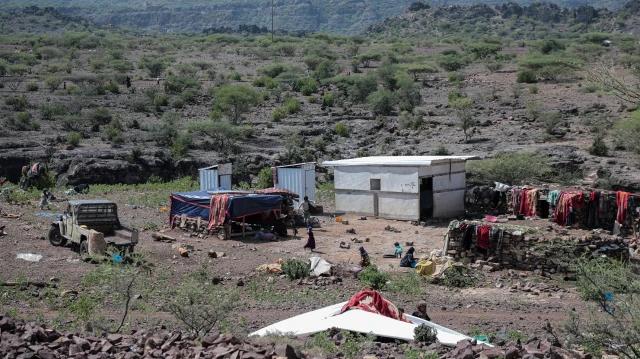
The same update described how hostilities forced people to flee frontline areas and, in some cases, to leave displacement camps to search for new refuge, while others evacuated cities and homes to save themselves.

In Taiz Governorate, OCHA said the western coast districts were among the hardest hit, where the IOM reported the displacement of 9,280 families (about 56,000 people).
Lahj Governorate ranked second with 3,225 displaced families (more than 19,000 people), while al-Hodeidah recorded 1,374 displaced families (more than 8,000 people), most from the Hais district.
The Yemeni government, through the Executive Unit of the Administration of Refugee Camps, issued an urgent humanitarian plea and said the number of displaced people up to September 13, 2026, in six liberated governorates reached 13,980 households totaling about 95,324 individuals.
Health strain and funding
Aid groups warned that fighting and shifting front lines were disrupting access to essential healthcare, with Marc Schakal of Medecins Sans Frontieres (MSF) telling Arab News that Mokha General Hospital is currently the only functioning health facility in the area.
“Mokha General Hospital, where the organization operates, is currently the only functioning health facility in the area”
Schakal said the hospital’s capacity had been reduced because some staff had left and some patients were staying away due to security concerns, while Houthi forces took control of Mokha and other parts of Yemen’s Red Sea coast in recent days.
MSF said many health facilities had been damaged or put out of service by fighting over the past 10 days, forcing people to travel further to access medical care, and Schakal described “a big challenge on the referral corridor.”
In parallel, the Norwegian Refugee Council said shelter options were rapidly shrinking, with three in four newly displaced households lacking adequate shelter and five camps where NRC works having emptied as people fled for safer areas.
Jan Egeland, NRC Secretary General, said, “This escalation could not come at a worse time for Yemenis,” while warning that Yemen’s humanitarian response has been grossly underfunded and that emergency stocks were running low.