Gaza Genocide21 June, 20262 min read
IDF Releases Footage Of Hezbollah Tunnels Under Lebanon’s Beaufort Castle After June Recapture
This article is an automated aggregation of coverage from news outlets. Our editorials offer in-depth analysis curated by the NewsCord team.
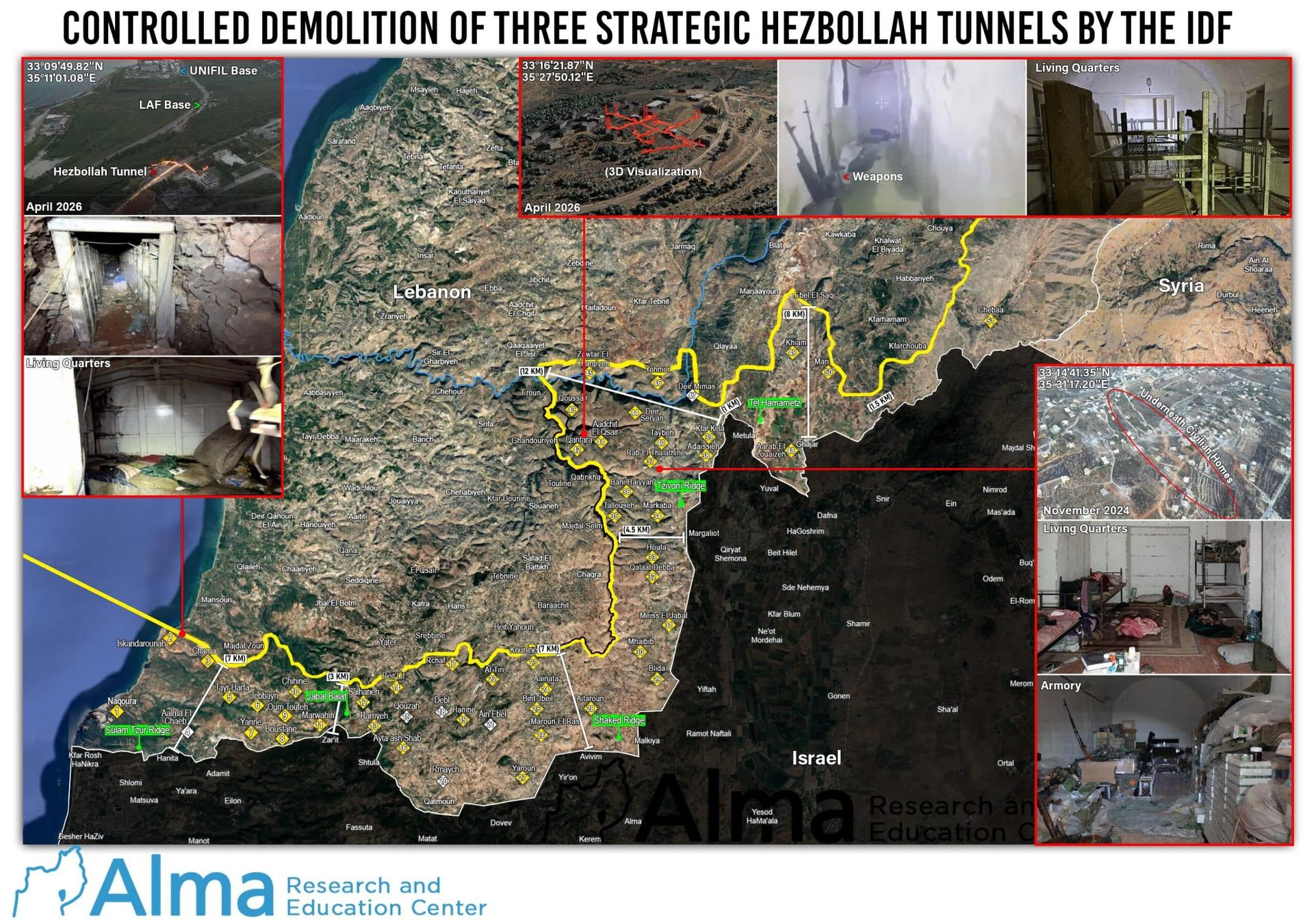
IDF released footage showing Hezbollah tunnels under Beaufort Castle after June recapture. Tunnels include living quarters, operating theatre, showers, and weapons cache.

ynetglobal was read line by line by the Watchdog: 5.9. See the score →
Beaufort tunnels and UNIFIL
Israeli forces have released footage and conducted tours tied to Hezbollah tunnels under Lebanon’s Beaufort Castle, a historic site that the Israeli military says housed command centres and that it recaptured in June. The Jerusalem Post framed the discovery as evidence of “decades of UNIFIL failure,” arguing that UNIFIL’s mission to monitor the Israeli withdrawal and help Lebanon reestablish its authority did not prevent Hezbollah from entrenching itself in southern Lebanon.
In the same reporting stream, the Crypto Briefing said the tunnels were “built over the last 15 years with Iranian support,” and described the network as including missile launch sites and living quarters beneath Beaufort Castle. The Times of Israel described the captured ridge area as a strategic escarpment where Hezbollah operatives launched hundreds of attacks from Beaufort, and said the IDF focused operations on capturing and demolishing major Hezbollah underground sites and preventing rocket attacks from the area.

Tunnel purpose and Iranian links
During a media tour, The Times of Israel reported that a Yahalom combat engineering unit officer said the tunnels were intended “to fire directly toward Israel,” adding that “the moment you exit the tunnel, you can see Metula right in front of you.” The Times of Israel also said the tunnels were intended “to defend against an IDF ground maneuver to the Beaufort Ridge,” and that the officer described the IDF’s capture of the ridge as defeating Hezbollah.
Lebanon 24 reported that Israeli Chief of Staff Eyal Zamir toured the Qala'at al-Shuqif area and said it was densely packed with terrorist infrastructure, adding that Hezbollah, with support and financing from Iran, built underground tunnels to threaten northern communities. Lebanon 24 further stated that Zamir urged the Lebanese army to fulfill its obligations under a signed agreement and said the Israeli army would continue to operate to remove what it sees as threats from Lebanese territory.
Escalation, ceasefire conditions
Lebanon 24 said the Israeli army resumed expanding its attacks on Lebanon as ground violations continued in the south, and it listed an Israeli drone strike on Karak from the al-Haushah area that hit a room containing a water pump. The same source reported explosions between Markaba and Hadatha, and also in Hadatha, Kunin, and al-Tiri, while warplanes flew between Nabatieh al-Fouqa and Kfar Tabnit and artillery shelling struck Deir Suryan, Beirashit, Hadatha, and Wadi al-Hijjar.
Lebanon 24 added that Israeli Chief of Staff Eyal Zamir said the Israeli army remains on high alert to launch a rapid assault if the ceasefire is violated, and it described a framework agreement signed on June 26 in Washington between Lebanon and Israel. In parallel, Al Jazeera said the Israeli Army released footage of hidden tunnels under Beaufort Castle and stated that Israeli soldiers recaptured the 900-year-old fortress in June, with the footage presented as showing Hezbollah’s command centres.