
Iran Attacks Neighbours; Arab, Islamic Foreign Ministers Condemn Strikes
Key Takeaways
- Riyadh hosted foreign ministers from Arab and Islamic states to address Iranian attacks.
- Delegates from about a dozen states discussed regional security and Iran's actions.
- Iranian attacks on Gulf and neighbouring states were the central crisis focus.
Regional Diplomatic Response
Foreign ministers from twelve Arab and Islamic countries convened in Riyadh for an urgent diplomatic meeting to address escalating tensions following Iranian attacks on regional states.
“A meeting of foreign ministers from Arab and Islamic countries took place in Riyadh on Thursday to discuss regional security amid Iranian attacks on Gulf States”
The gathering brought together representatives from Azerbaijan, Bahrain, Egypt, Jordan, Kuwait, Lebanon, Pakistan, Qatar, Saudi Arabia, Syria, Turkey, and the United Arab Emirates, demonstrating the widespread regional concern over Iran's military actions.
The ministers issued a joint statement condemning what they described as 'deliberate' Iranian attacks using ballistic missiles and drones, calling for an immediate end to hostilities and reaffirming the right of states to self-defense in accordance with Article 51 of the United Nations Charter.
The meeting represented one of the most significant diplomatic alignments since the conflict began on February 28, reflecting how widely the war's impact is being felt across the region.
Condemnation of Attacks
The Arab and Islamic ministers specifically condemned Iran's targeted attacks on civilian infrastructure and residential areas, describing them as dangerous escalations that violate international law.
According to the joint statement, Iranian strikes have hit critical infrastructure including oil facilities, desalination plants, airports, housing sites and diplomatic missions across the Gulf region.

The ministers emphasized that these attacks demonstrate Iran's persistent strategy aimed at undermining regional security and stability.
They also noted that since the war began on February 28, Iran has launched retaliatory missile and drone strikes against all six Gulf Cooperation Council (GCC) States, resulting in significant civilian casualties.
In multiple strikes on Abu Dhabi and Dubai alone, eight civilians were killed and more than 150 were injured, highlighting the human cost of the escalating conflict.
Saudi Diplomatic Stance
Saudi Foreign Minister Prince Faisal bin Farhan delivered particularly strong criticism of Iran's actions, declaring that trust in Iran has been 'completely shattered' and Tehran cannot be considered a partner in its current behavior.
“Riyadh/New Delhi, Mar 19 (UNI) Foreign Ministers from twelve Arab and Islamic countries strongly condemned Iranian attacks on regional States, saying such attacks cannot be justified under any pretext”
He characterized Iranian attacks as a dangerous escalation and clear violation of international law, reflecting what he described as a persistent strategy aimed at undermining regional security and stability.
Prince Faisal dismissed Iranian justifications for the attacks as unconvincing, describing them as attempts to cover up a broader policy of coercion.
He warned that Iran had 'pre-planned' these attacks, indicating they were not isolated incidents but part of a systematic policy of escalation.
The Saudi minister also emphasized that Saudi Arabia reserves the right to take necessary measures when needed, stating 'Iran is mistaken if it believes Gulf states are incapable of responding' and warning that Iran 'will not stop' unless confronted with a firm position.
Diplomatic Balancing Act
The diplomatic response demonstrated a careful balancing act by the Arab and Islamic nations, seeking to condemn Iran's actions while avoiding complete diplomatic isolation that could further escalate tensions.
While the ministers strongly criticized Iran's attacks across the region, their statement stopped short of completely severing ties with Tehran, reflecting a recognition that dialogue remains essential to avoid a wider war.
The language used was described as 'strong but measured,' with the ministers focusing on de-escalation and stability rather than calling for immediate retaliation.
Interestingly, the meeting also addressed Israel's role in the conflict but in a restrained manner. While some criticism was voiced over Israeli actions in the region, ministers largely avoided directly addressing Israel's strikes on Iran, choosing instead to keep the focus on immediate regional stability.
This selective emphasis highlights the complex diplomatic challenges facing the region as nations navigate relationships with multiple conflicting parties.
Conditions for De-escalation
The ministers emphasized that the future of relations with Iran depends on respect for the sovereignty of states, non-interference in their internal affairs, and refraining from using military capabilities to threaten neighboring countries.
“As the Iran vs US–Israel war intensifies and missile strikes ripple across the Gulf, a high-stakes diplomatic gathering in Riyadh has emerged as a defining moment in the region’s response”
They called on Iran to immediately halt its attacks, respect international law and international humanitarian law, and adhere to principles of good neighbourliness as a first step toward de-escalation and restoring regional stability.
The joint statement also urged Iran to comply with UN Security Council Resolution 2817 (2026), cease all attacks immediately, and avoid any provocative actions, including threats to close or disrupt international navigation in the Strait of Hormuz or undermine maritime security in Bab al-Mandeb.
This comprehensive approach reflects the ministers' understanding that addressing the current crisis requires both immediate de-escalation and a longer-term commitment to regional stability and international norms.
The diversity of attendees underscored how widely the war's impact is being felt, ranging from direct military threats and missile debris risks to disruptions in energy supplies and fears of large-scale displacement if tensions continue to escalate.
More on Iran
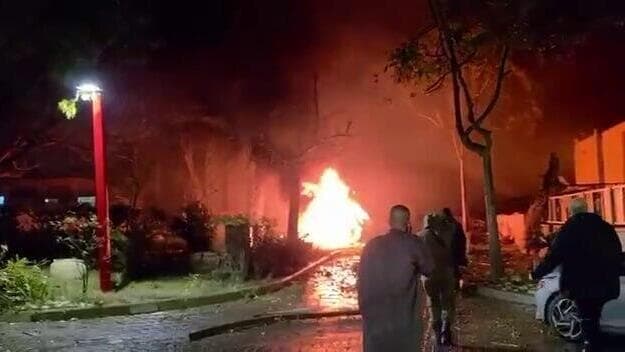
Iran Attacks Israeli Towns Dimona and Arad Near Israel's Main Nuclear Research Center, Dozens Wounded
43 sources compared
Iran Attacks Dimona in Retaliation for Natanz Strike
44 sources compared

Iran Attacks Diego Garcia with Long-Range Missiles, Targeting U.S.-UK Base
82 sources compared
Trump Defends Iran War by Citing Pearl Harbor
12 sources compared