Asia28 July, 20263 min read
Iran-Backed Militias Launch Drones at Saudi Aramco’s Abqaiq, Riyadh, and Jordan Border
This article is an automated aggregation of coverage from news outlets. Our editorials offer in-depth analysis curated by the NewsCord team.
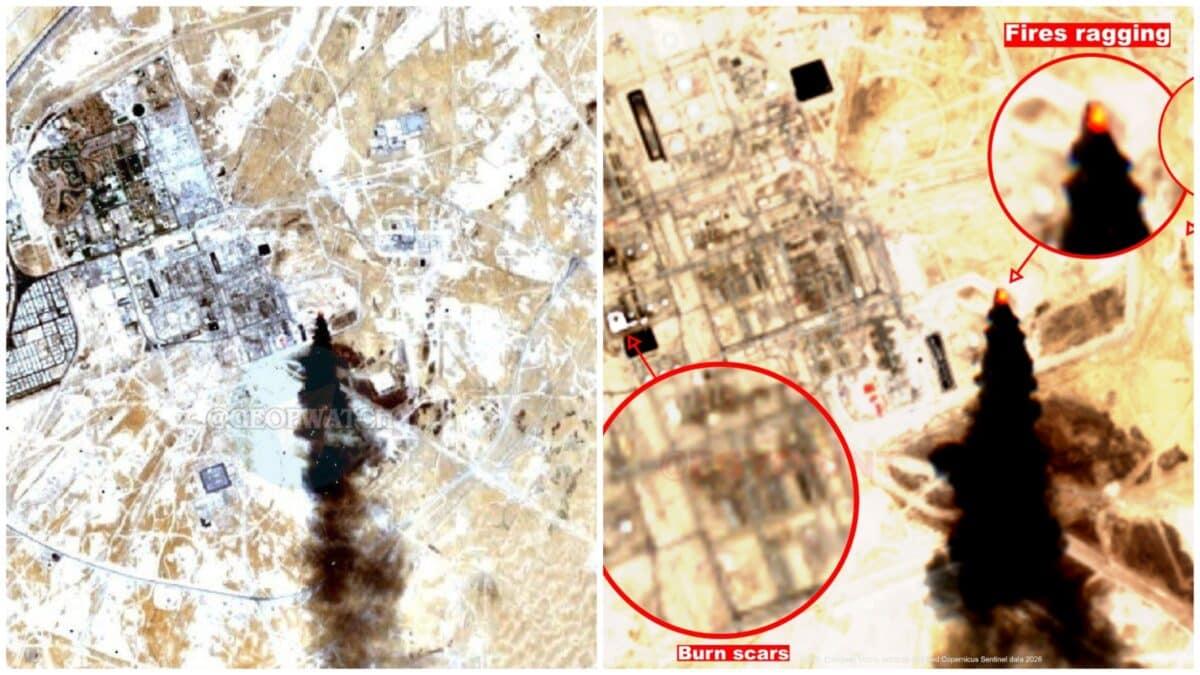
Drones struck Abqaiq refinery, triggering a massive fire. Drone strikes hit Saudi eastern and western coast facilities, with near-border drone activity at Jordan.

Drones Hit Saudi Oil
Israel, Saudi Arabia, Jordan, and Iraq reported drone attacks in their territory Monday amid a lull in US air strikes against Iran, after nearly two weeks of fighting between both sides. The Israel Defense Forces said it shot down two drones over the Jordan border near the Dead Sea, adding that the drones did not cross into Israeli territory and that their origin was under investigation. Saudi Arabia’s defense ministry said it shot down drones aimed at petroleum targets, some in its eastern province and others in the capital Riyadh, and said the drones had been launched from Iraq by Iran-backed militias.
Saudi Arabia blamed Iran-backed resistance groups in Iraq for carrying out the attack on Saudi Aramco’s Abqaiq facility and the East-West Pumping Station, and said authorities began emergency flaring at multiple production sites as part of the response. The Week and Energy News Beat both tied the Abqaiq fire to the East-West pipeline’s role in moving oil from Abqaiq to Yanbu, with The Week describing the pipeline as helping Saudi Arabia bypass shipping restrictions during the on-and-off blockade of the Strait of Hormuz.

Blame, Satellites, and Markets
Saudi Arabia’s foreign ministry urged Iraq’s government to “take all necessary measures to prevent its territories from being used as grounds from which acts of aggression are launched,” while Saudi authorities blamed Iran-backed groups in Iraq for the drone strike. NASA FIRMS satellite imagery confirmed extensive fire activity at Abqaiq, and TimesNow said a European Union Copernicus Sentinel-2 image on 27 July showed smoke rising from the site. Energy News Beat said the Abqaiq attack threatened to remove substantial volumes of both crude oil and refined products from global markets, and it described Abqaiq as processing “up to 7 million bpd” of Saudi crude.
It also reported that major marine insurers in the Lloyd’s of London market restricted or suspended war-risk insurance for Saudi-linked vessels and cargoes in the Red Sea, describing the practical effect as a near-blockade on loadings from Saudi Red Sea terminals such as Yanbu and Jizan. TimesNow added that Houthi military spokesman Yahya Saree said the group had struck crude oil supply and transport facilities linking eastern Saudi Arabia to the Red Sea export terminal at Yanbu, saying it was carried out in response to Saudi drone incursions into Yemeni airspace.
Escalation Risks Ahead
The Times of Israel reported that Iran has said it will pause its own attacks for as long as Trump’s self-imposed ceasefire continues, while also saying it was still in control of the contested Strait of Hormuz and was not seeking to resume peace talks with the US. Esmail Baghaei told a televised press conference on Monday that “reports about Iran requesting negotiations with the US are fabricated,” and said “This is not in our DNA.” Energy News Beat warned that the scale of targeted assets created “significant risk,” including the possibility of disruption to Abqaiq and the East-West Pumping Station that could idle millions of barrels per day of crude.
The Week described the East-West pipeline as a key component of Saudi Arabia’s strategy to bypass Strait of Hormuz shipping restrictions, and it said Saudi and Emirati pipelines together had a spare capacity of about 3.5 million to 5.5 million barrels per day before the war began. TimesNow said the incident renewed concerns about the vulnerability of key oil infrastructure in the Gulf, and it reported that Brent crude prices fell by about 6.5% on Monday to just above $90 a barrel after prices briefly rose above $100 during the height of the conflict.