Iran · 07 September, 2026 · 3 min read
Iran’s Mohsen Rezaei Says Tehran Will Announce Restricted Zone Outside Strait of Hormuz
Iran will announce restricted zone outside Strait of Hormuz, starting at the U.S. blockade line. Ships entering the zone will be sanctioned; Iran updates its Hormuz blacklist.
Whether the Strait is fully closed or still transited.
6 of 7 outlets skipped it: iran publishes a list of 46 violating vessels to be punished..
The Jerusalem Post was read line by line by the Watchdog: 5.0. See the score →
215outlets compared
Same story, two versions
tap a side to read it in full
Aajil
“about 40 ships passed in both directions on Tuesday”
Translated from the original.
Read the original ↗Global Times frames the strait as completely closed, while Aajil reports dozens of ships still transiting with US escorts.
Restricted zone outside Hormuz
Iran’s Supreme National Security Council Secretary Mohsen Rezaei said Tehran would announce a restricted zone outside the Strait of Hormuz in the coming days and place any ship attempting to transit the area on Tehran’s sanctions list.
“place any ship attempting to transit the area on Tehran's sanctions list”
Rezaei told state-run IRIB TV that the zone would extend from "the line where the U.S. naval blockade begins to the Strait of Hormuz region and inside the Persian Gulf on the other side (of the strait)."
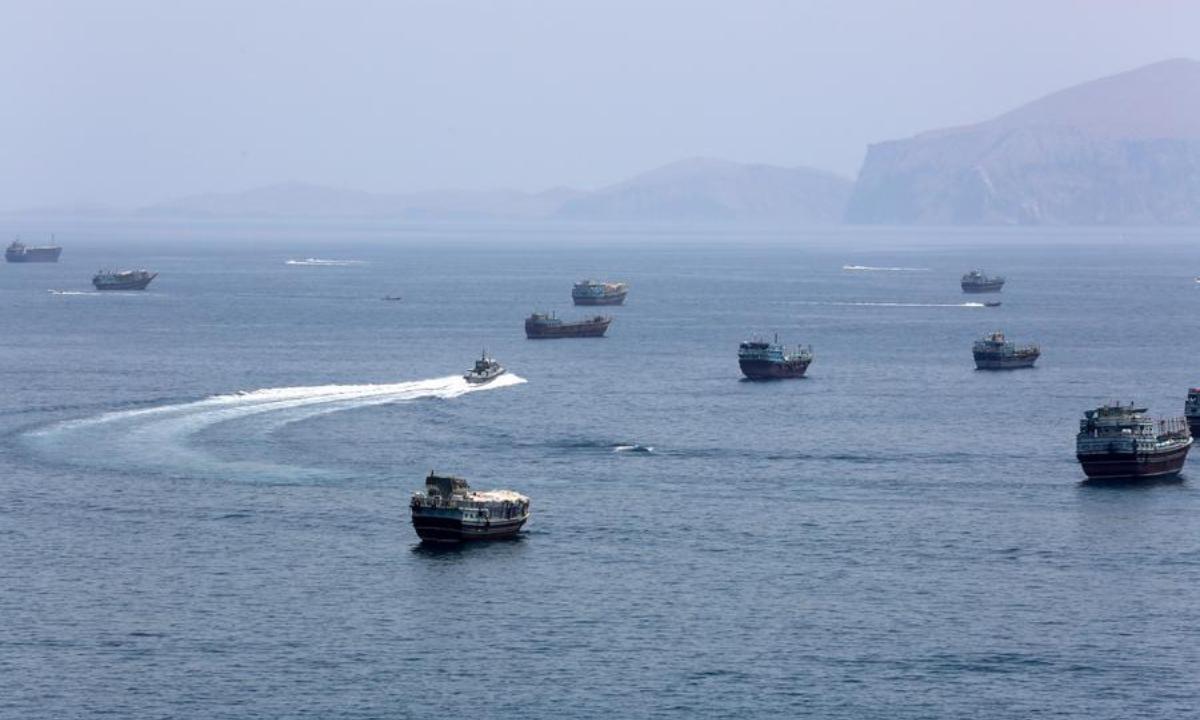
He also stressed that the Strait of Hormuz is "completely closed," dismissing U.S. claims that ships and oil tankers are crossing the waterway as a "lie."
The announcement came as the United States began implementing a “ship-to-ship” policy, with American officials saying President Donald Trump approved it to deter Tehran from attacking oil tankers and commercial ships transiting the Strait of Hormuz.
In that policy shift, Axios reported that American forces targeted two oil tankers belonging to the Iranian government, striking the engine rooms with drones with missiles after the tankers were anchored off the Iranian coast north of the line along which American forces impose their naval blockade.
Sanctions, strikes, and claims
Aajil reported that under the “ship-to-ship” principle, an Iranian oil tanker would be targeted for every ship Iran attacks, and it said the strikes marked the first time the United States struck Iranian tankers as retaliation for attacks on ships in the Strait of Hormuz.A
The same Aajil account said an American official stated about 40 ships passed in both directions on Tuesday, carrying millions of barrels of oil, while American forces intercepted several anti-ship cruise missiles and drones that the IRGC claimed to have launched toward the ships.A
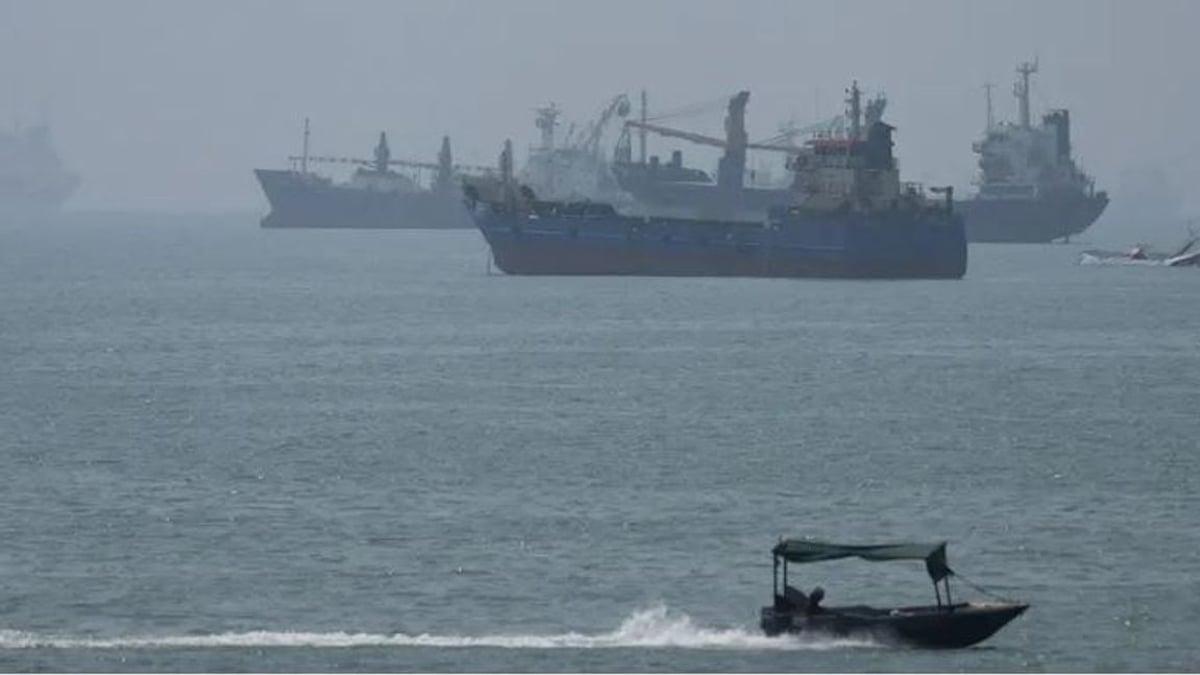
Iranian officials framed the confrontation as a widening cycle of retaliation, with Rezaei telling state media that the Strait of Hormuz is "completely closed" and that U.S. statements were a "big lie."
In response to threats about sinking tankers, ABC News reported that Iranian parliament speaker Mohammad Bagher Ghalibaf posted to X that "Strike our assets and you get struck. We've already proven it."
ABC News also said a Qatari delegation was in Iran on Sunday "to help reduce tensions," while an Iranian technical delegation had visited Qatar recently.
Shipping flows and wider stakes
Aajil said preliminary shipping data released on Friday showed four bulk carriers crossing the Hormuz Strait on Thursday, down from nine ships the day before and well below the 10-day average of about 15 vessels.A
“four bulk carriers crossing the Hormuz Strait yesterday, Thursday”
Kpler data cited by Aajil indicated that the ships that had crossed by 04:55 UTC included two medium-range tankers, one CamastarMax-class tanker, and one Handymax, while the figures excluded ships that may have passed with AIS transmissions turned off to avoid detection.A
Aajil also reported that only two of the giant crude oil tankers had crossed the strait so far this week, and it said that before the outbreak of the war on February 28, about 125 large commercial ships passed through the strait daily.A
Beyond Hormuz, Al Jazeera reported that the Panama Canal Authority said from Thursday only 34 vessels will be permitted to sail daily through the canal, with the cap dropping further to 32 on September 15.
Al Jazeera added that the canal handles about 5 percent of global maritime trade and said "some $270bn of cargo passed through the canal in 2024," while it linked the Hormuz crisis to Gulf producers being unable to export as much oil through the strait as before, driving more traffic toward the Panama Canal.