
Iran Fires Missiles at UK-US Diego Garcia Base in the Indian Ocean
Key Takeaways
- Iran attempted to hit the Diego Garcia base with missiles.
- Reports indicate at least one missile failed; an interceptor may have engaged.
- Diego Garcia is a joint US-UK base in the Indian Ocean.
Failed Missile Strike
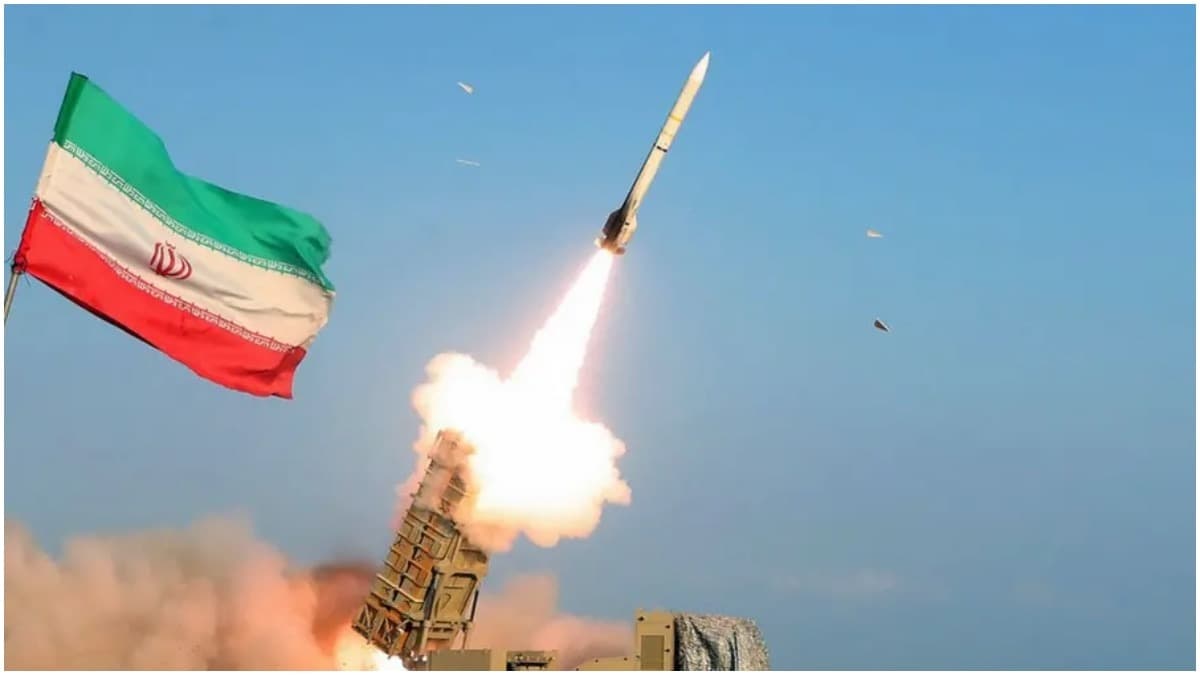
Iran launched two intermediate-range ballistic missiles toward the joint US-UK military base at Diego Garcia in the Indian Ocean in a significant escalation of tensions.
“Live updates: Iran fires missiles at UK-US Diego Garcia base in the Indian Ocean Major developments we’re following: - The Trump administration has said it will lift sanctions on Iranian oil stranded at sea under a 1-month license”
According to UK official sources cited by AFP, one missile failed mid-flight while the other was intercepted by a US warship, though officials have not disclosed full operational details of the interception.
The Wall Street Journal reported that neither missile hit the base, which occurred late on Friday or during the early hours of Saturday, marking the first escalation in the Indian Ocean since fighting began more than three weeks ago.
The Financial Express noted that Iran fired two 'unsuccessful' strikes, with both Iranian state media and western officials confirming the missiles were intercepted.
The attack came hours after the British government allowed US bombers to use UK bases, including Diego Garcia, in operations to prevent Iran from attacking ships in the Strait of Hormuz, creating a direct cause-and-effect relationship between the UK's decision and Iran's response.
Strategic Target
The attempted strike on Diego Garcia carries immense strategic significance due to the base's critical importance as a major hub for US-UK military operations across the Middle East, Africa, and Asia.
Located in the British Indian Ocean Territory, Diego Garcia serves as a cornerstone of American military presence, hosting long-range bombers, naval deployments, surveillance operations, and logistical support, having been the jumping-off point for major campaigns in both Iraq and Afghanistan.
The Financial Express emphasizes that the base was previously considered a 'safe haven' because of its remote location, but Iran's attack fundamentally alters this perception.
According to Business Today, the base's strategic importance is magnified by the fact that there is no foreign territory to be overflown by aircraft en route to attack Iran, thus bypassing permissions and making it an ideal launch point.
IndiaGlitz further notes that Diego Garcia is home to everything from stealthy B-2 bombers and nuclear submarines to guided-missile destroyers, making it a powerhouse of military capability that Tehran clearly wanted to demonstrate it could reach.
Extended Range
Iran's missile strike against a target 4,000 kilometers away dramatically reveals previously underestimated capabilities in Tehran's ballistic missile arsenal, fundamentally altering assessments of Iranian military strength.
“How hard would it be to stop Iran's missile threat”
The Financial Express reports that Iran has been revealed to be in possession of Intermediate-Range Ballistic Missiles (IRBMs) with a range of at least 4,000 kilometers, effectively putting parts of Europe (including cities like Athens or Rome) and the entirety of the Indian Ocean within their strike zone.
This range is well beyond the roughly 2,000 kilometers that Tehran has long publicly associated with much of its ballistic missile arsenal, as confirmed by Hindustan Times, which notes that Iran has imposed a declared range limit of 2,000 km on its missiles.
Associated Press News suggests Iran may have used space launch vehicle technology to extend missile range, with experts noting that Iran's Simorgh space launch vehicle could offer greater range 'at the likely cost of terminal accuracy.'
The semi-official Mehr news agency emphasized the significance of targeting Diego Garcia, stating it 'shows that the range of Iran's missiles is beyond what the enemy previously imagined,' while IndiaGlitz quotes assessments that certain Iranian missile variants have reportedly been tested beyond 2,000 km, though this represents a dramatic leap in capability.
Global Reaction
The missile strike has drawn strong international condemnation and heightened regional tensions, with multiple Arab leaders expressing concern about the escalating conflict.
Egypt's president Abdel-Fattah el-Sissi and Saudi Crown Prince Mohammed bin Salman stressed that the Iranian escalation against Gulf states endangers the safety and stability of the region, according to Associated Press News.

The Saudi Press Agency reported that el-Sissi reiterated Egypt's rejection of Iranian attacks on Gulf states and expressed solidarity with Saudi Arabia against threats.
Arab League chief Ahmed Aboul Gheit welcomed visits by el-Sissi and Jordan's King Abdullah II to multiple Gulf states, stating these visits 'reflect full Arab solidarity' in response to the crisis.
British officials described Iran's actions as reckless, with the UK Ministry of Defence stating that Iran 'lashing out across the region and holding hostage the Strait of Hormuz' was a threat to British interests and allies.
US Military Response
In response to the Iranian missile threat, the United States has significantly bolstered its military presence in the region, deploying thousands of additional Marines and sailors three weeks ahead of schedule.
“The attempted strike is significant because Diego Garcia is about 4,000 km from Iran, well beyond the roughly 2,000 km range Tehran has long publicly associated with much of its ballistic missile arsenal”
According to IndiaGlitz, the USS Boxer, a Wasp-class amphibious assault ship, is deploying to the Middle East with elements of the 11th Marine Expeditionary Unit, which includes up to 2,500 Marines.
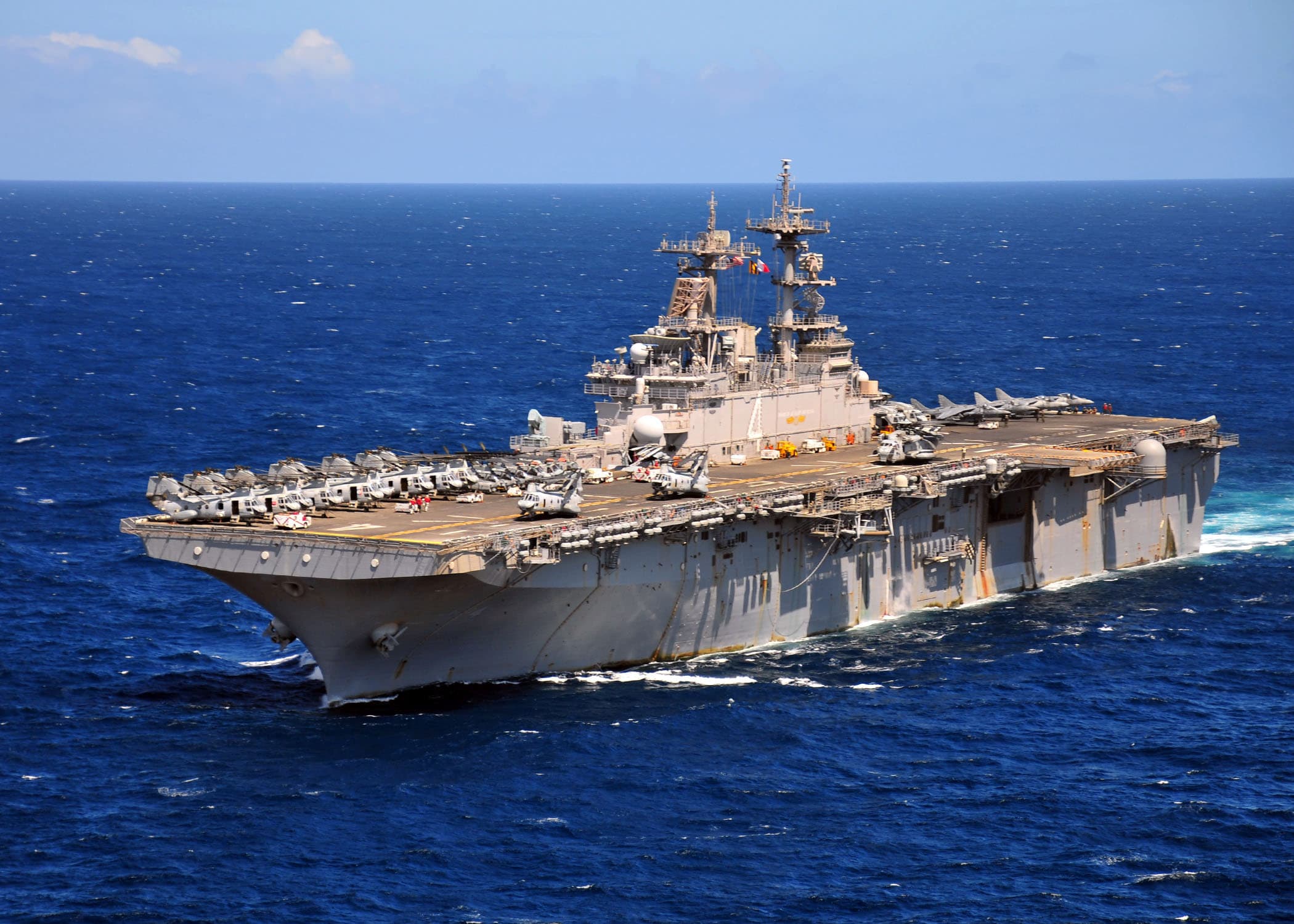
The Pentagon has stated that about 50,000 troops in the region are taking part in aspects of the attack on Iran, with IndiaGlitz describing the Marine Expeditionary Unit as a 'military Swiss Army knife' - a self-sufficient, fast-acting task force that can handle emergencies on land or at sea at a moment's notice.
General Dan Caine has confirmed that A-10 Warthogs and Apache gunships are already in the air, actively working to counter Iranian aggression.
The buildup is focused not only on securing the vital Strait of Hormuz - through which a fifth of the entire world's oil supply passes - but also on maintaining a powerful deterrent against further Iranian aggression.
More on Iran

Iran Attacks Israeli Towns Dimona and Arad Near Israel's Main Nuclear Research Center, Dozens Wounded
43 sources compared
Iran Attacks Dimona in Retaliation for Natanz Strike
44 sources compared

Iran Attacks Diego Garcia with Long-Range Missiles, Targeting U.S.-UK Base
82 sources compared

Trump Defends Iran War by Citing Pearl Harbor
12 sources compared