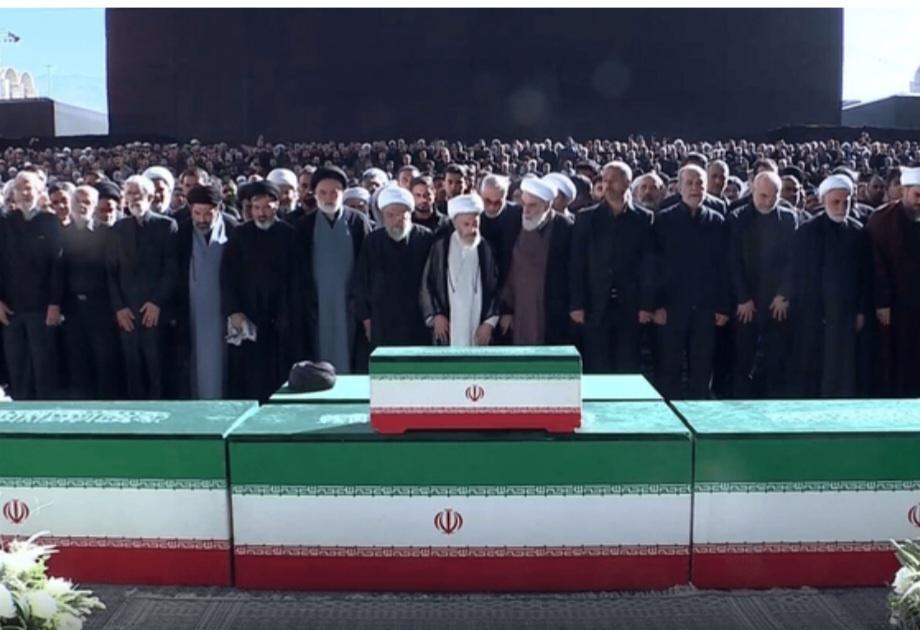
Iran Holds Week Of Ceremonies For Ayatollah Ali Khamenei Funeral In Tehran After US-Israeli Airstrike
Key Takeaways
- Prolonged funeral ceremonies amid US-Israel airstrikes and Iran's war context projected regime unity.
- Quranic recitations served as diplomatic messages to foreign delegations.
- Foreign delegations attended Tehran's funeral, signaling alliances amid regional tensions.
Funeral diplomacy and messaging
Iran began a week of ceremonies for the funeral of Supreme Leader Ayatollah Ali Khamenei in Tehran, with the state framing the mourning as a national duty and a message of unity among supporters of the Iranian government.
“Tehran, Iran – A week of ceremonies for the funeral of Supreme Leader Ayatollah Ali Khamenei has adopted heavy symbolism to promote pro-government religious and political messages”
Al Jazeera reported that Khamenei was supreme leader from 1989 until his death in a US-Israeli airstrike on February 28, with his son Mojtaba Khamenei taking over as head of state in March.

The ceremonies included organised demonstrations and official slogans such as “We must rise,” which Iranian authorities said is based on a Quranic verse calling on Muslims to stand up for a divine cause.
Al Jazeera also said the Supreme National Security Council described the crowd as “crying out two slogans: Resistance against the enemies, and revenge for the blood of Iran’s martyred leader,” as a giant red flag was unfurled over the Grand Mosalla.
The same report said the route for Khamenei’s remains stretched from Qom to Najaf and Karbala in Iraq before burial in Mashhad at the shrine of Imam Reza.
Crowds, leadership absence, and risk
Tens of thousands of mourners packed Tehran on Sunday amid a six-day funeral ceremony for the late Supreme Leader Ayatollah Ali Khamenei, with TIME describing the high-visibility gatherings as a bid to project strength despite war’s “massive economic and political setbacks.”
TIME reported that Khamenei, 86, was killed in the United States and Israeli airstrikes that marked the start of the war with Iran on Feb. 28, and that in the ensuing months fighting claimed the lives of over 50 senior-ranking political and military officials.
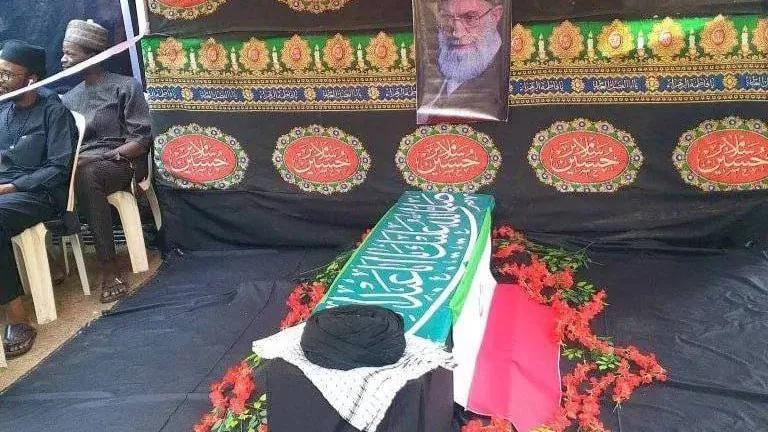
TIME said Iranian media reported that up to 20 million people are expected to attend the funeral proceedings in Tehran, and it noted that most of the nation’s remaining leadership attended, including an appearance by the Islamic Revolutionary Guard Corps Commander-in-Chief, Gen. Ahmad Vahidi.
Yet TIME highlighted that one of Khamenei’s sons, Mojtaba Khamenei, was notably absent from the show of state power, and it quoted Negar Mortazavi saying, “Avoiding a public appearance also prevents projecting an image of vulnerability at a moment when the state is trying to project resilience, unity, and strength.”
TIME also cited security concerns, including a New York Times report that officials were worried an appearance might invite an assassination attempt on Mojtaba, while President Donald Trump told Axios, “They are all there. One shot and we can take them all out.”
Quran verses as coded statecraft
Iran used Quranic recitations during the funeral in Tehran’s Grand Mosalla as foreign delegations paid tributes to Khamenei and his family, with WION describing the verses as a diplomatic showcase that drew distinctions between Iran’s allies and US-backed countries.
“Iran’s funeral diplomacy: The Quran verses that ranked allies, rivals and sent Saudi Arabia a message When the Saudi delegation stepped forward to pay respects at the coffin of the late Supreme Leader Ali Khamenei in Tehran’s Grand Mosalla, the Quran recitation that followed did not go unnoticed”
WION said the Saudi delegation’s recitation was the verse from Al Imran 3:13 about the Battle of Badr, and it described the passage as a reference to Saudi Arabia’s ties with the US and reports suggesting Saudi supported and even wanted the US to attack Iran.
Muslim Network TV reported that as Pakistani Prime Minister Shehbaz Sharif and his delegation entered the prayer hall, the reciter read Surah Al-Isra (17:80): “My Lord, grant me a truthful entrance and a truthful exit, and grant me from Yourself a supporting authority.”
Muslim Network TV said the arrival of the Saudi delegation was accompanied by Surah Aal-e-Imran (3:13): “There was already a sign for you in the two groups that met: one fighting in the way of Allah and the other rejecting faith.”
Middle East Eye described the same Saudi recitation as a reference to Iran’s victory over the US and Israel in their war on the country, and it said the verse was “a clear reference to what many are increasingly calling Iran’s victory over the US and Israel.”
More on Iran
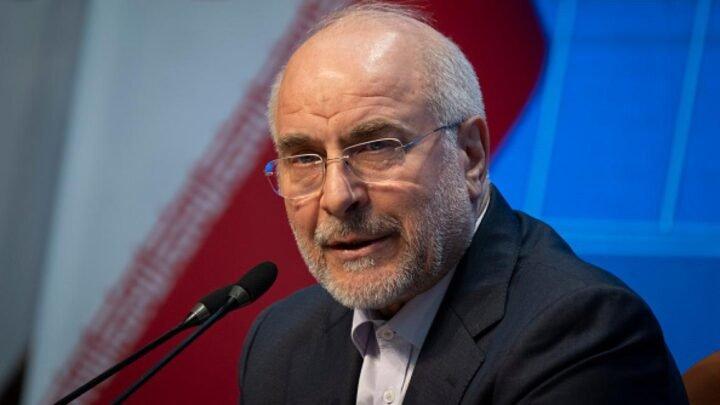
Iran Condemns Donald Trump’s One Shot Threat Against Ali Khamenei Funeral Leaders
11 sources compared
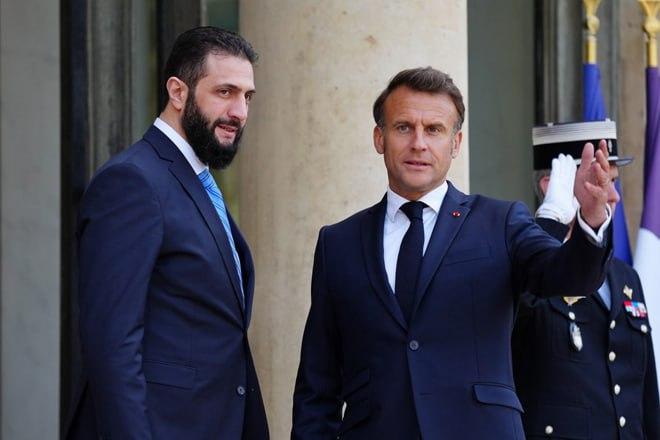
Emmanuel Macron Expected To Visit Damascus To Reinforce Economic Cooperation With Syria
24 sources compared

Trump Tells Axios Netanyahu Knows Who the Boss Is Ahead of White House Meeting
18 sources compared

Dmitry Medvedev Says Iran’s Strait of Hormuz Disruption Equals Nuclear Weapon
10 sources compared