
Iran · 03 July, 2026 · 3 min read
Dmitry Medvedev Says Iran’s Strait of Hormuz Disruption Equals Nuclear Weapon
Medvedev equated Iran's Strait of Hormuz disruption to possession of a nuclear weapon. Bab el-Mandeb Strait described as a thermonuclear weapon and leverage.
Who/what is the 'more powerful' chokepoint besides Hormuz?.
9 of 10 outlets skipped it: hardliners claim an Oman-American corridor via US escort..
10outlets compared
Same story, two versions
tap a side to read it in full
Oz Arab Media
“This comparison suggests a recognition of the geopolitical leverage that Iran holds”Read the original ↗
Türkiye Today and Al Jazeera frame Hormuz as nuclear threat; Oz Arab Media spotlights leverage.
Hormuz framed as nuclear
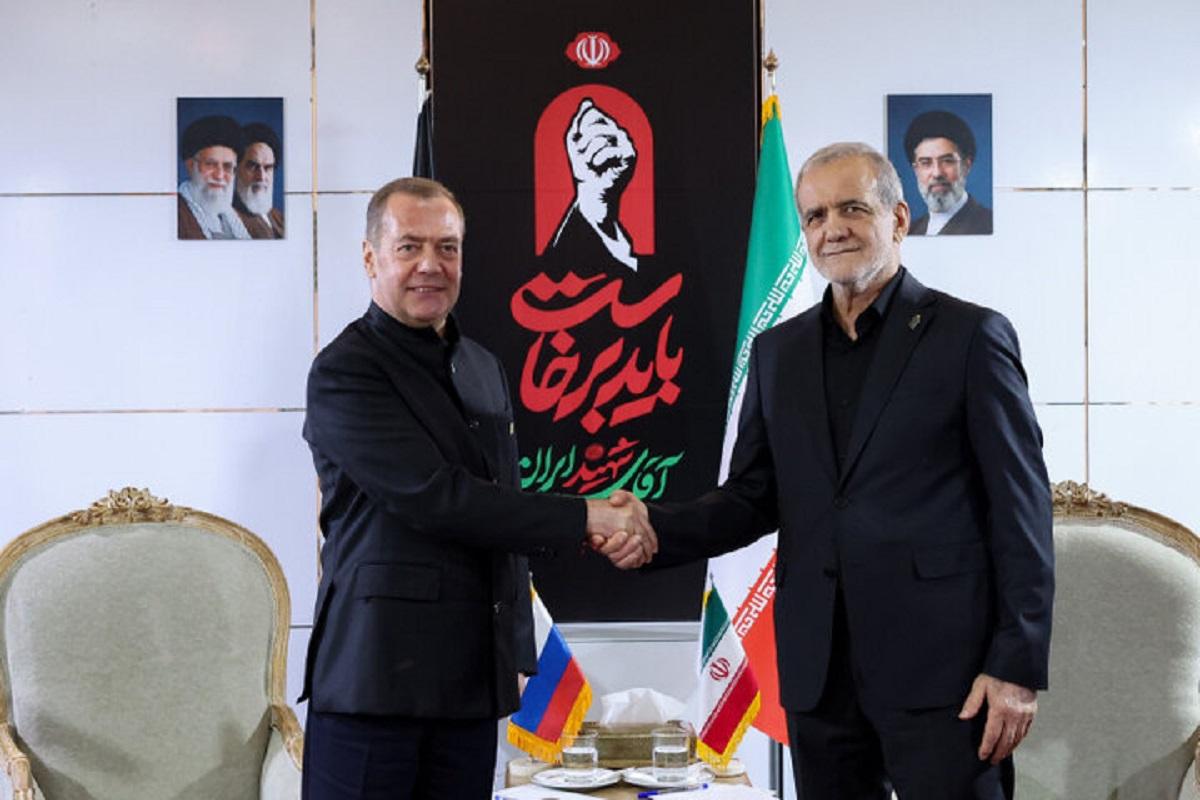
Dmitry Medvedev, deputy chairman of Russia’s security council, said Iran’s ability to disrupt traffic in the Strait of Hormuz is equivalent to possession of a nuclear weapon, in comments made in a video posted to social media as he returned from attending the funeral of Iran’s late Supreme Leader Ali Khamenei. Medvedev told journalists after returning from Tehran, where he represented Russian President Vladimir Putin at the funeral ceremonies of Ayatollah Seyyed Ali Khamenei, that “Iran has found itself another weapon instead of an actual nuclear arm—one that is no less powerful, namely the Strait of Hormuz,” and he linked the claim to Tehran’s demonstrated power by disrupting shipping through the strait during the recent conflict.
He also warned that the Bab el-Mandeb Strait could function as a “thermonuclear weapon” in the event of future military conflicts, creating a situation in which “all oil shipments and other maritime traffic would effectively come to a halt,” according to his remarks. The Kashmir Observer report said Medvedev traveled to Tehran as Putin’s special envoy to deliver Moscow’s official condolences to Iranian President Masoud Pezeshkian and to discuss expanding cooperation under the Russia-Iran Comprehensive Strategic Partnership Agreement.
US strikes and negotiations
In the same set of remarks after his visit to Iran, Medvedev criticized US strikes on Iran, calling them “completely unjustified” and saying they were launched while negotiations were still underway. Medvedev also said “Negotiations are always better than no negotiations,” while cautioning that securing a comprehensive agreement between Tehran and Washington would remain “extremely difficult,” and he pointed to a recently signed Memorandum of Understanding between Iran and the United States as a possible basis for future talks.
The WANA News Agency report said Medvedev acknowledged that not all U.S. officials support lifting sanctions on Iran, even as he argued that the understandings already reached could provide a foundation for future negotiations. WANA also reported that Medvedev discussed with Pezeshkian the idea of creating a “Platform of Sanctioned Countries” to coordinate efforts against what Moscow calls “illegal” restrictions, and it said the proposal could involve Russia, Iran, China and other states facing Western sanctions.
Iranian pushback on navigation
Iranian Deputy Foreign Minister Kazem Gharibabadi said the Strait of Hormuz “is not a stage for extra-regional powers to display military force,” warning against foreign military activity in the waterway.
Gharibabadi wrote on X that “As a responsible power and the guarantor of security in the strait, Iran warns against any military activity in this sensitive waterway,” and he said security in the strait “rests with the littoral states.”
The Türkiye Today report said British Prime Minister Keir Starmer and French President Emmanuel Macron said late Friday they were prepared to help establish a multinational military mission to secure navigation through the Strait of Hormuz, describing it as “a vital artery for the global economy.”
Türkiye Today also reported that a memorandum of understanding between Iran and the United States, brokered under Pakistani mediation, entered into force June 18 after being electronically signed by Pezeshkian and U.S. President Donald Trump, and it said the framework covers a cessation of hostilities, sanctions relief, Iran's nuclear program, the reopening of the Strait of Hormuz and broader regional security arrangements.