Iran01 April, 20267 min read
Iran Launches Missile And Drone Attack On UAE After April 8 Ceasefire
Iran launched missiles and drones at the UAE, first attack since the ceasefire took effect. UAE air defences intercepted 12 ballistic missiles, 3 cruise missiles, and 4 drones.
The National was read line by line by the Watchdog: 5.2. See the score →
Hormuz Escalation After Ceasefire
Iran launched its first missile and drone attack on the United Arab Emirates since a ceasefire with the U.S. took effect on April 8, and it fired two drones at a ship in the Strait of Hormuz, UAE authorities said Monday, as the U.S. military reported that two commercial vessels safely transited the key waterway. CBS News said the U.S. “sunk 7 small Iranian boats” while Iran launched attacks on UAE and ships in the Strait of Hormuz, and it also reported that “Iran launched its first missile and drone attack on the United Arab Emirates since a ceasefire with the U.S. took effect on April 8.” The BBC reported that the UAE accused Iran of “renewed drone and missile attacks,” saying a fire broke out at the oil port of Fujairah after an Iranian attack.
The BBC also said the UAE and South Korea both reported strikes on ships in the vital channel on Monday, while Maersk said one of its US-flagged vessels successfully exited the strait with US military protection under what Trump called “Project Freedom.” In the same reporting stream, ABC News said the U.S. mission to the UAE issued a security alert advising Americans in the country of “potential aerial threats,” and it quoted the U.S. embassy alert dated “On May 4, 2026, the UAE Ministry of Interior issued several public alerts via mobile phone that warned of potential aerial threats.” Across outlets, the pattern of claims and counterclaims centered on whether the ceasefire was being violated, with ABC News recording Trump saying, “[It was] not heavy firing,” when asked if the ceasefire had been violated, and Iran’s Foreign Ministry spokesperson Esmail Baghaei telling Gulf states that Iran had “no animosity” but “had to defend” itself.

Project Freedom and the Boats
The U.S. response to the Strait of Hormuz crisis centered on “Project Freedom,” with multiple outlets describing U.S. escorts, aircraft, and attacks on small boats.
CBS News said the U.S. Central Command provided details on aircraft used to support Project Freedom, including “U.S. Navy F/A-18 Super Hornets launching from USS Abraham Lincoln,” and it reported that “U.S. Navy MH-60 Sea Hawk helicopters and U.S. Army AH-64 Apache helicopters were used to eliminate Iranian small boats threatening commercial shipping.”

CBS News also quoted CENTCOM Commander Adm. Brad Cooper saying, “Over the last 12 hours, we've reached out to dozens of ships and shipping companies to encourage traffic flow through the [Strait of Hormuz], consistent with the President's intent to help guide ships safely through the narrow trade corridor.”
The BBC similarly described Trump’s effort to guide stranded ships out of the Gulf through the “largely closed waterway,” saying the U.S. struck seven Iranian “fast boats” in the Strait of Hormuz and that the UAE and South Korea reported strikes on ships in the channel.
ABC News said Trump stopped short of saying the ceasefire was violated, telling Jonathan Karl, “[It was] not heavy firing,” and it also recorded that U.S. Central Command said U.S. forces fired on “six Iranian fast boats” and intercepted several Iranian missiles and drones.
DW reported that CENTCOM commander Admiral Brad Cooper said the vessels stranded in the Persian Gulf represented “87 countries” and were “merely neutral and innocent bystanders,” while also alleging that Iran “initiated aggressive behavior” in the Strait of Hormuz and saying “we are simply going to respond to that.”
Iran’s Response and the 14-Point Proposal
Iran’s official framing of the Monday attacks emphasized defense and rejected a “military solution,” while also tying the immediate crisis to broader negotiations. ABC News reported that Iran’s Foreign Ministry spokesperson Esmail Baghaei told Gulf states that Iran had “no animosity” toward them but “had to defend” itself, adding, “The only reason we have to target their territories is simply because we had to defend ourselves against an act of aggression by the United States and Israel.” CBS News said the Iranian regime claimed it received a U.S. response to its latest 14-point peace proposal, which it said was aimed at ending the war, not extending the current ceasefire, and it quoted Trump saying over the weekend that he’d likely reject the Iranian proposal because “they have not paid a big enough price.”
CBS News also reported that Iran’s foreign minister Abbas Araghchi said “talks are making progress,” but he criticized the U.S. military’s Project Freedom in the Strait of Hormuz, writing, “Events in Hormuz make clear that there's no military solution to a political crisis,” and adding, “Project Freedom is Project Deadlock.” The same Araghchi language appeared in Australian Broadcasting Corporation’s live updates, which said Araghchi posted on X that “events in the Strait of Hormuz make clear there is "no military solution to a political crisis"” and that “Project Freedom is Project Deadlock.” DW likewise described Iranian state-affiliated media warning the UAE that it could become a target if Emirati authorities “make a misstep,” quoting Tasnim’s warning that “they will learn a lesson they are never forget.”
UAE Air Defenses, Injuries, and Fujairah
UAE officials described Monday’s barrage in terms of intercepted missiles and drones, injuries, and a fire at Fujairah’s oil port, while Iran denied or reframed some U.S. claims. CBS News reported that the UAE’s Ministry of Defense said “Over a dozen missiles were launched from Iran at the United Arab Emirates on Monday,” and it specified that the attack included “12 ballistic missiles, three cruise missiles and four drones,” with “Three people suffered moderate injuries.” The BBC said the UAE’s foreign ministry reported a tanker affiliated with Adnoc was hit in the Strait of Hormuz and that local officials reported “one strike caused a large fire and three injuries at its key oil port of Fujairah,” adding that the UAE called the attacks a “dangerous escalation” and said it reserved the right to respond.
The National reported that the UAE said air defences detected four cruise missiles launched by Iran, and it quoted the UAE’s Ministry of Defence saying “three of the missiles were intercepted "over the country's territorial waters, while the fourth fell into the sea".” The National also said three injured people were Indian citizens and were taken to hospital for treatment, and it quoted the UAE Ministry of Foreign Affairs describing the attacks as an “unacceptable transgression” and saying the UAE “reserved its full and legitimate right to respond.” Khaleej Times and the Kyiv Independent both described the same numerical breakdown for the UAE’s engagements, while ABC News recorded that the UAE said its air defense systems engaged with “12 ballistic missiles, three cruise missiles and four drones” and that the attacks resulted in three moderate injuries.
Diplomacy, Deadlock, and What Comes Next
As the firefight and escort operations continued, the U.S. and Gulf partners moved toward diplomatic measures while European and regional actors reacted to the renewed attacks.
CBS News said U.S. Ambassador to the U.N. Mike Waltz told reporters Monday that the U.S. will be co-drafting a Security Council resolution with Bahrain and its Gulf allies that would “hold Iran to account” for its monthslong chokehold over the Strait of Hormuz.
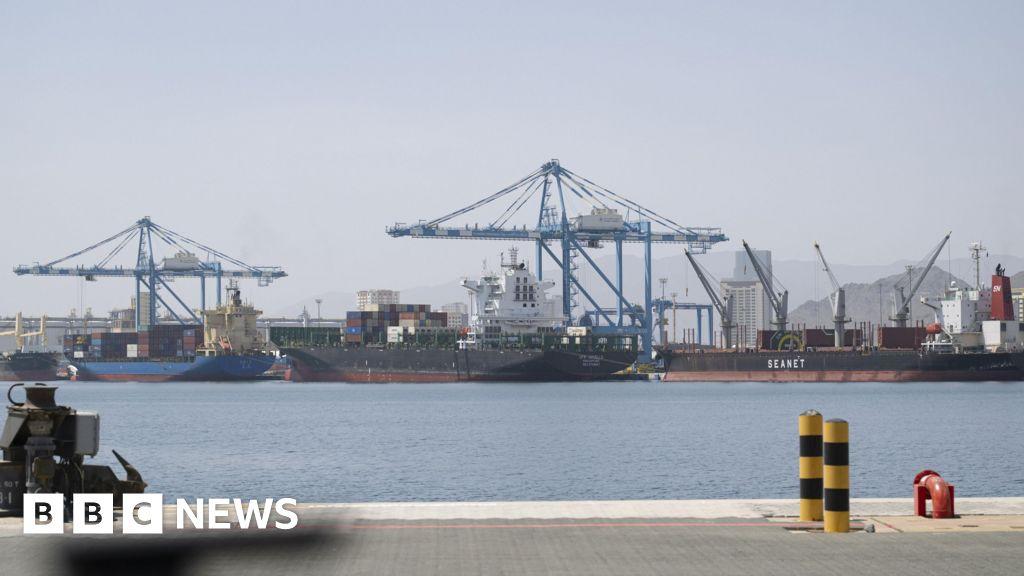
The BBC described the ceasefire context, saying that in early April the U.S. and Iran announced a ceasefire under which Iran ended its drone and missile strikes on Gulf countries including the UAE, but that few vessels have been able to transit the strait since then and the U.S. imposed its own blockade on Iranian ports.
DW added that Germany’s FGS Fulda mine-hunter left port in Kiel in northern Germany bound for the Mediterranean, with the German embassy saying it was pre-positioning so it could reach the Gulf quickly if called upon.
The European Commission president Ursula von der Leyen said Iranian attacks on the UAE on Monday were “a clear violation of sovereignty and international law” and that “These attacks are unacceptable,” adding that “security in the (Gulf) region has direct consequences for Europe.”
The BBC said Trump threatened to use force “if, in any way, this Humanitarian process is interfered with,” and it reported that “An estimated 20,000 seafarers on 2,000 ships have been stuck since the US-Iran war began in February,” underscoring the immediate human and commercial stakes.