
Iran Submits 14-Point Response Via Pakistan to U.S. Proposal Ending War
Key Takeaways
- Iran sent a formal 14-point negotiation plan to Pakistan to end the war.
- The plan aims to end hostilities with the US and resolve all issues.
- Trump said he is not satisfied and reviewing Iran's proposal.
A 14-point reply via Pakistan
Iran submitted a 14-point response to a U.S. proposal to end the war that began with U.S. and Israeli attacks on Iran on February 28, according to the semi-official Tasnim news agency and the state-owned media organization Press TV, as NPR reported.
NPR said the plan’s key points include a demand to resolve all issues and end the war within 30 days, instead of observing a two-month ceasefire as the U.S. had proposed.

The Iranian outlets also listed guarantees against future military aggression, the withdrawal of U.S. forces from Iran's periphery, an end to the naval blockade, the release of frozen Iranian assets, payment of reparations, the lifting of sanctions, an end to fighting in Lebanon, and a new mechanism governing the Strait of Hormuz.
NPR added that it had not independently verified the contents of the proposal, and said an Iranian official told it Friday that the document had been handed to Pakistan without disclosing its terms.
PBS, citing President Donald Trump’s remarks, said Trump was reviewing the new Iranian proposal to end the war and told reporters, "I'll let you know about it later," before boarding Air Force One.
PBS also reported that Tasnim and Fars, believed to be close to Iran's paramilitary Revolutionary Guard, said Iran sent a 14-point proposal via Pakistan in response to a nine-point U.S. proposal.
Anadolu Ajansı similarly reported that Iran submitted a new proposal to Pakistan to resume negotiations with the United States aimed at reaching an agreement to end the war, while noting that the report did not provide details on the content of the new proposal.
Trump rejects and weighs force
Multiple outlets described President Donald Trump’s reaction as rejecting the latest Iranian proposal while he kept open the possibility of further military action.
NPR reported that Trump on Saturday said he is reviewing the new proposal, and it quoted Trump’s earlier Friday comment: "They want to make a deal, I'm not satisfied with it, so we'll see what happens."

PBS, also citing the Associated Press, said Trump told reporters on Saturday, "I'll let you know about it later," and added that "they're going to give me the exact wording now."
The Guardian reported that Trump told reporters, "Right now, we have talks going on, they’re not getting there," and said his options remained "either blast them away or make a deal."
The Guardian also quoted Trump: "They’re asking for things I can’t agree to."
Australian Broadcasting Corporation reported that the White House rejected Iran's latest proposal for negotiations to end the war, put forward through Pakistani mediators on Thursday night, and quoted Trump threatening to "blast them to hell" if a deal is not struck.
The Times of Israel similarly reported Trump said he was dissatisfied with a new ceasefire offer from Tehran and confirmed he had been briefed on ways to "blast the hell out of them" if no deal were reached.
Strait of Hormuz and sanctions pressure
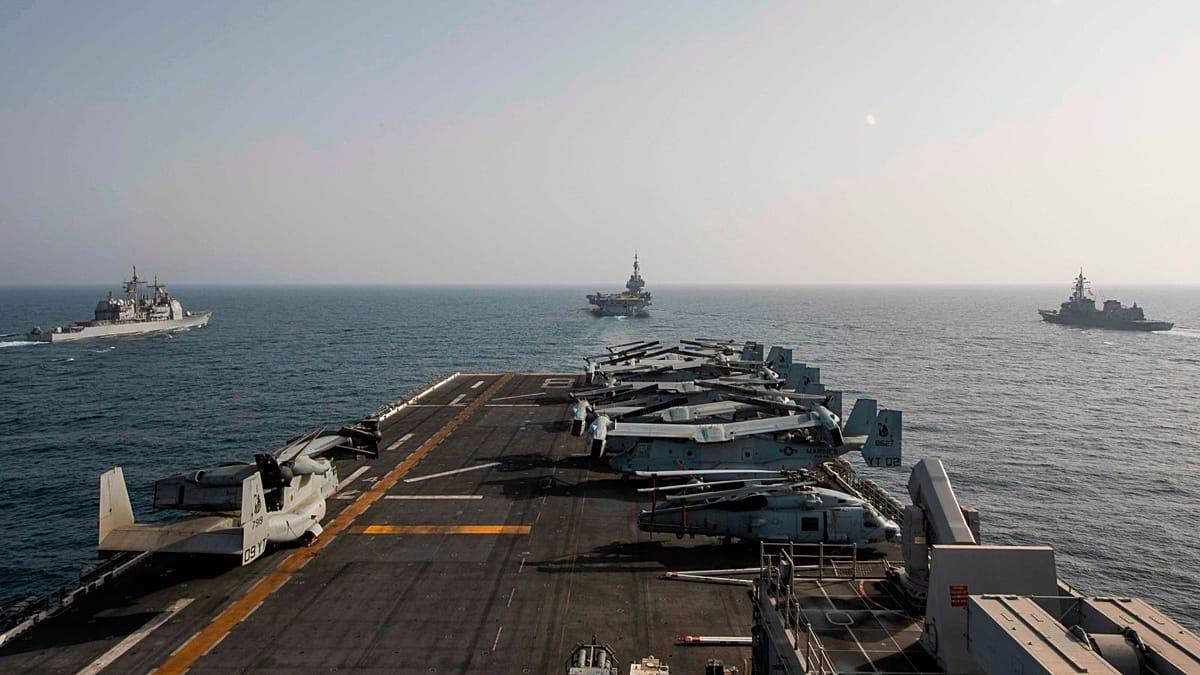
The Strait of Hormuz and the U.S. blockade of Iranian ports formed a central pressure point in the negotiations described by the sources.
“Despite the recent pause in the Iran–U”
NPR said the U.S. previously presented Iran with a 15-point framework demanding, among other things, the complete reopening of the Strait of Hormuz and an end to Iran's nuclear program.
PBS reported that the U.S. warned shipping companies they could face sanctions for paying Iran to pass safely through the Strait of Hormuz, and it added that the U.S. responded with a naval blockade of Iranian ports since April 13, depriving Tehran of oil revenue it needs to shore up its ailing economy.
PBS also said the U.S. Central Command on Saturday said 48 commercial ships have been told to turn back.
The Guardian described a parallel track in which Iran proposed charging fees on vessels passing through the strait as part of a deal to end the war, while the U.S. Treasury Office warned on Friday that any shipping companies that paid tolls to Iran for passage through the strait, including charitable donations to organizations such as the Iranian Red Crescent Society, would risk punitive sanctions.
The Guardian also reported that Iranian state media said Tehran handed the offer to Pakistan on Thursday night, and it described the dispute over lifting blockades as the next task: "The next task was to convince both sides to simultaneously lift their blockades on the strait of Hormuz."
The Times of Israel added that talks faltered over Iran’s nuclear program and control of the Strait of Hormuz, which it said was under competing Iranian and U.S. naval blockades, and it reported that the closure of the Strait of Hormuz caused unprecedented disruption to energy markets, choking off 20% of the world’s oil and gas supplies.
War powers deadline and ceasefire logic
Beyond the proposals themselves, the sources described a legal and political fight over timing and whether the U.S. must seek congressional authorization to continue hostilities.
Australian Broadcasting Corporation said Trump was moving to skirt a time limit on the use of force in Iran without congressional approval, arguing that hostilities had "terminated" due to a ceasefire announced on April 8.
It reported that Friday was the deadline for the U.S. to end the war or for Trump to make the case to Congress for extending it under the 1973 War Powers Resolution, and it said Congress must declare war or authorize the use of force within 60 days of hostilities beginning.
The Guardian reported that in Washington, Trump waved off a Friday deadline imposed by the war powers act requiring the U.S. president to seek congressional authorisation to continue hostilities beyond 60 days.
It said Trump claimed in a letter to congressional leaders that the White House did not need to seek approval because the ceasefire agreement forged with Iran had in effect paused the 60-day clock, an interpretation disputed by many legal experts.
The Times of Israel similarly reported that a senior Trump administration official said Friday that the ceasefire "terminated" hostilities between the US and Iran for the purposes of the 1973 US War Powers Act.
The Times of Israel also described Iran’s judiciary chief Gholamhossein Mohseni Ejei insisting in a video statement Friday that the U.S. achieved "nothing" during the war and that Tehran was open to negotiations but would not "back down".
Narges Mohammadi and the human stakes
While the diplomatic and military track centered on proposals and the Strait of Hormuz, PBS also reported on the health crisis of imprisoned Iranian rights lawyer Narges Mohammadi, describing it as at "very high risk".
“What are the ten points Iran has put forward, and will the United States agree to them”
PBS said her foundation and family reported Saturday that Iran's Intelligence Ministry was opposing her transfer to Tehran for treatment by her own doctors, and it said Mohammadi, a Nobel Peace Prize laureate in her early 50s, was urgently transferred to a hospital in Zanjan in Iran's northwest on Friday after a cardiac crisis and fainting.
It reported that medical teams in Zanjan requested her records before performing any treatment while recommending she be transferred to Tehran, and it said her Paris-based husband, Taghi Rahmani, stated in a voice message shared with The Associated Press by the foundation that the Intelligence Ministry opposed the transfer for angiography, or imaging of the blood vessels.
PBS also reported that the Norwegian Nobel Committee urged Iranian authorities to immediately transfer Mohammadi to her medical team, saying, "She has the mental resilience for imprisonment, but her body does not have the readiness. The Ministry of Intelligence wouldn't even mind if (she) died," as her husband told Sky News.
PBS further reported that before her arrest on Dec. 12, Mohammadi had been serving a sentence of 13 years and nine months on charges of collusion against state security and propaganda against Iran's government, but had been released on furlough since late 2024 over medical concerns.
It said her legal team is pursuing the matter with the General Prosecutor's office, the foundation said.
In the broader negotiation context, PBS also described U.S. warnings to shipping companies and the naval blockade since April 13, while the Guardian and Times of Israel described the stakes for global energy markets and the risk of escalation if talks fail.
More on Iran
Pentagon Says U.S. Blockade In Strait Of Hormuz Cost Iran $4.8 Billion In Lost Oil Revenue
28 sources compared

Reuters Investigation Links Nobitex Founders Ali And Mohammad Kharrazi To Sanctioned Entities
11 sources compared

Donald Trump Reviews Iran’s 14-Point Proposal, Threatens New Strikes If Tehran Misbehaves
31 sources compared

Donald Trump Reviews Iran’s 14-Point Peace Proposal, Says Iran Has Not Paid Enough Price
26 sources compared