Iran · 16 August, 2026 · 3 min read
Iran And Tajikistan Form Working Group To Export Surplus Oil Products And Supply Crude
Iran and Tajikistan formed a working group to manage surplus oil exports and crude supply. They will expand transport and logistics cooperation, including rail, road, and ports.
Energy trade mechanism vs transport diplomacy emphasis.
5 of 7 outlets skipped it: annual volume: around 800,000 metric tons currently transported.
9outlets compared
Same story, two versions
tap a side to read it in full
Tasnim and Mehr foreground transport; Tehran Times foregrounds oil-product export mechanism.
Energy working group in Tehran
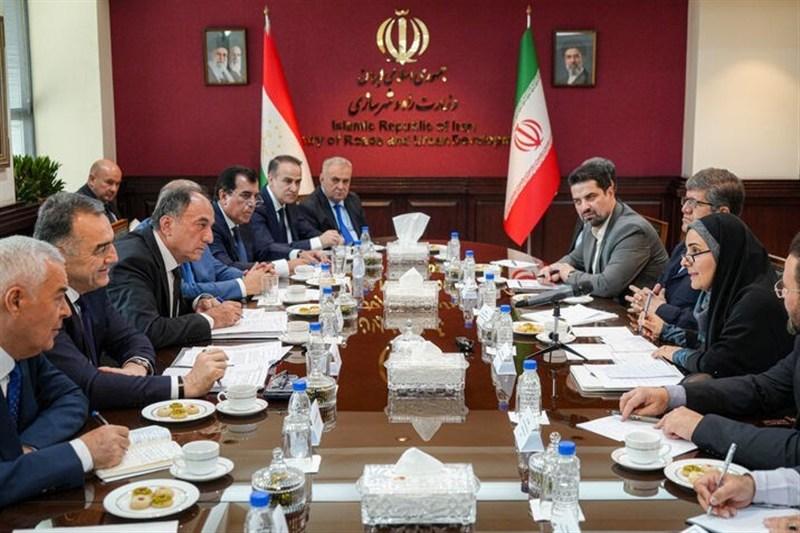
Iran and Tajikistan agreed to establish a working group to examine mechanisms for exporting Iran's surplus oil products and supplying crude oil needed by Tajikistan's refineries, with the agreement announced on August 15 following high-level talks in Tehran. Iran's Oil Minister Mohsen Paknejad met with Dalir Juma, Tajikistan's Minister of Energy and Water Resources, and Azim Ibrahim, Tajikistan's Minister of Transport, to review cooperation capacities. Paknejad said the discussions focused on exporting Iran's surplus oil products to help address issues Tajikistan is encountering, and he described the meeting as "a very good opportunity" to explore partnership potential with Tajikistan.
He also said the basis was to draft a long-term contract framework with Tajikistan regarding fuel supply and the supply of crude oil needed by its refineries, while Tajik Minister Dalir Juma emphasized that Tajikistan is seeking to increase imports of oil products from Iran. The Tehran talks were framed as part of accelerated engagements between the two Persian-speaking nations over the past year, with Paknejad noting it was the third time in two years he had met Tajikistan's Energy Minister in Tehran.

Transport diplomacy and rail links
Alongside the energy cooperation, Iran’s transport diplomacy featured prominently in Tehran meetings, where Farzaneh Sadegh met Tajik Minister of Transport Azim Ibrohim and Minister of Energy and Water Resources Dalir Jum’a. Sadegh pointed to an increase in international rail freight between Iran and Tajikistan in 2025 compared with the previous year, and she said the growth reflects the depth of bilateral relations and the administration’s emphasis on transport diplomacy. She announced that the Chabahar-Zahedan railroad link would become operational within the next three months, noting that track-laying on the route has been completed, and she said Chabahar could help boost Tajikistan’s logistics hub and provide it with access to open waters.
Sadegh also called for the immediate resolution of road-transport problems between the two countries and urged Iran’s Civil Aviation Organization to follow up on increasing air connections, promoting tourism, and examining reciprocal discounts. In the same Tehran setting, the Trend News Agency said the two sides stressed the need to accelerate and implement cooperation in rail, road, air transport, port and logistics sectors, with Tajik Minister of Energy and Water Resources Daler Juma and Minister of Transport Azim Ibrahim arriving in Tehran on August 15.
.jpg&w=1920&q=75)
Foreign ministry ties and implementation
Iran’s Foreign Minister Seyed Abbas Araghchi met in Tehran with Dalir Jum‘a and Azim Ibrohim, Tajik ministers who had traveled to Tehran for talks and consultations with their counterparts. Araghchi expressed appreciation to the government and people of the Republic of Tajikistan for their valuable support during the American-Zionist military aggression against Iran, and he emphasized that Iran and Tajikistan, as heirs to the ancient Persian civilization, have always stood by one another. The meeting also included Farrukh Sharifzoda, Deputy Foreign Minister of Tajikistan, and the Tajik ministers voiced satisfaction with the talks while voicing the hope that, with the formation of a joint working group and the agreed mechanisms, the understandings reached—especially in the areas of energy and transport—would be implemented.
In parallel, Iran’s Oil Ministry Website reporting via IranOilGas said Tajikistan plans to expand its infrastructure and logistics capacity to increase the volume of crude oil and petroleum products transported between Iran and Tajikistan, and it put the current figure at around 800,000 metric tons of petroleum products transported annually. That same report said the volume could increase significantly following the launch of a joint working group, with a joint expert group to assess technical issues and draft a framework for a long-term agreement covering fuel and crude oil supplies.