Iran Threatens To Close Strait Of Hormuz After U.S. And Israel Strikes In Lebanon
Key Takeaways
- Iran threatens to close the Strait of Hormuz amid Israeli strikes in Lebanon.
- Iranian delegation arrives in Switzerland as talks with the US continue.
- US denies Hormuz closure; negotiations progress toward a framework.
Hormuz dispute and talks
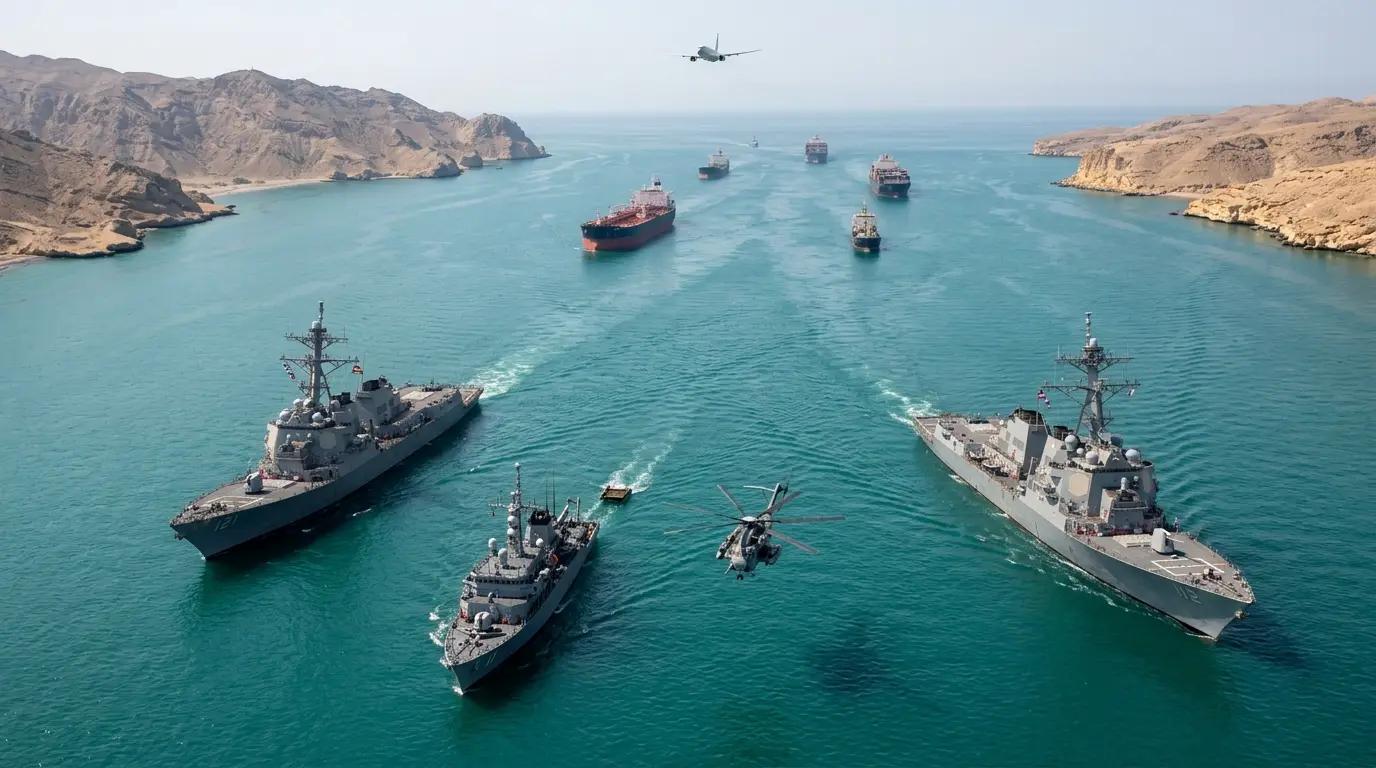
Iran said it would close the Strait of Hormuz again after accusing the U.S. and Israel of violating a memorandum of understanding tied to Israeli strikes in Lebanon, while U.S. Central Command said traffic continued to flow and that U.S. forces were monitoring the situation.
U.S. President Donald Trump also threatened to impose U.S. tolls in the strait if a final deal with Iran is not reached in 60 days, framing the fees as “services rendered as the Guardian Angel.”

Vice President JD Vance departed for Switzerland to take part in direct long-term peace talks with Iran, and he told reporters he hoped to make progress on “the nuclear issue” and the “Lebanon ceasefire issue.”
The BBC reported that an Iranian delegation led by Parliamentary Speaker Mohammad Bagher Ghalibaf landed in Switzerland ahead of further talks with the U.S., with the Iranian state media description focused on implementation rather than beginning a second phase.
The CBS News live updates said the talks were set to be held at the Bürgenstock Resort in Switzerland, where the resort told CBS News it would remain closed to the public through Tuesday.
Competing claims and mediators
U.S. and Iranian claims on control of the Strait of Hormuz diverged sharply, with CENTCOM spokesperson Capt. Tim Hawkins saying, “Iran does not control the Strait of Hormuz. Traffic continues to flow.”
Iran said it was shutting down commercial traffic in the strait due to a violation of the memorandum of understanding, and the Islamic Revolutionary Guard Corps warned vessels not to approach or their “security could be at risk.”

CNN said the talks were set for Sunday in the Swiss mountain resort of Bürgenstock, and it described Iran’s delegation as led by Mohammad Bagher Ghalibaf while warning that talks “won’t advance without first addressing Lebanon.”
CNN also quoted an Iranian official saying ending the conflict in Lebanon was “the most important item on the Iranian delegation’s agenda,” and it described the U.S. as setting up the structure of negotiations with Iran.
In parallel, CBS News said Special envoys Steve Witkoff and Jared Kushner arrived in Switzerland early Saturday, and it described Qatar and Pakistan as mediators participating in the technical-level process.
Political pressure and next steps
As the U.S.-Iran memorandum of understanding moved into a 60-day negotiating window, Senate Republicans criticized the deal’s terms, with Sen. Bill Cassidy calling it “the worst foreign policy blunder in decades.”
“Tehran, Iran – Iran Supreme Leader Mojtaba Khamenei’s reservations about his country’s interim peace deal with the United States have emboldened the country’s hardline political grouping, which opposes any concessions with Washington”
USA TODAY reported that Sen. Roger Wicker said a proposed $300 billion economic development fund for Iran would make similar payoffs under Barack Obama’s 2015 deal “look like a pittance by comparison,” while JD Vance pushed back by saying, “I think that he's wrong on this.”
The Guardian described Israelis reacting with anger and betrayal to the ceasefire deal, quoting Avi Perez saying, “We were betrayed by President Trump,” and quoting Daniel Dorfmann saying, “It’s a big mistake.”
The Washington Post reported U.S. intelligence agencies warned that Israeli Prime Minister Benjamin Netanyahu is likely to take steps that will undermine President Donald Trump’s effort to reach a lasting peace deal with Iran.
Al Jazeera reported that Iran Supreme Leader Mojtaba Khamenei’s reservations emboldened hardline opposition, and it quoted a written statement attributed to him saying he granted permission only after “explicit acceptance of responsibility” by President Masoud Pezeshkian.
More on Iran

Iran Closes Strait of Hormuz After Israeli Strikes on Lebanon Ahead of U.S.-Iran Talks in Switzerland
12 sources compared

Donald Trump Says No Tolls in Strait of Hormuz for 60 Days Unless Imposed by USA
10 sources compared
Iran Closes Strait of Hormuz After Israeli Attacks in Lebanon, Trump Threatens US Tolls
10 sources compared
Trump Escalates Feud With Italy’s Giorgia Meloni Over Disputed G7 Photo Claim
13 sources compared