
Iran Warns US as Trump Rejects Proposal to Reopen Strait of Hormuz
Key Takeaways
- Iran delivered a new peace proposal to the United States via Pakistan mediator.
- Trump said he is not satisfied with Iran's latest proposal.
- Ceasefire talks mediated by Pakistan are stalled amid frozen negotiations.
Ceasefire, proposals, and threats
Iran and the United States traded competing messages over a stalled peace process as a ceasefire remained in place and both sides continued to circulate proposals through mediator Pakistan.
Türkiye Today reported that Deputy Foreign Minister Kazem Gharibabadi told diplomats in Tehran that “the ball is in the United States’ court to choose the path of diplomacy or the continuation of a confrontational approach,” adding that Iran was “prepared for both paths.”

The same report cited Mohammad Jafar Asadi, a senior figure in Iran’s military central command, saying “a renewed conflict between Iran and the United States is likely.”
In parallel, Reuters through Mint described how a senior Iranian official said the latest proposal would “reopen shipping in the Strait of Hormuz and lift the US blockade on Iran,” while “postponing discussions on Tehran's nuclear programme.”
Reuters also framed Trump’s reaction as rejection, with Mint quoting Trump’s line that he was “unhappy” and “not satisfied” with the proposal and that “They want to make a deal, but I’m not satisfied with it.”
Australian Broadcasting Corporation reported that the White House rejected Iran’s latest proposal and that Trump threatened to “blast them to hell” if a deal was not struck, while also saying “At this moment I'm not satisfied with what they're offering.”
Across the reporting, the ceasefire context remained consistent: the war launched by the United States and Israel on February 28 had been “on hold since April 8,” and only “one failed round of direct talks has taken place” between Iranian and US representatives, with the next steps hanging on whether negotiations could restart.
What the proposals would change
The competing drafts and counter-drafts described in the reporting centered on the Strait of Hormuz, the US blockade, and how to sequence nuclear discussions.
Mint reported that a senior Iranian official said the proposal would end the US-Iran war with a guarantee that “Israel and the US would not attack again,” and that Tehran would open the Strait of Hormuz while Washington would lift its blockade.

Under that framework, Mint said future talks would be held on “curbs to Iran's nuclear programme in return for the lifting of sanctions,” while Iran demanded Washington “recognise its right to enrich uranium for peaceful purposes, even if it agrees to suspend it.”
Türkiye Today added that Iran delivered a new draft proposal to mediator Pakistan on Thursday evening, with the contents “not detailed,” and that the White House declined to provide details about Iran’s latest proposal.
BSS/AFP reported that the text of the proposal was handed to Islamabad on Thursday evening, with negotiations “frozen despite a weeks-long ceasefire,” and that “Details of the new Iranian proposal were not immediately available.”
Australian Broadcasting Corporation noted that Trump did not specify what he was unsatisfied with, saying “No details about the new proposal were included in Iranian media reports and Mr Trump did not specify what he was unsatisfied with in the offer.”
In parallel, multiple outlets referenced Axios reporting about US envoy Steve Witkoff submitting amendments that would “put Tehran’s nuclear program back on the negotiating table,” including a demand that Iran not move enriched uranium from sites bombed during a brief war last year or resume activity there while talks continue.
Domestic politics and war powers
As the diplomatic process stalled, the reporting also emphasized a parallel political and legal fight in Washington over whether Trump could continue the war without congressional authorization.
CNBC reported that Trump told Congress on Friday that hostilities in Iran “have terminated” since he imposed a two-week ceasefire on April 7 that has been extended, and that the claim came on what would have been a deadline under the War Powers Resolution of 1973.
CNBC said Friday marked 60 days since the war began in late February, and it described Trump’s letters to congressional leaders as aimed at discouraging lawmakers from restricting military action.
CNBC quoted Trump’s letters that “There has been no exchange of fire between United States Forces and Iran since April 7, 2026,” and that “The hostilities that began on February 28, 2026, have terminated.”
It also reported Defense Secretary Pete Hegseth’s view that the countdown clock “pauses or stops in a ceasefire,” while Sen. Tim Kaine said, “I do not believe the statute would support that.”
Australian Broadcasting Corporation similarly described the deadline for the US to end the war or make the case to Congress for extending it under the 1973 War Powers Resolution, and it said Congress must declare war or authorize the use of force within 60 days of hostilities beginning.
Türkiye Today added a separate layer by reporting that lawmakers were debating whether Trump had breached a deadline to seek congressional approval for the war, while administration officials said the ceasefire pauses a 60-day limit after which congressional authorization would be required, and opposition Democrats disputed that claim.
Voices from Tehran and Washington
The reporting assembled a set of direct statements from Iranian officials, US officials, and political figures that repeatedly tied diplomacy to coercion and sequencing.
Türkiye Today quoted Deputy Foreign Minister Kazem Gharibabadi saying Iran was “prepared for both paths,” and it cited Mohammad Jafar Asadi warning that “a renewed conflict between Iran and the United States is likely.”
It also quoted Iran’s judiciary chief Gholamhossein Mohseni Ejei saying Tehran had “never shied away from negotiations,” but would not accept the “imposition” of peace terms.
Mint, drawing on Reuters, described an unnamed senior Iranian official saying the proposal was “a significant shift aimed at facilitating an agreement,” and it quoted the official’s view that negotiations over the nuclear issue would be moved to a “final stage.”
On the US side, Mint quoted Trump saying “At this moment I’m not satisfied with it,” and it also included Trump’s line that “They’re asking for things I can’t agree to.”
Australian Broadcasting Corporation added Trump’s warning that “I'm not sure if they ever get there,” and it reported that he refused to say whether he would launch more strikes if a deal was not struck.
CNBC, meanwhile, quoted Trump’s letters and also recorded Trump’s claim that hostilities had “terminated,” while also reporting that Sen. Chuck Schumer called the claim “bulls---.”
Stakes: Hormuz, sanctions, and shipping
The stakes described across the reporting were anchored in the Strait of Hormuz, the US counter-blockade, and the economic pressure on both sides.
“News Flash TEHRAN, May 2, 2026 (BSS/AFP) - Iran delivered a new proposal for peace talks with the United States via mediator Pakistan, state media reported Friday, with negotiations between the two sides frozen despite a weeks-long ceasefire”
Türkiye Today said Iran had maintained control over the strait since the war began, restricting major flows of oil, gas and fertilizer, while the United States imposed a counter-blockade on Iranian ports.
It also reported that news of Iran’s new proposal briefly pushed oil prices down nearly 5%, though prices remained about 50% above pre-war levels as the Strait of Hormuz remained closed.
BSS/AFP similarly said Iran maintained its stranglehold on the Strait of Hormuz, cutting off “vast amounts of oil, gas and fertiliser,” while the US imposed a counterblockade on Iranian ports, and it reported that optimism sent oil prices falling by nearly five percent for West Texas Intermediate.
BSS/AFP also said inflation has risen past 50 percent in recent weeks and that on Thursday the US military said its blockade had stopped Iran from exporting $6 billion worth of oil.
In the diplomatic arena, BSS/AFP described how an EU official told AFP that Kaja Kallas had spoken with Abbas Araghchi by phone Friday about efforts to reopen the strait, and it quoted Tehran resident Amir saying the stalemate “feels like we are stuck in purgatory.”
The reporting also described US efforts to restart shipping through an international coalition, while French Foreign Minister Jean-Noel Barrot insisted the US mission was “not of the same nature as the one we established,” and would serve as “a sort of complement.”
More on Iran
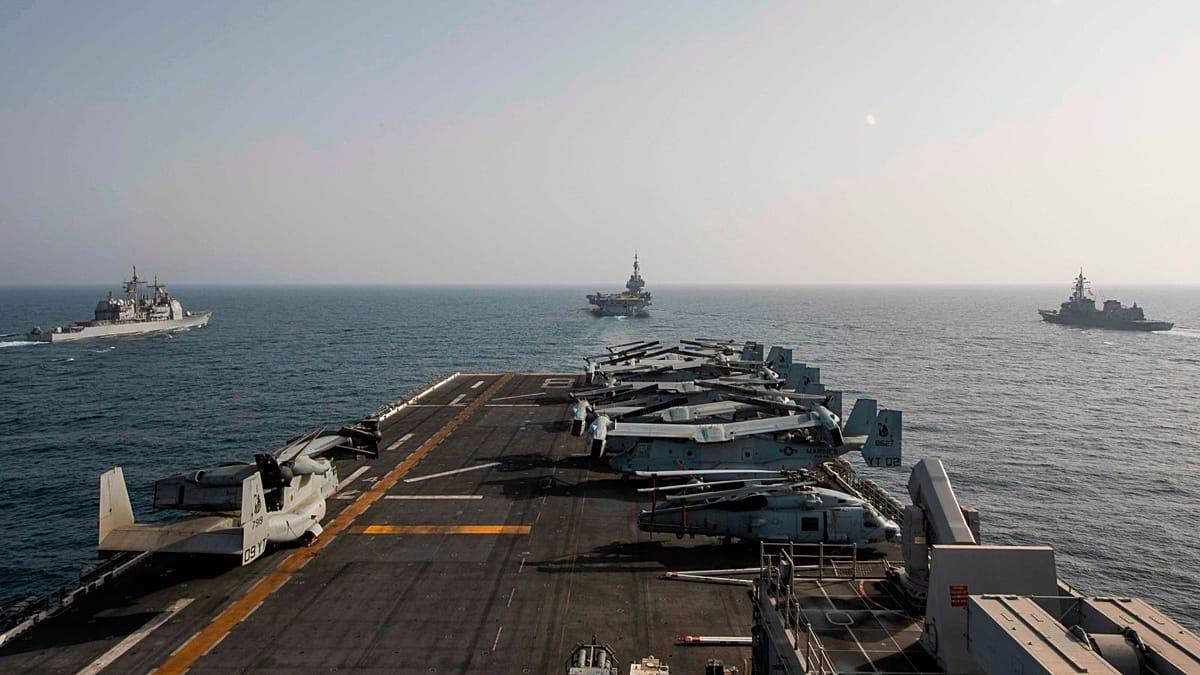
Pentagon Says U.S. Blockade In Strait Of Hormuz Cost Iran $4.8 Billion In Lost Oil Revenue
28 sources compared

Reuters Investigation Links Nobitex Founders Ali And Mohammad Kharrazi To Sanctioned Entities
11 sources compared

Donald Trump Reviews Iran’s 14-Point Proposal, Threatens New Strikes If Tehran Misbehaves
31 sources compared

Donald Trump Reviews Iran’s 14-Point Peace Proposal, Says Iran Has Not Paid Enough Price
26 sources compared