Iran23 April, 20266 min read
Iranian Forces Seize MSC Francesca and Epaminondas, Take Them to Bandar Abbas
IRGC seized the MSC Francesca and Epaminondas near Hormuz and towed them to Bandar Abbas Trump ordered the Navy to shoot minelaying boats in the Strait of Hormuz
dw was read line by line by the Watchdog: 5.9. See the score →
Seizures Near Hormuz
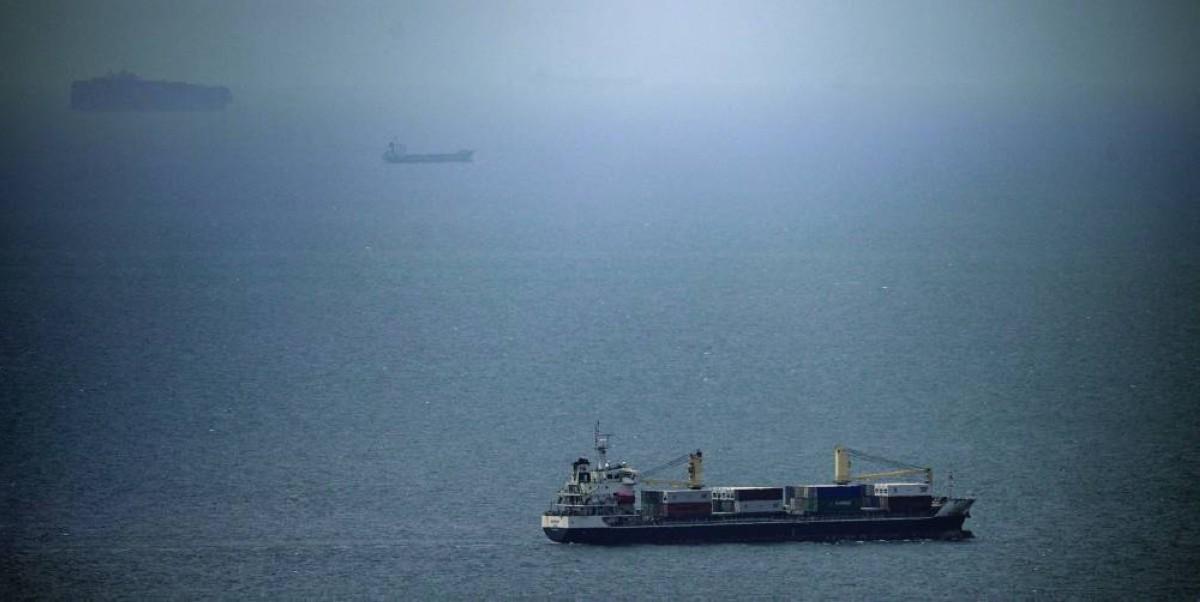
Iranian forces seized two container ships in the Strait of Hormuz and took them toward the port of Bandar Abbas, according to Reuters reporting cited by Fox News and also echoed by Report.az. The ships were identified as the MSC Francesca and the Epaminondas, and Iran’s Islamic Revolutionary Guard Corps claimed on Wednesday that the vessels were operating without proper authorization and had tampered with navigation systems, accusations that Reuters said could not be independently verified. Fox News reported that the ships were managed by Mediterranean Shipping Company (MSC) and that there was a combined 40 crew onboard, with the ship anchored nine nautical miles from the Iranian coast.
A relative of a captive onboard one of the ships told Reuters that "Some 20 Iranians armed to the teeth stormed the ship" and that "Sailors are under Iranians' control, their movements on the ship are limited, but the Iranians are treating them well." Montenegro’s minister of maritime affairs, Filip Radulovic, was quoted by Reuters as saying, "Negotiations between MSC and Iran are ongoing, our sailors are fine," and Report.az added that four sailors on the MSC Francesca including its captain are from Montenegro. Croatia’s foreign ministry confirmed that two Croatians were also aboard, while Report.az said full details on the crew of the Panama-flagged ship had not been made available.

U.S. Blockade and Mines
The Iranian seizures unfolded during a broader U.S.-Iran naval standoff over the Strait of Hormuz, with both sides imposing competing blockades and keeping tanker traffic at a near standstill, according to CNBC and The Guardian.
CNBC reported that Brent oil rose above $100 per barrel again as tanker traffic through the strait remained at a near standstill, and it said that two cargo vessels, but no tankers, had crossed the strait so far Thursday based on ship tracking data from LSEG.

The Guardian reported that Trump claimed the U.S. had “total control over the strait of Hormuz” and pointed to a U.S. report warning it could take six months to clear the strait of mines.
In that same reporting, the Pentagon’s warning said approximately 20 mines were thought to have been placed in the strait, with some deposited by small boats and others manoeuvred into place remotely, making them harder to locate.
The Guardian also quoted Trump’s Truth Social post saying, "We have total control over the strait of Hormuz. No ship can enter or leave without the approval of the United States navy. It is ‘Sealed up Tight,’ until such time as Iran is able to make a DEAL!!!" and it added that Trump ordered the U.S. navy “to shoot and kill” any boat mining the waterway, with “There is to be no hesitation,” said Trump.
Forbes and AP further described the enforcement posture: Forbes said the Defense Department statement on X described the seizure of stateless vessel M/T Majestic X as “transporting oil from Iran, in the Indian Ocean,” and AP said the U.S. military seized another tanker associated with smuggling Iranian oil and released video footage of U.S. forces on the deck of Majestic X.
Iran Calls It Piracy
Iran characterized the U.S. capture of an Iranian-linked ship as “piracy” and framed its own seizures as responses to violations of maritime regulations, according to Al Jazeera. Al Jazeera reported that Iran responded to the U.S. capture of one of its tankers close to the Strait of Hormuz earlier this week by capturing two foreign commercial vessels on Wednesday and moving them to its coast. It said Iran called the U.S. attack on its ship by the US an act of “piracy” and, on Wednesday, said the two tankers it had seized had violated maritime regulations, according to Iranian state media.
Reporting from Tehran, Al Jazeera’s Tohid Asadi said: “This is in line with what we heard from the IRGC [Islamic Revolutionary Guard Corps] previously, saying that any passage of ships, vessels or oil tankers through the Strait of Hormuz should be with the permission and coordination of the IRGC.” Al Jazeera also described the earlier U.S. seizure of the Iranian-flagged container ship Touska, saying the U.S. military fired on and then seized the Touska close to the Strait of Hormuz on Monday as it was en route to the Iranian port of Bandar Abbas. It quoted CENTCOM’s account that “American forces issued multiple warnings and informed the Iranian-flagged vessel it was in violation of the US blockade,” and it said that after the crew failed to comply over a six-hour period, “Spruance directed the vessel to evacuate its engine room” before the U.S. destroyer fired.
Ceasefire, Talks, and Leadership
The seizures and the mine-clearing warnings were occurring alongside ceasefire diplomacy and disputes over whether Iran would attend talks, as described by The Guardian and The Washington Post. The Guardian said Trump’s comments on Thursday came after the U.S. special forces boarded a stateless oil tanker in the Indian Ocean, with the Pentagon claiming it was carrying Iranian crude oil, and it said the operation took place hours after Iran’s seizure of the two container ships. It also reported that on Thursday night Trump was asked how long he was willing to wait for a peace deal with Iran and he replied: “Don’t rush me.”
The Guardian further said Iran refused to attend peace talks in Pakistan, a snub that Trump attributed to a lack of consensus in Tehran on negotiating strategy. The Washington Post described the diplomatic sequence in Islamabad, saying Trump extended his ceasefire with Iran indefinitely on Tuesday night and that a U.S. delegation led by Vice President JD Vance and a high-level team of Iranian officials were set to travel to Islamabad for a second round of face-to-face negotiations. The Post said Iranian officials informed Pakistani mediators at the last minute that they would not attend so long as a U.S. blockade of the strait continues, and it quoted Iran’s Foreign Ministry spokesman Esmaeil Baqaei saying, “Up to this moment, no decision has been made regarding participation in the negotiations,” and that the reason is “completely clear” and linked to “contradictory” messages from the Trump administration.

Global Impact and Enforcement
The standoff’s consequences were described in terms of shipping disruption, economic leverage, and enforcement actions that continued even during the ceasefire period.
“It is unclear how long the ceasefire can hold before the naval standoff between the U.S. and Iran turns into a shooting war again.”
CNBC said the fragile truce between Washington and Tehran had silenced – for now – the bombs, missiles and drones that caused death and destruction across the Middle East earlier in the war, but it said the conflict evolved into a confrontation between naval blockades as the U.S. and Iran tried to gain economic leverage over each other.
It reported that Iran continues to demand that ships obtain its permission to transit the strait, while President Donald Trump claimed the U.S. has "total control" over the sea lane and that the U.S. Navy maintained its blockade of Iranian ports and vessels.
CNBC also said it was unclear how long the ceasefire can hold before the naval standoff turns into a shooting war again, and it reported that Trump said he ordered the U.S. Navy to "kill any boat" that is laying mines in the strait.
AP described the latest seizure as part of “global maritime enforcement” and said the Defense Department released video footage of U.S. forces on the deck of Majestic X, with a Pentagon statement saying, “We will continue global maritime enforcement to disrupt illicit networks and interdict vessels providing material support to Iran, wherever they operate.”
AP also quantified the broader economic disruption, saying the standoff effectively choked off nearly all exports through the strait with no end in sight, and it reported that the price of Brent crude oil nosed over $100 per barrel, marking a 35% increase from prewar levels.