Iran-Israel24 September, 20252 min read
Iranian President Pezeshkian Declares at UN That Iran Does Not Seek Nuclear Weapons
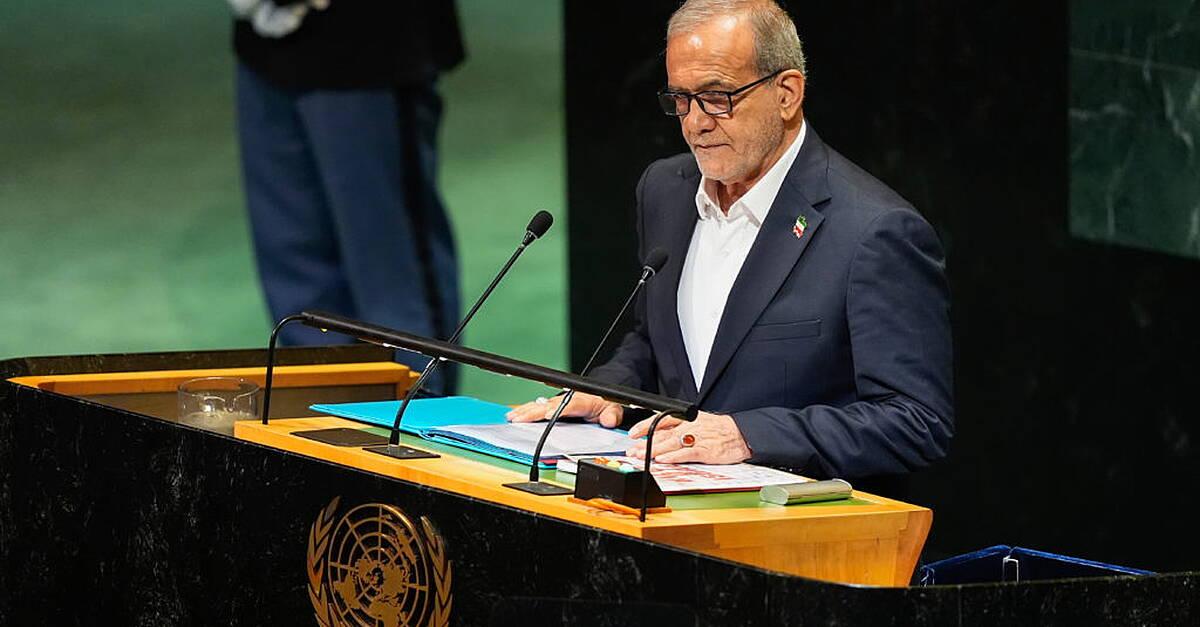
Iranian President Masoud Pezeshkian declared Iran will never seek nuclear weapons. Iran condemned Israeli and U.S. attacks on its nuclear sites as damaging international trust.

35 outlets told this the same way.
Outlets did split on U.S. Intercepts Iran Message Activating Sleeper Cells After U.S.-Israel Strike Kills Khamenei →
Iran's Nuclear Program Statement
Iranian President Masoud Pezeshkian addressed the United Nations General Assembly, firmly stating that Iran does not seek to develop nuclear weapons. This declaration comes amid heightened tensions following recent military actions by Israel and the United States, as well as impending sanctions from European countries.
“Iranian President Masoud Pezeshkian addressed the UN General Assembly, reaffirming that Iran does not seek to develop nuclear weapons, citing religious and leadership edicts against such arms.”
Pezeshkian emphasized that Iran's nuclear program is solely for peaceful purposes, citing a religious edict from Supreme Leader Ayatollah Ali Khamenei that prohibits the development of nuclear weapons. This stance is consistent with Iran's long-standing position, despite skepticism from Western countries due to Iran's advanced nuclear activities.

European Sanctions on Iran
The European powers, specifically the UK, France, and Germany, have initiated a process to reinstate UN sanctions on Iran, accusing it of non-compliance with the 2015 nuclear deal (JCPOA). This move has been met with strong opposition from Iran, which views the sanctions as illegal and influenced by the United States.
Iranian officials argue that the European countries are acting in bad faith, especially after the U.S. withdrawal from the JCPOA in 2018. Despite these tensions, there are ongoing negotiations between Iran and European leaders to prevent the reinstatement of sanctions, with French President Emmanuel Macron expressing a willingness to de-escalate tensions.
Condemnation of Military Strikes
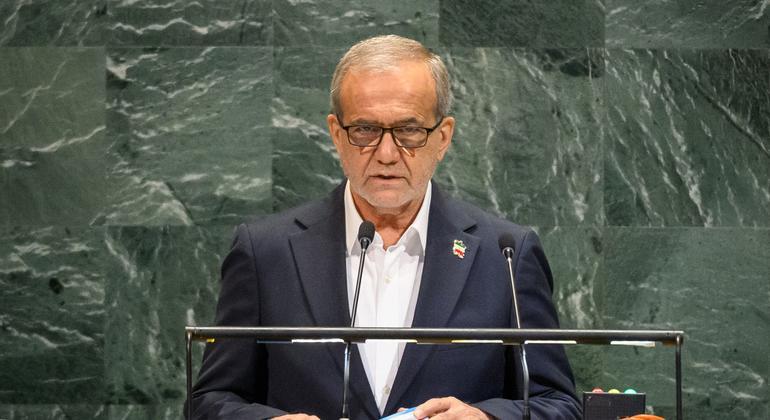
In his speech, President Pezeshkian condemned recent military strikes by Israel and the United States on Iranian sites, describing them as violations of diplomacy and human rights. He accused Israel of being the true source of regional instability and criticized its actions as aggressive expansionism. This rhetoric aligns with Iran's broader narrative of portraying itself as a victim of Western aggression, while simultaneously calling for cooperation with peace-seeking countries based on dignity and trust.
“He criticized Israel’s ambitions for a 'greater Israel,' accusing it of apartheid, genocide, and aggression against neighbors.”
Iran Nuclear Negotiation Efforts
Despite the strong rhetoric, Iran has expressed a willingness to negotiate with European powers to avoid the reimposition of sanctions. French President Emmanuel Macron has been actively involved in these discussions, urging Iran to allow full access to UN nuclear inspectors and to be transparent about its nuclear activities.
Macron has also highlighted the importance of resuming negotiations to reach a peaceful resolution. However, Iran remains firm in its stance against negotiating with the U.S., which it accuses of imposing diktats rather than engaging in genuine talks.