
Iranian President Pezeshkian Demands Halt to U.S. and Israeli Attacks and Guarantees Against Future Aggression
Key Takeaways
- Iran demands halt to U.S. and Israeli attacks and guarantees against future aggression.
- Pezeshkian urges unity among Muslim nations amid regional conflict.
- Pezeshkian discussed regional developments and bilateral ties with Modi during a phone call.
Diplomatic Demands
Iranian President Masoud Pezeshkian has issued firm demands for the immediate cessation of what he described as 'U.S. and Israeli aggression' against Iran.
“On February 28, the US and Israel launched coordinated attacks, targeting multiple sites and facilities across Iran”
He insists on guarantees against future military actions as a prerequisite for ending the ongoing regional conflict.
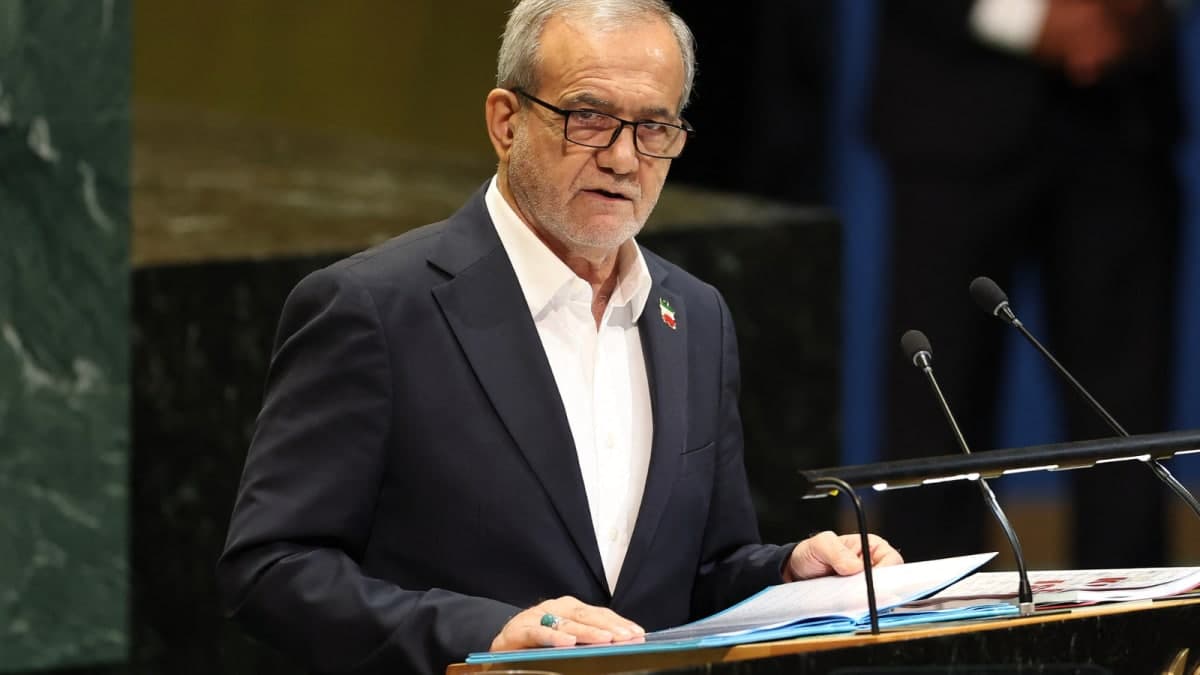
During a phone conversation with Indian Prime Minister Narendra Modi on Saturday, Pezeshkian emphasized that Iran did not initiate the hostilities.
He characterized the military actions as lacking 'legal justification' during ongoing nuclear negotiations.
The Iranian leader stressed that a primary condition for peace is the immediate halt to attacks by the United States and Israel.
This must be combined with assurances that such aggression will not be repeated in the future.
Pezeshkian also urged the BRICS bloc, with India currently holding its presidency, to play an independent role in stopping hostilities.
Modi expressed deep concern over escalating tensions in West Asia and condemned attacks on energy infrastructure.
He warned that such attacks could impact global food and energy security.
Rejection of Justifications
President Pezeshkian firmly rejected U.S. and Israeli justifications for the military attacks.
He dismissed claims that the operations were aimed at preventing Iran from developing nuclear weapons.
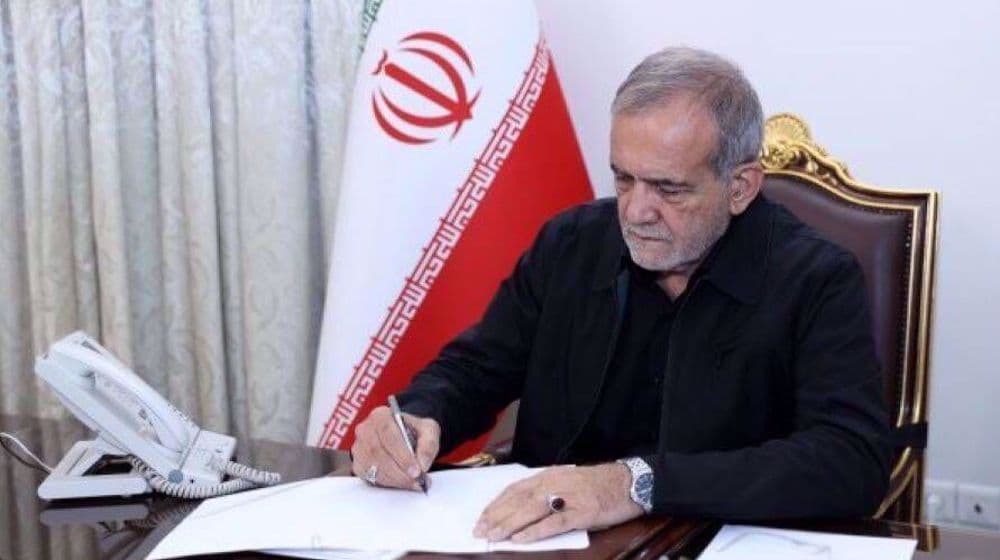
The Iranian president emphasized that Iran's leadership has historically and consistently opposed nuclear arms.
He noted that the late Ayatollah Khamenei had given specific instructions banning such weapons.
Pezeshkian accused adversaries of conducting military actions without 'legal justification' while nuclear negotiations were ongoing.
He specifically pointed to the assassination of Iran's Leader of the Islamic Revolution Ayatollah Seyyed Ali Khamenei.
Top military commanders and defenseless civilians were also targeted in these attacks.
The Iranian president challenged the characterization of Iran as a source of regional instability.
Instead, he blamed Israel for carrying out attacks across multiple countries in the region.
Pezeshkian stated that Iran has always been willing to engage in dialogue and accept oversight of its peaceful nuclear activities.
Civilian Casualties
The Iranian president detailed severe casualties and infrastructure damage resulting from what he described as U.S. and Israeli military aggression.
“Iranian President Masoud Pezeshkian says Tehran requests firm guarantees that no military aggression is ever launched against the country in the future before it can agree to end the war if the United States and Israel immediately stop the hostilities”
He claimed attacks have resulted in the deaths of senior military officials and civilians, including innocent students.
Pezeshkian specifically highlighted a devastating attack on a primary school in Minab.
This attack was allegedly launched from neighboring countries hosting U.S. bases.
The school attack resulted in the deaths of 168 children.
He emphasized that these civilian casualties, particularly the targeting of children, constitute war crimes under international law.
The attacks have also caused significant damage to public infrastructure.
This disruption has further affected civilian life and essential services in Iran.
The Iranian leader presented these casualties as evidence of disproportionate and unlawful military actions.
Regional Solutions
In addition to demanding an end to hostilities, President Pezeshkian proposed a comprehensive diplomatic solution.
This solution centers on the creation of a regional security framework led by West Asian countries.
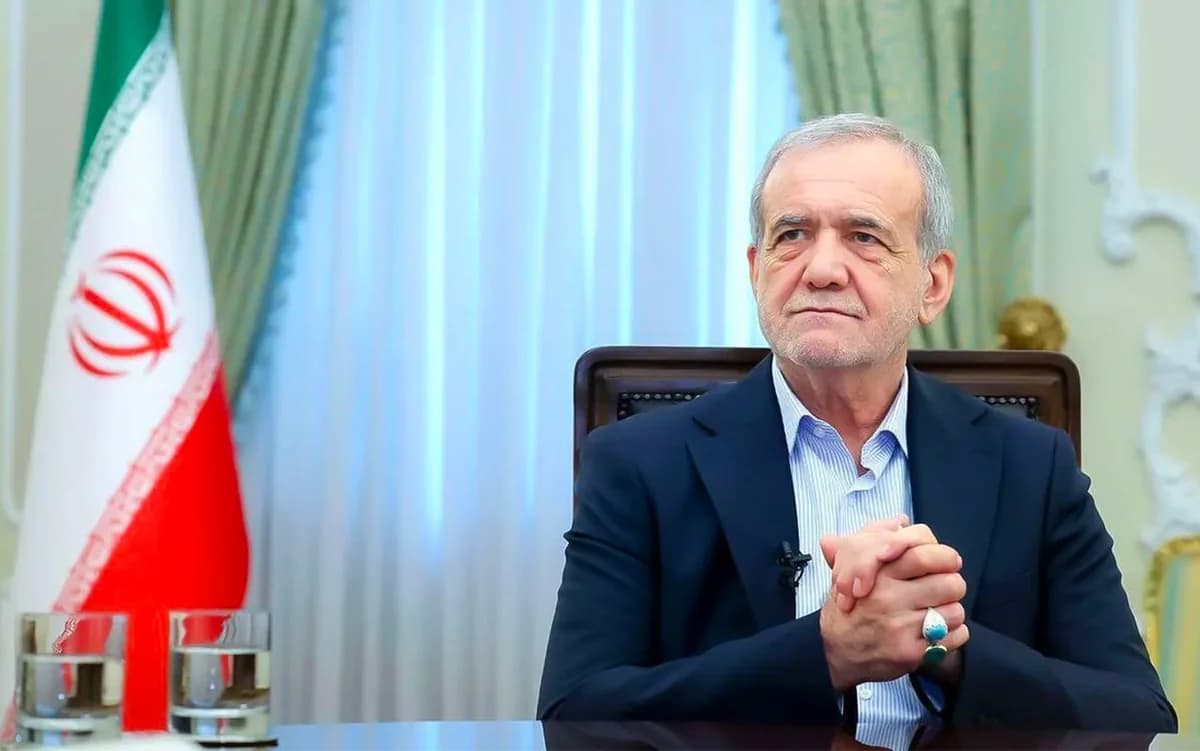
The framework aims at ensuring stability without foreign intervention.
The Iranian leader emphasized Iran's willingness to engage in dialogue.
He also emphasized Iran's willingness to accept oversight of its peaceful nuclear activities.
Pezeshkian had previously proposed such arrangements in UN meetings in New York.
He specifically called for India, as current BRICS president, to play an independent mediation role.
The Iranian leader framed Iran's proposals as seeking genuine peace rather than confrontation.
He contrasted this with what he described as continued aggression by U.S. and Israeli forces.
Pezeshkian suggested regional security can only be achieved through indigenous arrangements.
US Statements
Meanwhile, U.S. President Donald Trump announced on Friday that the United States is considering 'winding down' military operations against Iran.
“WANA (Mar 21) –Iranian President Masoud Pezeshkian stated that ending the ongoing conflict in the region requires the immediate cessation of what he described as “U”
He claimed that objectives are 'very close to being met.'
In a post on Truth Social, Trump stated, 'We are getting very close to meeting our objectives as we consider winding down our great Military efforts in the Middle East.'
White House Press Secretary Karoline Leavitt reinforced this timeline.
She claimed that the Pentagon had predicted it would take approximately 4-6 weeks to achieve the mission.
Leavitt noted that 'tomorrow marks week 3' of operations.
She asserted that 'the Iranian Regime is being crippled day by day'.
Leavitt also claimed that 'their ability to threaten the United States and our allies is being significantly weakened.'
However, these U.S. statements directly contradict Iran's characterization of the conflict as unprovoked aggression.
Pezeshkian maintains that Iran did not initiate hostilities and that the attacks violate international law.
More on Iran
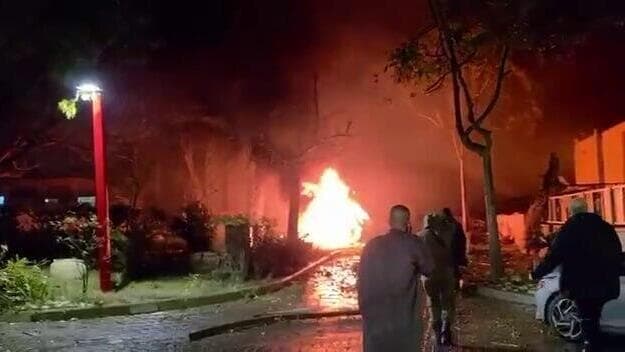
Iran Attacks Israeli Towns Dimona and Arad Near Israel's Main Nuclear Research Center, Dozens Wounded
43 sources compared
Iran Attacks Dimona in Retaliation for Natanz Strike
44 sources compared

Iran Attacks Diego Garcia with Long-Range Missiles, Targeting U.S.-UK Base
82 sources compared
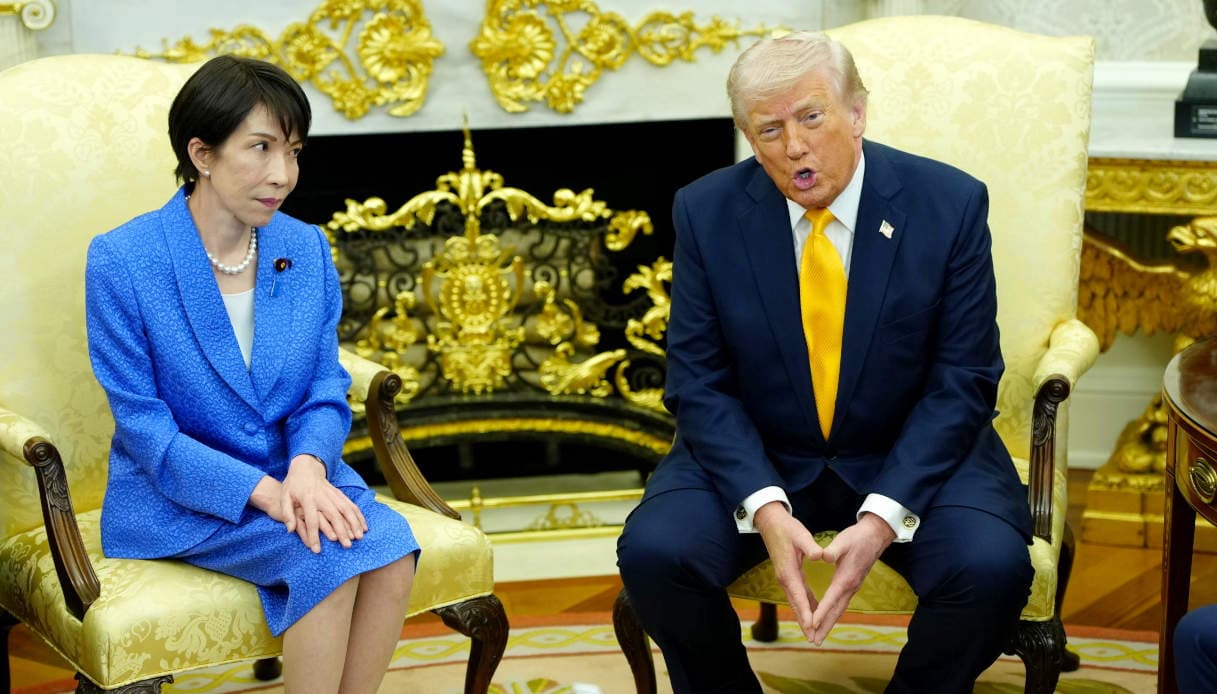
Trump Defends Iran War by Citing Pearl Harbor
12 sources compared