Iran’s Abbas Araqchi Set To Travel To Pakistan For US-Iran Ceasefire Talks
Key Takeaways
- Iranian Foreign Minister Abbas Araqchi to visit Pakistan for renewed US-Iran ceasefire talks.
- Pakistani sources expect renewed US-Iran ceasefire talks in Pakistan.
- Reports conflict on whether any Iranian delegation has departed for Islamabad.
Diplomat to Pakistan
Iran’s top diplomat is set to travel to Pakistan as officials there try to get the United States and Iran back to ceasefire negotiations, according to reporting that ties the trip to “ongoing regional developments” and the US-Iran war.
“It is expected that the Iranian Foreign Minister will arrive in Islamabad on Friday, with American security teams already on the ground”
The Washingtonpost, citing Iran’s state-run IRNA news agency, says Iranian Foreign Minister Abbas “The trip to Pakistan comes as officials there have been trying to get the United States and Iran to a second round of ceasefire negotiations,” and that the trip begins Friday.
In parallel, BBC News Arabic’s report says Tehran “announced in a post on its Telegram channel that, so far, no Iranian delegation has traveled to Islamabad—neither a senior delegation nor a junior one, nor an initial delegation or a follow-up delegation.”
Albalad.news adds that it is expected the Iranian Foreign Minister will arrive in Islamabad on Friday evening, with American security teams already on the ground, and that “Iranian Foreign Minister Abbas Araqchi is expected to arrive on Friday evening.”
The same Albalad.news report says three Pakistani sources told it that peace talks between Iran and the United States could resume soon in Pakistan, and that “an American logistical and security team is already on hand to conduct potential talks.”
It also notes that there was “no immediate direct response from Washington or Tehran” to the report, even as U.S. Defense Secretary Pete Hegseth said Iran has a chance to strike a 'good deal' with the United States.
Taken together, the accounts show a negotiation track centered on Pakistan and Islamabad, but with conflicting claims about whether an Iranian delegation has already left for the host city.
Ceasefire and the Strait
The diplomatic movement toward Pakistan is occurring against a backdrop of ceasefire management and escalating pressure around the Strait of Hormuz, with multiple reports describing both the negotiation timeline and the maritime constraints.
Albalad.news says the “last round of peace talks was expected on Tuesday but never took place,” and that “Iran said it was not yet ready to commit to attending, and the American delegation led by Vice President J. D. Vance never left Washington.”
It adds that President Donald Trump “unilaterally extended the cease-fire by two weeks on Tuesday at 11:00 to give negotiators more time to reconvene,” and that “Iran regards maintaining the cease-fire in Lebanon as a precondition for talks with the United States on the broader war.”
The same report says Trump told that he is “not in a hurry to reach a deal and wants it to be 'permanent,'” while also stressing that the United States has the upper hand in the confrontation in the Strait of Hormuz.
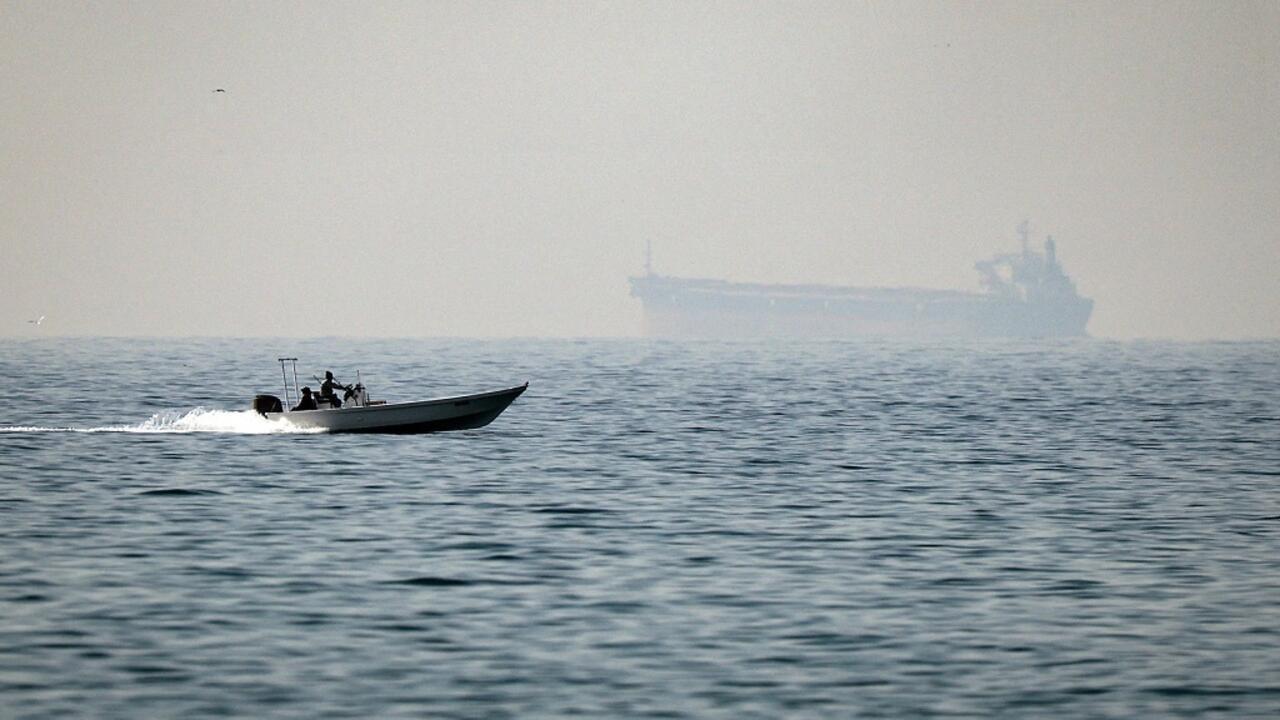
Albalad.news describes the strait as the “world's most important energy-shipping route,” and says “Iran has blocked nearly all ships except its own since the start of the war eight weeks ago.”
It further reports that Trump imposed “a separate blockade on Iranian shipping last week,” and that “Iran says it will not reopen the strait until Trump lifts the blockade.”
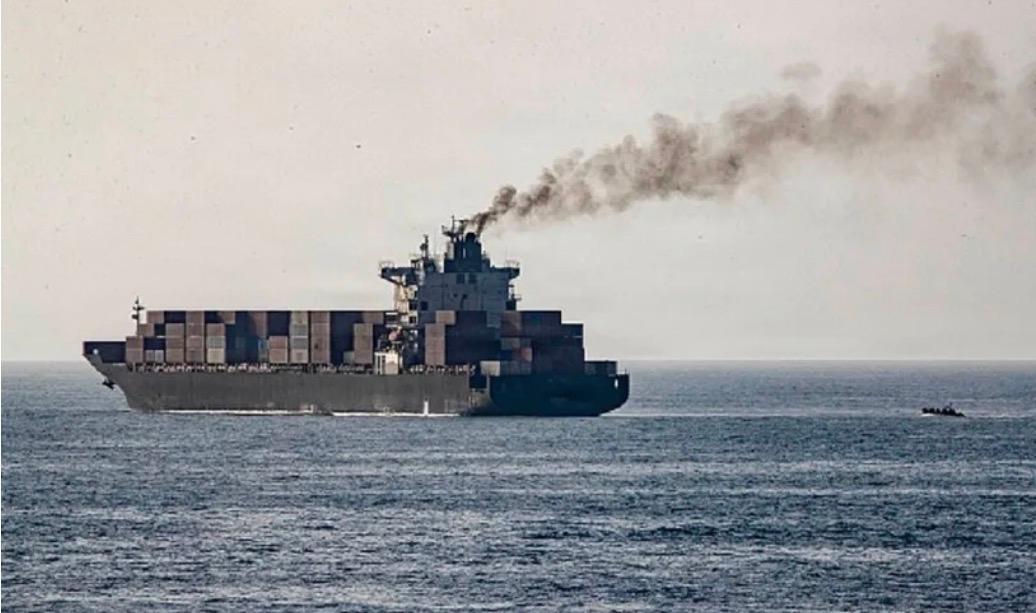
The report provides a snapshot of the maritime impact: “only five ships passed through the strait in the last 24 hours, compared with about 130 ships a day before the war,” and notes that “Hapag-Lloyd, the container shipping company, also said that one of its ships had crossed.”
Trump, JCPOA, and Economics
The negotiation push is also tied in the sources to the United States’ approach to the nuclear deal and to the economic strain inside Iran, with the BBC News Arabic report explicitly linking Trump’s stated negotiating posture to the JCPOA.
“The official Iranian state broadcaster announced in a post on its Telegram channel that, so far, no Iranian delegation has traveled to Islamabad—neither a senior delegation nor a junior one, nor an initial delegation or a follow-up delegation”
BBC News Arabic says that “According to what U.S. President Donald Trump posted on Truth Social, he insists he has the upper hand in negotiations with Iran,” and that he wrote the deal “will be far better than the JCPOA.”
The same report describes the JCPOA as “the agreement reached by President Obama in 2015,” and says it “tied Iran’s nuclear activities to the lifting of sanctions imposed by the United Nations, the United States, and the European Union.”
It then recounts Trump’s decision-making: “In 2018, Trump announced his intention to withdraw the United States from the agreement,” describing it as “dilapidated and rotten,” and says he “reimposed economic sanctions.”
The BBC News Arabic report also frames the current negotiation question in terms of Iran’s ability to sustain itself financially, asking “can the Iranian government pay its employees’ salaries if the blockade of the Strait of Hormuz continues?”
It says “Iranian officials estimate damages at up to $270 billion (about £200 billion),” and describes how sanctions, inflation, and a falling currency have pushed households toward “a subsistence economy.”
The report adds that “Internet censorship and outages have cut the livelihoods of many women who sold their crafts through social media and online marketplaces,” and that “closed companies and bounced checks” have intensified economic pressures.
Pakistan’s Position and Risks
The sources also place Pakistan at the center of the diplomatic and security calculus, describing both its relationships with multiple sides and the possibility that it could be pulled into conflict if talks fail.
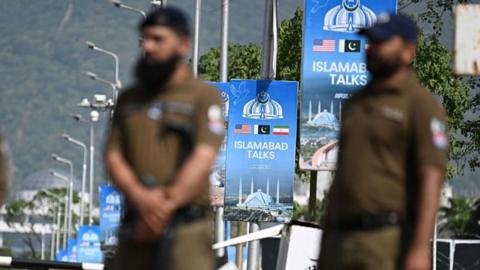
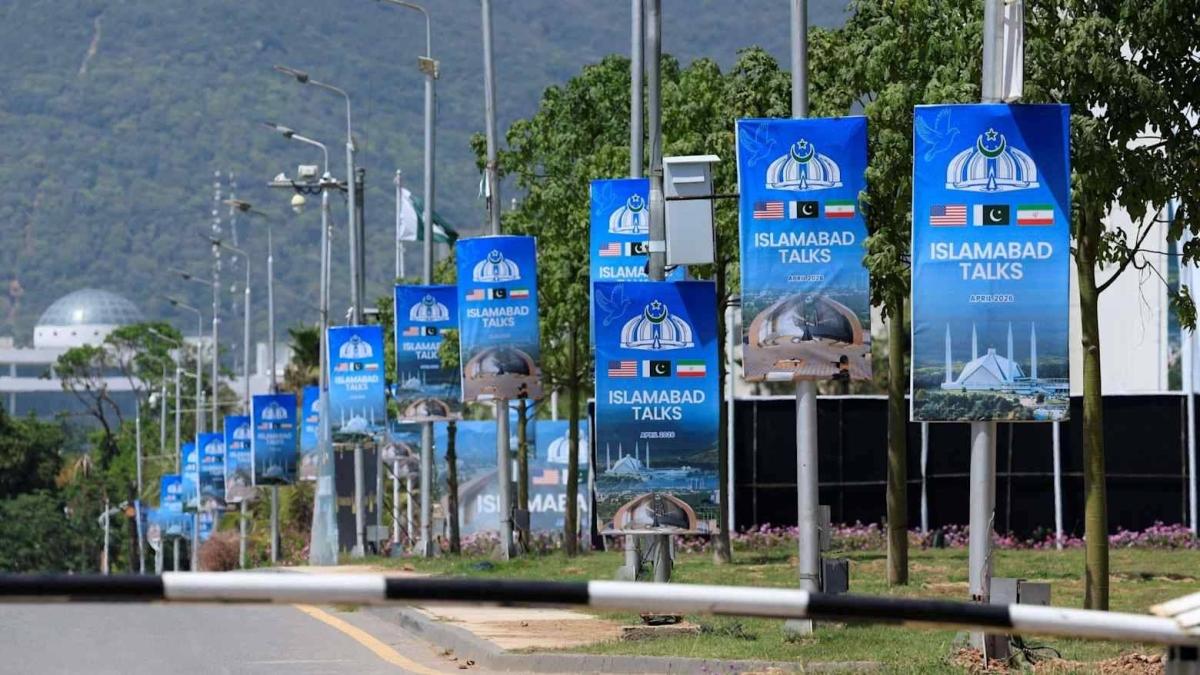
BBC News Arabic says “As Pakistan prepares to host a second round of peace talks—despite doubts about whether they will take place—security measures in Islamabad are being tightened,” and that “posters reading “Islamabad Talks” appear on the streets of the capital.”
It adds that “Pakistan holds a unique position, enjoying trust from the United States, Iran, and Gulf states,” while also noting that “close ties with the United States have not prevented Pakistan from officially condemning the first U.S.-Israeli strikes on Iran.”
The report says Pakistan’s stance has also been shaped by its alliances, stating that “when Iran attacked Saudi Arabia’s oil fields, its military ally, Pakistan issued a sharp statement against Tehran.”
It warns that “If the negotiations collapse, Pakistan could be drawn into war with its neighbor Iran,” and ties that risk to regional defense arrangements, saying “Pakistan signed a joint defense agreement with Saudi Arabia last year.”
BBC News Arabic also links the current ceasefire timeline to the region’s security environment, stating that “before the current ceasefire, which is due to end tomorrow.”
In Albalad.news, the same host-city focus appears in the expectation that peace talks could resume in Pakistan with “American security teams already on the ground.”
Conflicting Reports and Framing
While the sources converge on Pakistan as the venue and on the idea of renewed talks, they diverge in how they describe the status of Iranian participation and the immediate prospects for negotiations.
“Democracy Dies in Darkness By Associated Press Iran’s state-run IRNA news agency confirmed Friday that Iranian Foreign Minister Abbas The trip to Pakistan comes as officials there have been trying to get the United States and Iran to a second round of ceasefire negotiations”
Washingtonpost says IRNA confirmed Friday that Iranian Foreign Minister Abbas’s trip to Pakistan begins Friday and frames the move as raising hope for renewed talks, but BBC News Arabic counters that Tehran says “so far, no Iranian delegation has traveled to Islamabad—neither a senior delegation nor a junior one, nor an initial delegation or a follow-up delegation.”
Albalad.news occupies a middle ground in timing, saying it is expected the Iranian Foreign Minister will arrive in Islamabad on Friday evening and that American security teams are already on the ground, while also stating that “There was no immediate direct response from Washington or Tehran to the report.”
The sources also differ in how they characterize the negotiation momentum: Albalad.news reports that the last round “was expected on Tuesday but never took place,” and that Vice President J. D. Vance’s delegation “never left Washington,” while the Washingtonpost framing emphasizes hope for renewed talks through the diplomat’s trip.
On the U.S. side, Albalad.news includes a direct statement from U.S. Defense Secretary Pete Hegseth that Iran has a chance to strike a 'good deal' with the United States, while BBC News Arabic emphasizes Trump’s Truth Social claim that he “insists he has the upper hand in negotiations with Iran.”
The BBC News Arabic report also broadens the frame beyond diplomacy into the JCPOA history and Iran’s economic strain, including the question of whether Tehran can pay employees if the blockade continues.
Meanwhile, the Washingtonpost-linked account centers the trip’s purpose as focused on “ongoing regional developments” and the US-Iran war.
More on Iran

Trump Administration Sanctions Hengli Petrochemical And 40 Shippers Over Iranian Oil
16 sources compared

Iranian FM Abbas Araghchi Visits Pakistan as US-Iran Ceasefire Talks Stall
16 sources compared
U.S. Naval Blockade of Iranian Ports Pressures Tehran in Strait of Hormuz Standoff
14 sources compared
Iran Grants Russia Strait Of Hormuz Transit Fee Exemptions, Ambassador Kazem Jalali Says
16 sources compared