Iran18 April, 20266 min read
Iran’s Deputy FM Saeed Khatibzadeh Says No US Talks Date Without Framework Agreed
No date for next US-Iran talks until framework is agreed. A shared framework must be agreed by both sides, Iran and the US.
Framework first, no date
Iran’s deputy foreign minister, Saeed Khatibzadeh, said Iran will enter the next round of negotiations with the United States only if a “framework of understanding” is agreed by both sides, and he insisted that “no exact date has been set yet.” Speaking on the sidelines of a diplomacy forum in the southern Turkish province of Antalya on Saturday, Khatibzadeh dismissed US “contradictory and vague” claims about the timing of the next round and said, “Until we agree on the framework, we cannot set the date.” Khatibzadeh told reporters, “We are now focusing on finalizing the framework of understanding between two sides,” adding that “Progress has been made but differences still remain.”
He also said Iran does not want to enter “any negotiation or meeting which is doomed to fail,” framing the demand for a framework as a way to avoid “another round of escalation.” Multiple outlets carried the same core message: Kurdistan24 said Iran stressed that “no date is set for the next round of negotiations with the United States,” while France 24 reported Khatibzadeh’s line that “Until we agree on the framework, we cannot set a date.” The talks referenced by the sources had recently ended in Islamabad without agreement, and the new condition for resuming them was the same across the reporting: a shared structure before any meeting is scheduled.

Hormuz, ceasefire, and escalation
The diplomatic standoff over talks is unfolding alongside competing claims about the Strait of Hormuz and the status of a ceasefire, with Khatibzadeh linking the negotiation atmosphere to maritime tensions. PressTV said Iran’s deputy foreign minister pointed to tensions pertaining to the Strait of Hormuz and stated that Iran seeks to maintain stability and the safe passage of commercial vessels through the strategic waterway “in line with the terms of the truce” while warning, “but will show reaction in the face of pressure.” PressTV also reported that Foreign Minister Abbas Araghchi announced the reopening of the strait after the implementation of a ceasefire in Lebanon, but Lieutenant-Colonel Ebrahim Zolfaghari of the Khatam al-Anbiya Central Headquarters said on Saturday that Iran had reasserted control over the Strait of Hormuz due to the United States’ “so-called naval blockade” and acts of “piracy.”
In the same account, Zolfaghari said Iran agreed to a managed passage of a limited number of oil tankers and commercial ships through the Strait of Hormuz, while asserting that Americans continued “banditry and piracy under the guise of a so-called blockade.” Kurdistan24 described the dispute as a maritime standoff and said Iran accused the United States of “sabotage” after the US said the strait was open except for Iranians, prompting Iran to warn of “repercussions.” Geo News similarly reported that Khatibzadeh said Iran had announced it would allow safe passage for commercial vessels in line with the terms of the truce, and he rejected US accusations that Iran was threatening freedom of navigation.

What each side demands
The sources lay out a set of issues that Tehran says must be addressed before formal talks can proceed, and they portray Washington’s position as conditional on different priorities. In Arabic21’s account of the Islamabad talks, senior US and Iranian officials were set to meet on Saturday in Islamabad to hold talks aimed at ending the conflict, with Tehran insisting that “formal talks cannot begin until Washington provides commitments to a cease-fire in Lebanon and to lift sanctions on Iran.” Arabic21 said Iran places the Lebanon cease-fire among its top priorities, while also stating that the United States and Israel view that issue as outside the framework of the understandings with Tehran, whereas Tehran says it is an essential part of it.
The same source said Iran calls for lifting the restriction on its financial assets and ending the sanctions that have weighed on its economy for years, while Washington has expressed willingness to consider broad sanctions relief in exchange for Iranian concessions on its nuclear and missile programs. Arabic21 also described a dispute over the Strait of Hormuz, saying Iran seeks to cement recognition of its authority over the Strait of Hormuz, including the right to impose transit fees and to control access to it, while Washington views that as a major shift and insists the strait remain open to oil shipments and free navigation without restrictions or fees. Finally, Arabic21 said Iran maintains its right to enrich uranium, while the United States rejects this claim and President Donald Trump has said it is non-negotiable, and it added that the United States and Israel are pushing to significantly reduce Iran’s ballistic capabilities while Tehran considers its ballistic arsenal a sovereign matter not up for discussion.
Voices: diplomacy, pressure, and tweets
Khatibzadeh’s remarks at the Antalya diplomacy forum were presented as a direct rebuttal to US messaging and as an insistence that Iran will not accept terms that treat it as an exception to international law.
PressTV quoted him saying, “I have to be very crystal clear that Iran would not accept to be an exception from the international law,” and it added that he stressed Iran’s commitments as per the International Atomic Energy Agency (IAEA) and the Non-Proliferation Treaty (NPT).
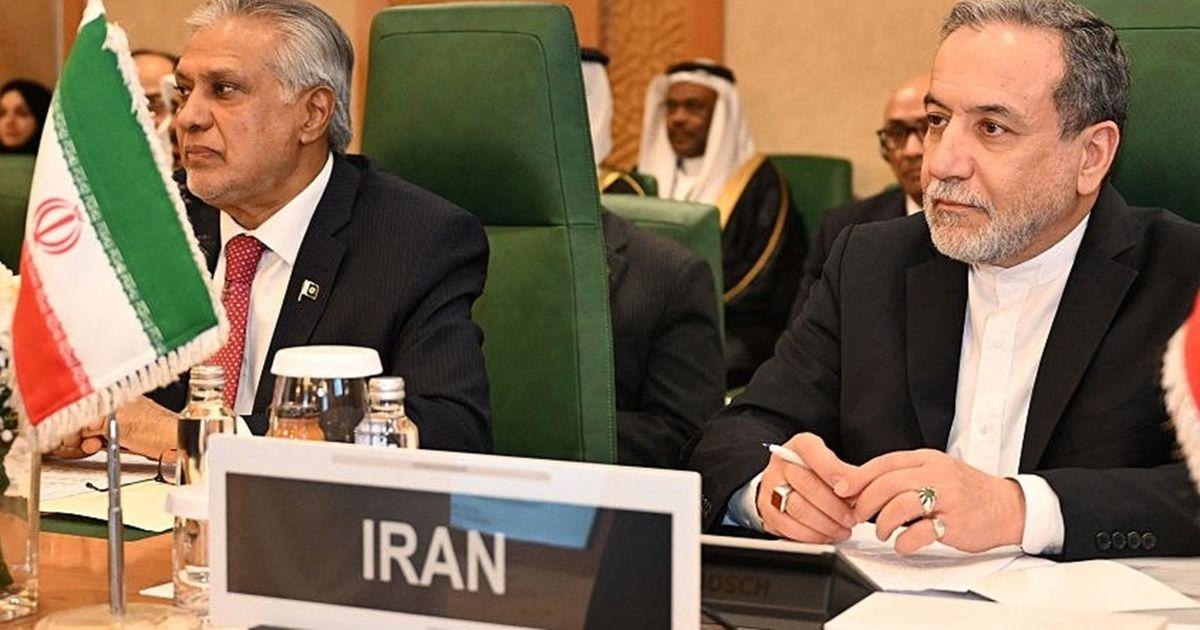
He also urged the US to abandon its “maximalist approach” and respect international regulations to ensure "result-oriented diplomacy," while warning that “The alternatives to diplomacy are highly undesirable.”
Geo News and France 24 both carried Khatibzadeh’s criticism of US statements, with Geo News quoting him: “The American side tweets a lot, talks a lot. Sometimes confusing, sometimes, you know, contradictory,” and adding that “It is up to the American people to decide whether these statements are consistent and in accordance with international law.”
France 24 likewise reported that Khatibzadeh said, “We will defend heroically and patriotically (our country) ... as the oldest civilisation on earth,” and it included his rejection of US accusations about freedom of navigation in the Strait of Hormuz.
The sources also include the framing of the negotiation posture as defensive and conditional: PressTV said Khatibzadeh warned that Iran would show reaction to pressure, while Geo News said he vowed resistance to pressure from Washington.
Mediators and the next steps
While Iran insisted on a framework before any new meeting, the sources also described regional mediation efforts and the political logistics around the next phase of diplomacy. Geo News reported that Prime Minister Shehbaz Sharif and Chief of Army Staff (COAS) and Chief of Defence Forces (CDF) Field Marshal Asim Munir concluded separate visits aimed at ending the Iran war, with Field Marshal Munir leaving Tehran and premier Shehbaz headed home from Turkey. Geo News said CDF Munir met Iran’s top leadership and peace negotiators during a three-day visit to Tehran, and it described a military’s media wing statement on Saturday.
The same Geo News account said Egypt and Pakistan were working “very hard” as mediators to bring about “a final agreement between the United States and Iran,” quoting Egypt’s foreign minister Badr Abdelatty as saying, “We hope to do so (reach an agreement) in the coming days.” PressTV added that a two-week ceasefire was brokered on April 8, allowing for negotiations in Islamabad, where Iran proposed a 10-point plan seeking US troops’ withdrawal and the lifting of sanctions, and it said that after 21 hours of intensive talks the Iranian delegation returned to Tehran without an agreement. PressTV also reported that US President Donald Trump announced a naval blockade of the Strait of Hormuz and that the US military confirmed the blockade took effect at 1400 GMT on Monday, escalating the situation further.
