
Iran’s IRGC Says It Is Ready for Shocking Battlefield Events After Trump Ceasefire Extension
Key Takeaways
- Iranian leaders signal readiness to resume war with the United States and Israel.
- Trump extends ceasefire and keeps blockade; talks uncertain.
- Pakistan mediates Iran-US talks; Tehran considering participation under Pakistan mediation.
Ceasefire, parades, and threats
Iran’s leadership debated war and peace after US President Donald Trump extended a two-week ceasefire, while state media and Iran’s military and security leadership signaled opposition to major concessions during negotiations.
Al Jazeera reported that Tehran organized “more displays of defiance on Tuesday night and into Wednesday,” timed to coincide with the slated end of the ceasefire, after negotiators failed to arrive in Pakistan for talks.

In Enghelab (Revolution) Square, a Khorramshahr-4 ballistic missile was moved through cheering crowds, while in Vanak Square masked men stood atop a truck-mounted launcher for a Ghadr ballistic missile as loudspeakers blasted “Death to America.”
Al Jazeera also described motorcades broadcasting religious songs through neighbourhoods at night, with participants waving flags of armed groups in other countries that are in Iran’s “axis of resistance,” including Lebanon’s Hezbollah.
The same report quoted a state-linked religious singer, Hossein Taheri, asking, “What else must [the] US do for it to be considered a ceasefire violation?” and adding that supporters would continue to remain in the streets until they can “exact our revenge” for a wounded soldier and others like him.
In parallel, PressTV said the Islamic Revolution Guards Corps (IRGC) marked the anniversary of its establishment by announcing readiness to create “shocking events far beyond the comprehension and calculation of the US-Israeli enemy” on the battlefield.
PressTV framed the IRGC’s posture as “ready for decisive, certain, and immediate confrontation with any threat or repetition of enemy aggression,” and said a “new round of possible military battle” would “inflict crushing blows beyond the enemy’s imagination on their remaining assets in the region.”
Who was killed and why
The current confrontation was sparked by wide-ranging strikes on Iran that killed the country’s supreme leader on 28 February, according to the BBC’s account of the conflict’s origins and escalation.
The BBC said the US and Israel launched strikes on Iran that targeted “missile infrastructure, military sites and leadership in the capital, Tehran, and across the country,” and it reported that Iran’s Supreme Leader, Ayatollah Ali Khamenei, was killed during the first wave of strikes.

The BBC added that Israel’s military said “dozens more senior figures in the powerful Islamic Revolutionary Guard Corps (IRGC) were also killed,” and it named Mojtaba Khamenei as Khamenei’s successor on 8 March.
The BBC listed other high-ranking Iranian officials killed, including security chief Ali Larijani, intelligence minister Esmail Khatib, and the head of the paramilitary Basij force, Gholamreza Soleimani, and it said Israel described these as targets in air strikes.
The BBC also described the strikes as including key sites linked to Iran’s nuclear programme, which Iran insists is entirely peaceful, and it named Kharg Island as “home to a major oil terminal that is considered Iran's economic lifeline.”
It further said Israel targeted South Pars, part of the world’s largest natural gas field, and it reported that an Iranian warship was sunk by a US submarine in the Indian Ocean near Sri Lanka on 4 March.
The BBC reported that at least 87 people were killed in that sinking, and it said Human Rights Activists in Iran (HRANA) reported on 7 April that 3,636 people had been killed in Iran since the war began, including 1,701 civilians, of whom at least 254 were children.
The BBC also said Iran accused the US and Israel of attacking a girls’ school near an IRGC base in southern Iran on 28 February, saying 168 people, including around 110 children, were killed, while the US said it was investigating and Israel said it was “not aware” of any military operations in the area.
Negotiations and internal divisions
As ceasefire talks continued, Iran’s internal debate over negotiations with the United States surfaced in competing public positions, according to the Institute for the Study of War’s April 20 special report.
The ISW-CTP report said Iranian Parliament Speaker Mohammad Bagher Ghalibaf appeared to be engaged in “a serious intra-regime debate” with Islamic Revolutionary Guards Corps (IRGC) Commander Major General Ahmad Vahidi and other senior regime officials opposed to negotiations with the United States.
It reported that Ghalibaf publicly defended negotiations on Iranian state television on April 18, arguing that “diplomacy with the United States, alongside military power, is necessary to secure Iran’s objectives.”
The report further said Ghalibaf reportedly criticized hardline officials, including Supreme National Security Council (SNSC) member Saeed Jalili and hardline parliamentarian Amirhossein Sabeti, for their opposition to negotiations during a meeting with advisers.
ISW-CTP said US officials told Axios on April 20 that the US negotiating delegation thought it was “negotiating with the right people“ in Islamabad on April 11 and 12, but that the IRGC effectively told the Iranian negotiating delegation upon their return to Tehran that they ”don’t speak for” the IRGC.
The report stated that “we aren’t sure who’s in charge and neither do they,” quoting a second US official speaking to Axios on April 20, and it said the report was consistent with ISW-CTP’s assessment of a division between Vahidi and members of Iran’s negotiating team.
It also said Vahidi appeared to have the upper hand over Ghalibaf at the moment, noting that Vahidi was reportedly the only Iranian official with direct access to Supreme Leader Mojtaba Khamenei.
ISW-CTP added that Israeli media reported on April 19 that Iranian officials’ inability to contact Mojtaba was a significant obstacle to continued US-Iran negotiations.
The report also said US and Iranian delegations would reportedly meet in Islamabad, Pakistan, for a second round of talks in the coming days, and it cited US Vice President JD Vance traveling to Pakistan on April 21.
Ceasefire disputes and maritime incidents
Even as negotiations proceeded, the sources described competing claims about whether the ceasefire was being violated, including a maritime dispute involving an Iranian-flagged vessel.
The ISW-CTP report said the Khatam ol Anbia Central Headquarters claimed that the April 19 seizure of the Iranian-flagged, US-sanctioned Touska by the US Navy violated the US-Iran ceasefire.

It quoted the spokesperson for the Khatam ol Anbia Central Headquarters, which it described as functionally controlled by the IRGC, warning on April 19 that Iranian forces will respond to the US seizure of the Touska and asserting that the United States had “violated the ceasefire.”
The report also said unspecified security sources told Reuters that the Touska was likely transporting dual-use items from China to Iran, and it added that the sources said the Touska had previously transported dual-use items to Iran.
In parallel, Al Jazeera reported that Iran’s ambassador to the United Nations, Saeed Iravani, told reporters that another round of negotiations can take place in Islamabad only if Washington lifts the blockade it has imposed on Iran.
Al Jazeera also said state television host claims included that “87 percent of Iranians would rather go back to war than offer any major concessions in talks,” and it described another host saying Washington needs the war to end but has chosen to drag out negotiations to pressure Iran through its naval blockade of the country’s ports.
PressTV, for its part, asserted that a “two-week ceasefire, brokered by Pakistan, is currently in place,” while also saying tensions remain high over US threats of a naval blockade and Iran’s firm control over the Strait of Hormuz.
PressTV described the IRGC’s recent combined missile and drone operation as inflicting “fatal and devastating blows to their infrastructure, strategic centers, and support capabilities,” and it said this led to a “cognitive vacuum” and “miscalculations” by the “aggressive and invading front.”
Stakes: war, missiles, and next talks
The stakes described across the sources centered on whether the ceasefire would hold, how Iran would respond to perceived violations, and what demands would shape the next round of talks.
Al Jazeera said Iran’s state television adopted a hardline approach toward negotiations with the US, with presenters and analysts advocating “military strength in the face of threats and ultimatums from Trump,” and it reported that the IRGC said two vessels trying to pass through the Strait of Hormuz were seized after they failed to obtain necessary permits.

The same Al Jazeera report said the IRGC’s Mousavi warned Iran’s neighbours that if their territories and facilities are used for more attacks against Iran, “they must say goodbye to oil production in the Middle East region.”
ISW-CTP described US and Iranian demands as largely staying the same, stating that US officials speaking to the Wall Street Journal said the US delegation was pushing for “the immediate reopening of the Strait of Hormuz,” “a pause in Iranian uranium enrichment for at least 20 years,” and “the removal of Iran’s highly enriched uranium (HEU) stockpile from Iran.”
The report said the Wall Street Journal reported that Iran’s demands are Iranian ”control” over the strait, “the lifting of sanctions on Iran,” and “a shorter pause in uranium enrichment,” while it also said Trump previously indicated that a pause in enrichment would be insufficient to meet US demands.
PressTV asserted that the IRGC was “ready for decisive, certain, and immediate confrontation with any threat or repetition of enemy aggression,” and it said the IRGC’s strikes were aimed at “their remaining assets in the region.”
Meanwhile, the BBC described how the fighting escalated quickly after the initial strikes, spreading to Lebanon, and it said the US and Iran agreed to a conditional two-week ceasefire starting on 7 April.
The BBC also reported that Iran’s attacks included missile and drone attacks in response, and it said the IRGC said it had targeted Israeli government and military sites in Tel Aviv and elsewhere.
Taken together, the sources portray a negotiation process that is inseparable from ongoing military signaling, with the next round of talks in Islamabad framed by conditions around blockade and ceasefire compliance.
More on Iran
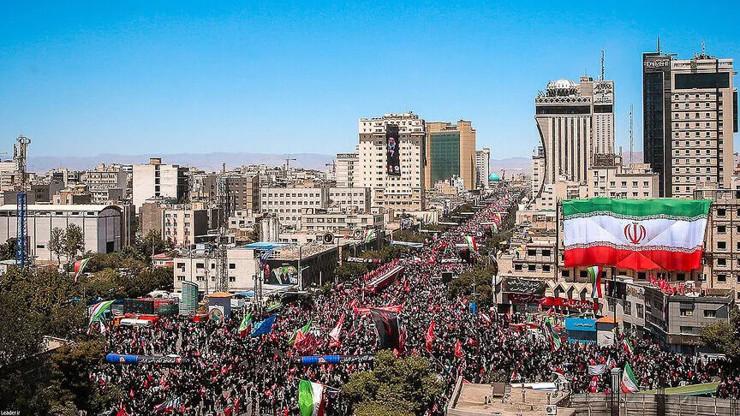
Israeli Strike Kills Ayatollah Ali Khamenei, Buried at Imam Reza Shrine in Mashhad
19 sources compared
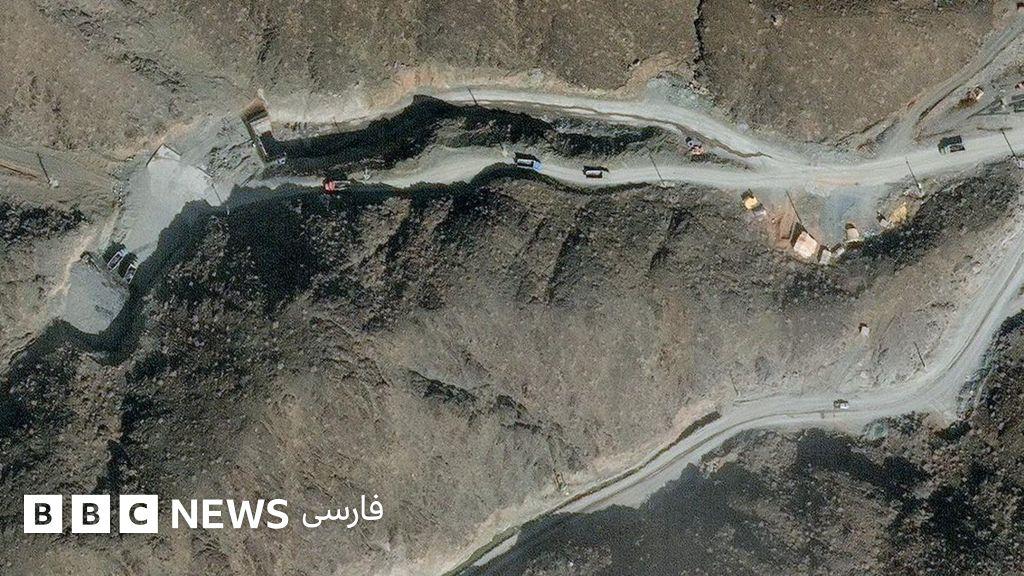
Iran Attempts To Restore Nuclear Sites Damaged In US And Israel Strikes, CNN Satellite Images Show
15 sources compared
Abbas Araghchi and Prince Faisal Bin Farhan Discuss Regional Developments After US Attacks
11 sources compared

Trump Says U.S. Agreed to Continue Iran Talks, Ceasefire Is Over
19 sources compared