Iran · 07 September, 2026 · 3 min read
Iran’s Mohsen Rezaei Announces Restricted Zone Outside Strait of Hormuz, Threatens Sanctions
restricted zone outside Hormuz starts at the US blockade line, extends into the Gulf Any ship entering the zone will be placed on Iran's sanctions list
How fully the Strait is blocked.
7 of 8 outlets skipped it: US targets Iranian tankers via “ship-to-ship” retaliation policy.
The Jerusalem Post was read line by line by the Watchdog: 5.0. See the score →
222outlets compared
Same story, two versions
tap a side to read it in full
Global Times insists the Strait is completely closed, while ABC Australia stresses Iran has largely blocked passage.
Restricted zone outside Hormuz
Iran’s Supreme National Security Council Secretary Mohsen Rezaei said Tehran would announce a restricted zone outside the Strait of Hormuz in the coming days and place any ship attempting to transit the area on Tehran’s sanctions list.
“place any ship attempting to transit the area on Tehran's sanctions list”
Rezaei told state-run IRIB TV that the zone would extend from "the line where the U.S. naval blockade begins" to the Strait of Hormuz region and inside the Persian Gulf on the other side of the strait.
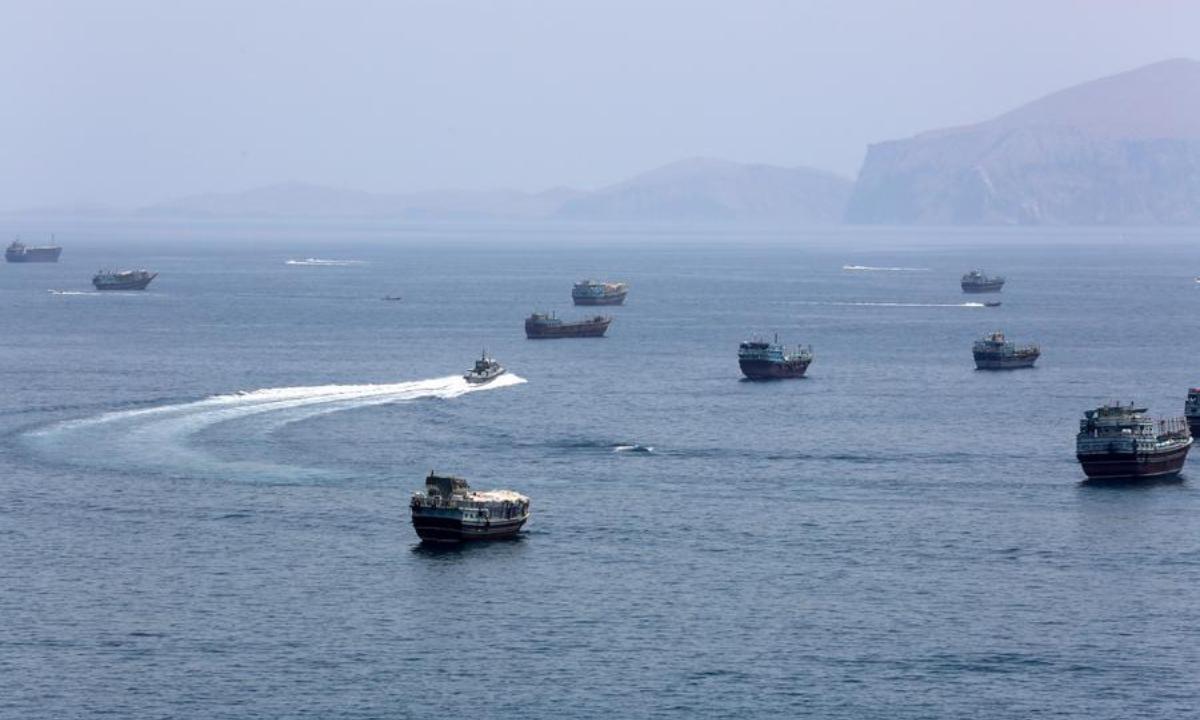
The same account said Rezaei stressed that the Strait of Hormuz is "completely closed," dismissing the U.S. claim that ships and oil tankers are crossing the waterway as a "lie."
Rezaei also said Iran had test-fired for the first time a domestically developed anti-destroyer missile above a U.S. aircraft carrier 48 hours earlier, describing it as a warning that the U.S. naval blockade is vulnerable.
In parallel, the U.S. began implementing a “ship-to-ship” policy against Iran in the Strait of Hormuz, with American forces targeting two oil tankers belonging to the Iranian government.
Ship-to-ship retaliation
Axios reported that American officials said the strike on the two Iranian tankers came within a wave of broad attacks carried out by American forces on Tuesday inside Iran, targeting about 100 military objectives.
An American official explained that President Donald Trump approved the new policy to deter Tehran from attacking oil tankers and commercial ships transiting the Strait of Hormuz, and that under this policy, "an Iranian oil tanker would be targeted for every ship Iran attacks."
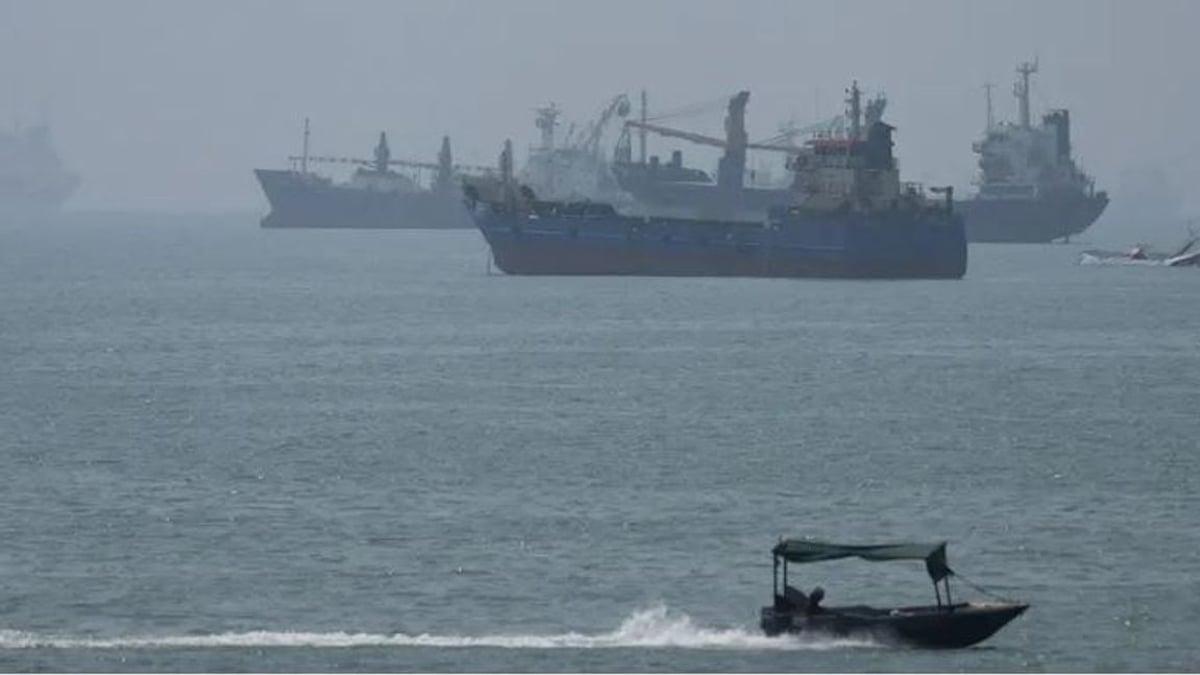
The Aajil account said the two Iranian tankers were hit by American drones with missiles that struck the engine rooms while the tankers were anchored off the Iranian coast north of the line along which American forces impose their naval blockade.
It also said an American official reported about 40 ships passed in both directions on Tuesday, carrying millions of barrels of oil, while American forces intercepted several anti-ship cruise missiles and drones with none hitting their targets.
Separately, ABC News reported that Iran’s Mohsen Rezaei said any ship that enters the new zone "with the intention of crossing the Strait of Hormuz" will be put on a sanctions list.
Shipping declines and wider pressure
Aajil said preliminary shipping data showed four bulk carriers crossing the Hormuz Strait on Thursday, down from nine ships the day before and well below the 10-day average of about 15 vessels.
“four bulk carriers crossing the Hormuz Strait yesterday, Thursday”
Kpler data cited in the same report said the ships that had crossed by 04:55 UTC included two medium-range tankers, one CamastarMax-class tanker, and one Handymax.
The report also said that before the outbreak of the war on February 28, about 125 large commercial ships passed through the strait daily, representing about one-fifth of global daily oil and LNG supplies.
In a separate development, Al Jazeera reported that the Panama Canal Authority said that from Thursday only 34 vessels will be permitted to sail daily through the canal, with the cap dropping further to 32 on September 15.
Al Jazeera added that the canal handles about 5 percent of global maritime trade and cited research that "Some $270bn of cargo passed through the canal in 2024" as the Hormuz crisis pushes Gulf producers to route more exports elsewhere.