Full story
Pipeline Deal in Washington
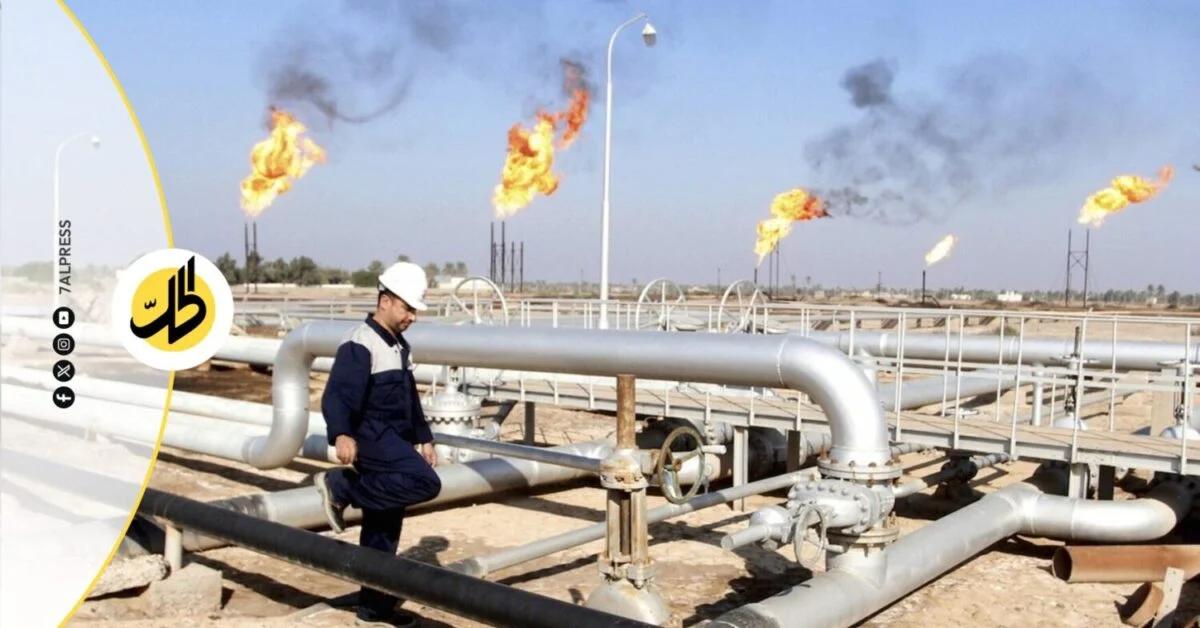
Iraq and Syria signed an agreement in Washington to rehabilitate the Kirkuk–Baniyas crude oil pipeline, an export route intended to bypass the Strait of Hormuz.
“Academics and economic analysts described the Syrian government's agreement with its Iraqi counterpart and an international consortium of companies to rehabilitate the Kirkuk–Baniyas oil pipeline as strategic, noting in statements to "Syria Now" that it re-draws the regional energy map as well as its economic benefits, while pointing to serious challenges facing the project”
The project is described as inactive since 2003, and the planned initial capacity is stated as 2 million barrels per day once operational.

The U.S. State Department welcomed the decision as an “important milestone for the region and for Syria-Iraq relations,” and said a US-led international consortium would handle the technical and financial aspects.
SANA said Syria signed two memoranda with Iraq and an international consortium to rehabilitate and revive the Kirkuk–Baniyas pipeline during meetings held in the United States, with Youssef Qablawi signing on behalf of the Syrian government and Basim Abdul Karim Nasser representing the Iraqi side.
The Kirkuk–Baniyas line is described as a historic corridor linking Iraqi oil production to Mediterranean export markets, and the agreements were signed in the presence of the Iraqi prime minister and the U.S. energy secretary.
Consortium, Capacity, and Costs
The agreement assigns Chevron a leading role in implementation, with the U.S.-led international consortium expected to undertake the project’s technical and financial work.
Kurdistan24 said the pipeline will have an initial transport capacity of 2 million barrels of crude oil per day once rehabilitated, while SANA said the consortium would begin preparing technical and financial studies and establish an implementation framework.

The Crypto Briefing said the pipeline restoration is expected to have an initial capacity of 2 million barrels per day once operational and described reconstruction costs estimated at over $4.5 billion.
The SANA account said the memoranda were signed in the United States and that the first memorandum covered rehabilitation of the Kirkuk-Baniyas pipeline, while the second memorandum covered studies and an implementation framework for rehabilitation of the pipeline and associated facilities.
In the same U.S.-backed framing, the U.S. State Department described the project as “a priority infrastructure project of bilateral and regional strategic significance,” linking the corridor to Mediterranean export markets and beyond.
Security and Regional Stakes
While the memoranda aim to restore a strategic energy corridor, the Al-Jazeera Net analysis framed the project as facing security challenges because parts of the pipeline pass through Anbar province in western Iraq and eastern Syria.
Al-Jazeera Net said the push of the pipeline through Syrian territory will pose security challenges since a large part of the pipeline passes through areas that “continue to witness activity by several groups, chiefly Islamic State.”
The same analysis warned that “the project faces opposition from some Iran-aligned armed factions inside Iraq,” raising insurance costs and uncertainty about the sustainability of operating the line.
It also described the rehabilitation cost as a major obstacle, citing estimates ranging from 6 to 8 billion dollars, and said the project “still desperately and hugely needs investment inflows and foreign direct investment.”
In parallel, the Crypto Briefing tied the pipeline’s purpose to reducing reliance on the Strait of Hormuz amid disruptions, and said the development comes “amid ongoing disruptions in the strait due to the US-Israel conflict with Iran.”