Full story
Iraq hosts Ghalibaf
Iraqi leaders met on Wednesday with visiting Iranian Parliament Speaker Mohammad Bagher Ghalibaf in Baghdad to discuss bilateral ties and regional tensions, according to official statements.
“Top Iraqi leaders met on Wednesday with visiting Iranian Parliament Speaker Mohammad Bagher Ghalibaf in Baghdad”
Iraqi Prime Minister Ali al-Zaidi affirmed the depth of historical, geographical, and religious ties between Iraq and Iran and commended Iran's support for Iraq, especially during its war against the Islamic State (IS) group.
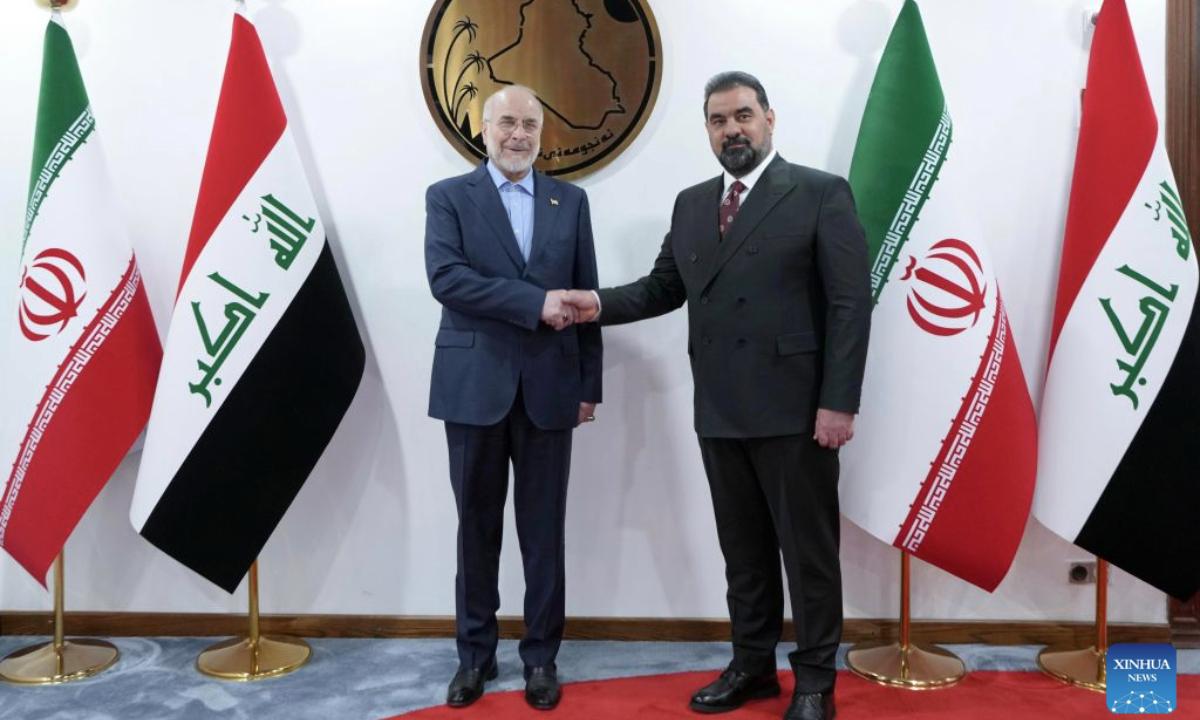
In a separate meeting, Iraqi Parliament Speaker Haibet al-Halbousi stressed the importance of activating friendship committees, strengthening parliamentary diplomacy, and expanding bilateral cooperation, a statement by the Iraqi parliament said.
Al-Halbousi also called for granting Iraq a special status for oil exports via the Strait of Hormuz to safeguard its economic interests, noting that Iraq is among the countries most affected by regional turbulence.
For his part, Ghalibaf expressed his country's appreciation for the deep historical relations between the two neighboring countries, stressing Iran's keenness on coordination and cooperation with Iraq in various fields.
Trump escalates economic pressure
In Washington, US President Donald Trump announced what he described as "the most crushing economic operation ever taken" against any country providing a lifeline to Iran.
Trump warned that "ANY country that allows its financial institutions, businesses, airports, or government entities to provide any type of lifeline to Iran will itself face TREMENDOUS Economic Consequences," and demanded an immediate halt to financial and commercial conduits.

The comments came nearly a week after Treasury Secretary Scott Bessent said the US would apply measures that have "never been seen" on Iran, targeting Iranian "bank accounts, crypto wallets, assets around the world, cutting off payments into both the leadership in the regime and the government itself."
Trump also said he was in "possession" and in "complete control" of the Strait of Hormuz, which the article says has been effectively closed shortly after the US and Israel launched a massive military campaign against Iran on Feb 28.
The same report said the US military has established a shipping corridor in and out of the Strait of Hormuz, with 15 to 20 oil tankers moving in and out each night through a southern channel along the coast of Oman.
Regional tensions and diplomacy
While Iraq and Iran discussed cooperation in Baghdad, the report also described heightened regional tensions tied to the Strait of Hormuz and US-Iran military pressure.
“He described Israel as a “cancerous tumor that must be eradicated.””
Kurdistan24 said Halbousi told Qalibaf that the Iraqi people, government, and political forces oppose Israel’s aggression against Iran, describing Israel as a "cancerous tumor that must be eradicated."
Kurdistan24 also said Halbousi highlighted the approaching withdrawal of U.S. forces from Iraq and called for stronger economic ties between Baghdad and Tehran, including efforts to facilitate Iraqi oil exports through the Strait of Hormuz.
In parallel, United News of Bangladesh said Iran rejected the United Arab Emirates' accusation that it fired two ballistic missiles that fell into the Persian Gulf, with Iranian Foreign Ministry spokesperson Esmail Baghaei criticizing the UAE's statement as going against good relations and efforts to reduce tensions.
The same UNB report said France would expel two Iranian diplomats in response to Iran's expulsion of two French diplomats earlier this week, after French Foreign Minister Jean-Noël Barrot criticized Iran for failing to investigate what he described as a deliberate attack.