USA12 August, 20263 min read
US Forces Fire Missile At Vela Nova In Gulf Of Oman, CENTCOM Confirms
This article is an automated aggregation of coverage from news outlets. Our editorials offer in-depth analysis curated by the NewsCord team.
US forces fired a helicopter-launched missile at the Panama-flagged Vela Nova, hitting its rudder. CENTCOM confirmed the strike as part of enforcing an embargo on Iranian ports.

Ship Strike and Blockade
American forces fired a missile from a helicopter at the rudder of the Vela Nova, a Panamanian-flagged container ship, in the Gulf of Oman, and US Central Command (CENTCOM) confirmed the attack on Tuesday. The Jerusalem Post said the US official told The Wall Street Journal earlier on Tuesday that the ship's crew was transferred to another vessel after the attack, and it added that no casualties or injuries have been reported at this time. The Jerusalem Post also tied the incident to US and Iran remaining at a standstill over peace talks to end the American blockade of Iranian ports and create a broader-reaching ceasefire.
In the same report, Pakistani Defense Minister Khawaja Muhammad Asif told Bloomberg News that “Things are shaping up again in favor of a peace arrangement or a deal,” as US officials reportedly discussed extending the ceasefire “indefinitely” if Iran's nuclear program is kept in check and traffic resumes in the Strait of Hormuz. The Jerusalem Post further described a separate maritime attack in the Bab el-Mandeb Strait, saying Houthis reportedly killed three crew members of a Tanzanian-flagged cargo ship, the Tihamah, with two Yemeni coast guard sources and two military officials in the government confirming the attack to Reuters.
Warship Claims and Blockade Enforcement
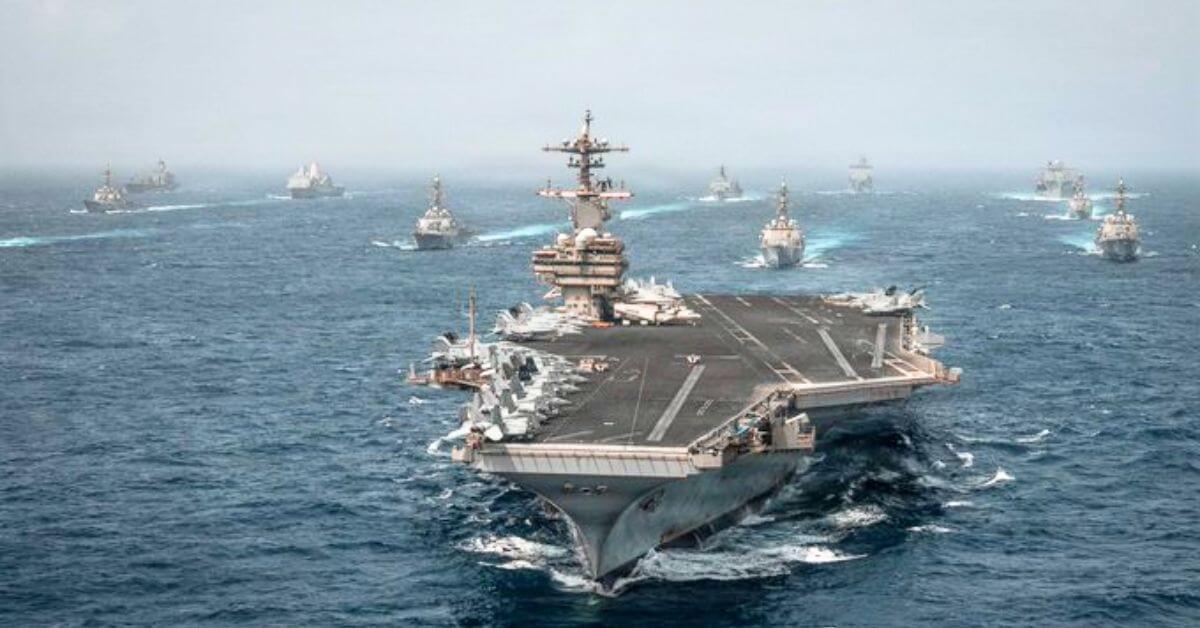
WANA News Agency reported that Iran’s Islamic Revolutionary Guard Corps (IRGC) spokesperson Hossein Mohebbi said the United States no longer has even a single warship in the Persian Gulf, describing the development as one of the consequences of the “Ramadan War.” Mohebbi told WANA that the United States had more than 100 warships in the Persian Gulf during the Iran-Iraq War and 30 to 40 warships in the region before the Ramadan War, while Washington now has no warships in the Persian Gulf. Marine Insight, citing CENTCOM, said the United States has deployed more than 20 warships across the Middle East to enforce a blockade against Iran, and it said CENTCOM redirected 55 commercial vessels, disabled two and boarded two to enforce the blockade.
Marine Insight added that tensions remain high around the Strait of Hormuz and said Iran has said it will not reopen the waterway to commercial shipping unless the United States meets several demands. In the same Marine Insight account, Iranian Foreign Minister Abbas Araqchi said on Sunday that an agreement with Oman on new shipping lanes through the Strait of Hormuz was in its “final stages,” while a U.S. official told Reuters Washington would lift its blockade of Iranian ports under an agreement aimed at restoring commercial shipping without impediments.

Deterrence, Threats, and Costs
In a television statement reported by قناة العالم, Brigadier General Nayyini said the Strait of Hormuz is under full Iranian sovereignty and added that the Hormuz Strait is entirely managed by the Revolutionary Guards’ naval forces. قناة العالم quoted Nayyini saying about 700 missiles and 3,600 drones were fired at American and Zionist targets, and it said he stressed that America now feels powerless while the U.S. military budget is 80 times larger than the Iranian military budget. Mehr News Agency, also quoting Hossein Mohebbi, warned that if a threat against Iran emerges, “hundreds of thousands of miles of energy transmission lines, thousands of power plants, and all American and non-American systems, and even global infrastructure connected to the Internet, would be at risk,” as the IRGC spox put it.
WANA News Agency said Mohebbi described the war’s impact on global supply chains, including that before the conflict between 125 and 140 ships passed through the mouth of the Persian Gulf each day while the number fell to six or seven during the war, and that around 1,300 loaded vessels were halted inside the Strait of Hormuz. WANA News Agency concluded that Mohebbi said the disruption sharply increased shipping and insurance costs and affected the supply of oil, petroleum products, raw materials and industrial components, with broader consequences for global financial markets and supply chains.