
Ahmad Vahidi and the IRGC Control Iran, Jerusalem Post Says Mojtaba Khamenei Not Leading
Key Takeaways
- Mojtaba Khamenei has not appeared publicly and may be unable to lead.
- IRGC generals, led by Ahmad Vahidi, effectively run Iran's decision-making.
- Khamenei is injured and under medical treatment, awaiting a prosthetic leg.
Who leads Iran now
Iran’s leadership question—“Who is in charge?”—has become a central focus of reporting since the opening strikes of Iran’s current war with the US and Israel, with multiple outlets describing a system where formal authority and practical control appear to diverge.
“Who is running Iran right now”
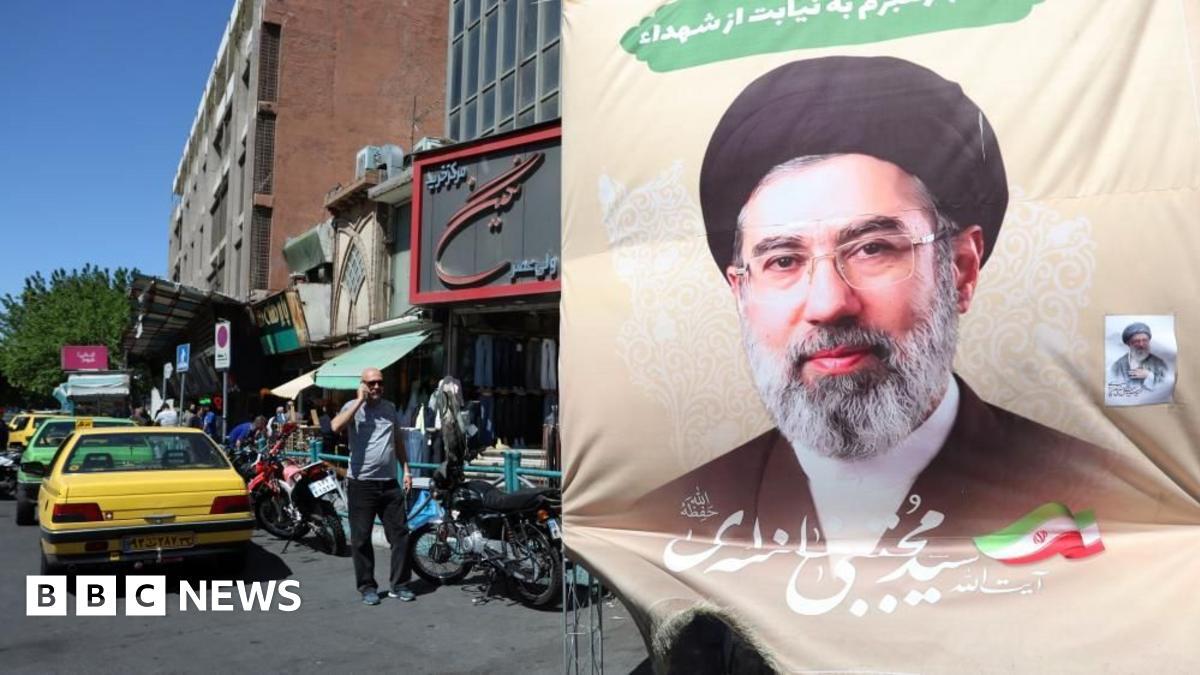
The BBC frames the formal answer as clear: “Mojtaba Khamenei has assumed the role of supreme leader following the killing of his father, Ali Khamenei, on the first day of the war on 28 February,” but adds that “the picture is far murkier.”

ABC News similarly says decision-making in Iran is “not as centralized as it was before,” and that “there is no clear evidence of fractures at the level of core decision-making,” even as President Donald Trump has described “fractured” leadership.
The Jerusalem Post goes further, citing “two people familiar with the matter” who say Mojtaba Khamenei is “not functioning as the Iranian supreme leader and is not in control,” and that “the Islamic Revolutionary Guard Corps (IRGC) and its commander, Ahmad Vahidi, were essentially in control of Iran.”
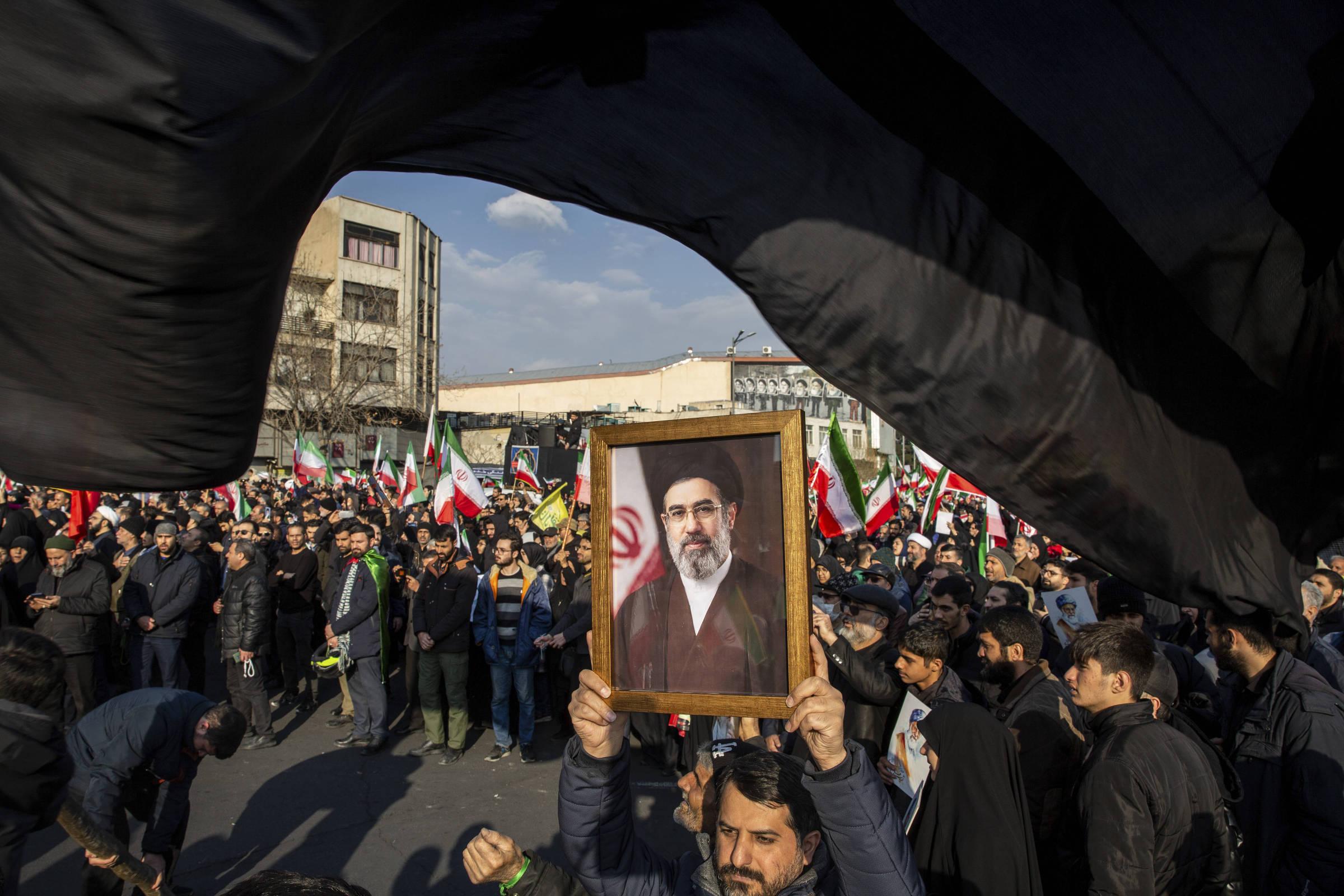
In parallel, the BBC notes that Mojtaba Khamenei “has not been seen in public since taking power,” and that “there is little direct evidence of his day-to-day control.”
The Times of India and The Hill both tie the uncertainty to his injuries and limited contact, with The Hill reporting that Khamenei “has had very little contact with Iranian generals amid negotiations to end the war.”
Injuries, secrecy, and a “board”
Across the coverage, the physical condition and near-total absence of Mojtaba Khamenei in public life is repeatedly linked to a governance style that appears to rely on intermediaries and sealed communications.
The BBC says “Invisible leader Mojtaba Khamenei has not been seen in public since taking power,” and notes that beyond “a handful of written statements,” there is “little direct evidence of his day-to-day control.”

The Independent reports that Khamenei “has not been seen or heard since he was appointed to the role in March,” and adds that four senior Iranian officials told The New York Times he is “gravely wounded” but “mentally healthy,” with “one of Mr Khamenei’s legs was operated on three times” and “his face and lips have been badly burned, making speaking difficult.”
The Times of India similarly says he is “awaiting a prosthetic leg” after “severe facial burns,” while The Hill states that he is “awaiting a prosthetic leg and facial plastic surgery,” and that he “has severe facial burns for which he will get additional surgical procedures.”
The Times describes how Khamenei is “attempting to run Iran via a labyrinthine system of couriers,” with “sealed, handwritten messages” exchanged by “cars and motorbikes,” and says his orders are “relayed through the same process in reverse.”
The Independent adds that “Iranian generals are delivering messages to the ayatollah on handwritten notes sealed in envelopes and passed on by trusted couriers to his hideout.”
In this framing, Abdolreza Davari’s “director of the board” description becomes a recurring metaphor for how decisions are processed, with The Hill quoting him that “Mojtaba is managing the country as though he is the director of the board” and that “the generals are the board members.”
IRGC commanders and the Strait
Multiple reports converge on the idea that the IRGC is increasingly central to operational decisions, especially those tied to the Strait of Hormuz and the day-to-day pace of the war.
“After a wave of assassinations targeting top Iranian officials and a supreme leader who has not been seen in public since the war began, a key question has emerged: who is really running Iran”
The BBC says “Control over the Strait of Hormuz is Iran's most immediate source of leverage,” but that “decisions over its closure sit with the Islamic Revolutionary Guard Corps (IRGC), led by Ahmad Vahidi, rather than the diplomatic team.”
ABC News likewise warns that “there is concern that Iran has become an increasingly militarized country tightly controlled by the Islamic Revolutionary Guard Corps,” and lists the IRGC-linked figures it says bind the new system, including “Brigadier General Ahmad Vahidi, commander in chief of the IRGC,” and “General Yahya Rahim Safavi.”
The Jerusalem Post similarly asserts that “the IRGC staged a show of force and launched ballistic missiles during a drill,” and quotes Nati Tuvian saying “Members of the IRGC, and Vahidi in particular, are not figures who are willing to make concessions.”
The ABC’s account of the political-military dynamic includes a description of how the “widening gap” between civilian and security preferences is becoming visible, with Andreas Krieg telling the outlet “the widening gap between what the civilian camp appears to want and what the security camp will permit.”
The Australian Broadcasting Corporation also describes friction over Hormuz, saying Foreign Minister Abbas Araghchi declared the Strait “completely open” after a ceasefire, but “the next day, the IRGC announced the strait was closed again.”
The BBC adds that diplomatic channels “open but only just,” noting that Araghchi’s brief reversal about Hormuz was “a rare glimpse of how little control the diplomatic track has over military decisions.”
In the same thread, the Jerusalem Post reports that Tehran refused to attend talks with US Vice President JD Vance and Parliament Speaker Mohammad Bagher Ghalibaf “as long as a naval blockade remained in place,” linking the dispute to internal disagreements over negotiations.
Competing narratives from US and allies
The reporting also shows sharp differences in how US officials and Israeli-aligned perspectives interpret Iran’s internal dynamics, with Trump’s public claims of confusion and infighting contrasted against other sources describing a more stable core.
The Times says President Trump blamed “confusion and infighting at the top of the Iranian regime for the stalemate in peace negotiations,” and quotes Trump on Truth Social: “Iran is having a very hard time figuring out who their leader is! They just don’t know!”
The Jerusalem Post similarly reports that Trump has “recently stopped referring to Khamenei,” and includes Trump’s MS NOW remarks: “Iran has no idea who its leader is. They are completely confused...”
ABC News, however, presents a different picture from “multiple sources involved in security and policy,” stating that “the overall view is that decision-making in Iran is no longer centralized around the supreme leader as it was before the war” but that “there is not a huge gap between different factions within the regime.”
ABC News also includes a regional policy source saying, “there may be differences in emphasis and approach within the Iranian system, but there is no clear evidence of fractures at the level of core decision-making.”
The Jerusalem Post adds an Israeli expert framing, with Nati Tuvian telling the Post that “The moment they do, they will lose public support,” and that “The likelihood that anyone outside the IRGC was currently making decisions in Iran, especially regarding negotiations with the United States, was “slim to none.”
Meanwhile, the BBC emphasizes the ambiguity of signals from the top, describing a “vacuum of interpretation” because Khamenei’s “signalling function is now largely missing.”
The Australian Broadcasting Corporation adds a domestic dimension by quoting people in Tehran describing increased repression, with Medi saying “Clearly, the regime has grown much harsher,” and Maryam saying “The regime's only skill is spreading fear and terror: cutting off the internet, jamming satellite networks, executing innocent youth.”
Together, the outlets depict not just a leadership dispute, but competing explanations for why negotiations stall and why the war’s operational tempo appears to be set by security institutions.
What comes next
The stakes described across the coverage center on whether diplomacy can proceed when the operational levers—especially the Strait of Hormuz—are controlled by IRGC commanders, and when external powers fear they cannot identify a single decision-maker.
“Trending: West Asia war updates Strait of Hormuz US Navy chief steps down IPL Super El Nino Devil Wears Prada 2 advertisement Iran president Pezeshkian joins treatment of Supreme Leader Mojtaba Khamenei: Report FP News Desk _•_ April 23, 2026, 20:15:37 IST advertisement Iran President Masoud Pezeshkian is reportedly involved in treating Supreme Leader Mojtaba Khamenei, raising questions over leadership stability as the country faces ongoing conflict”
The BBC says “Even when diplomatic channels are open, the system appears unable or unwilling to commit,” and points to the “stalled second round of talks with the US in Islamabad” as reinforcing that the diplomatic track cannot reliably translate into strategic decisions.
The Jerusalem Post reports that Tehran refused to attend talks involving US Vice President JD Vance and Parliament Speaker Mohammad Bagher Ghalibaf “as long as a naval blockade remained in place,” and adds that a message from a circle close to Khamenei’s office prohibited the negotiating team from discussing nuclear issues.
The Times of India and The Hill both describe how Khamenei’s limited direct engagement and reliance on couriers has contributed to a system where “decisions are often presented to him as ‘fait accompli,’” with The Hill quoting Sanam Vakil that “Mojtaba is not yet in full command or control.”
The Hill also quotes Ali Vaez saying “Mojtaba is not supreme; he might be leader in name, but he is not supreme the way his father was,” and that “Mojtaba is subservient to the Revolutionary Guards.”
Beyond negotiations, the Sky News Arabia report says Trump has not yet decided on sending American forces to seize nuclear material, citing sources who told CBS News that Trump said, “I have a lot of decisions to make,” as the Pentagon prepared options.
That same report says the IAEA “could not determine the fate of about 400 kilograms of highly enriched uranium,” and notes that a British maritime security agency reported “about 15 attacks since the start of operations,” using “unidentified projectiles,” as oil tankers face risks from “missiles, drones, and naval mines.”
In this environment, the BBC’s framing of leverage and the IRGC’s operational autonomy suggests that even if diplomatic talks resume, the ability to deliver consistent commitments may remain constrained by the security chain of command.
More on Iran
Trump Orders U.S. Forces To Board Iranian Ships Amid Hormuz Blockade
17 sources compared

Trump Sends Witkoff and Kushner to Pakistan for Talks With Iran Foreign Minister Abbas Araghchi
33 sources compared

Trump Administration Sanctions Hengli Petrochemical And 40 Shippers Over Iranian Oil
16 sources compared

Pentagon Considers Suspending Spain From NATO Over Iran War Support Dispute
16 sources compared