Iranupdated 25m ago3 min read
MapIRGC Navy Says Two Oil Tankers Hit Mines and Catch Fire in Strait of Hormuz
“It remained unclear whether either incident was connected to the mine strikes claimed by Iran.”
“attempting to transit the chokepoint via a southern route not authorized by Iran”
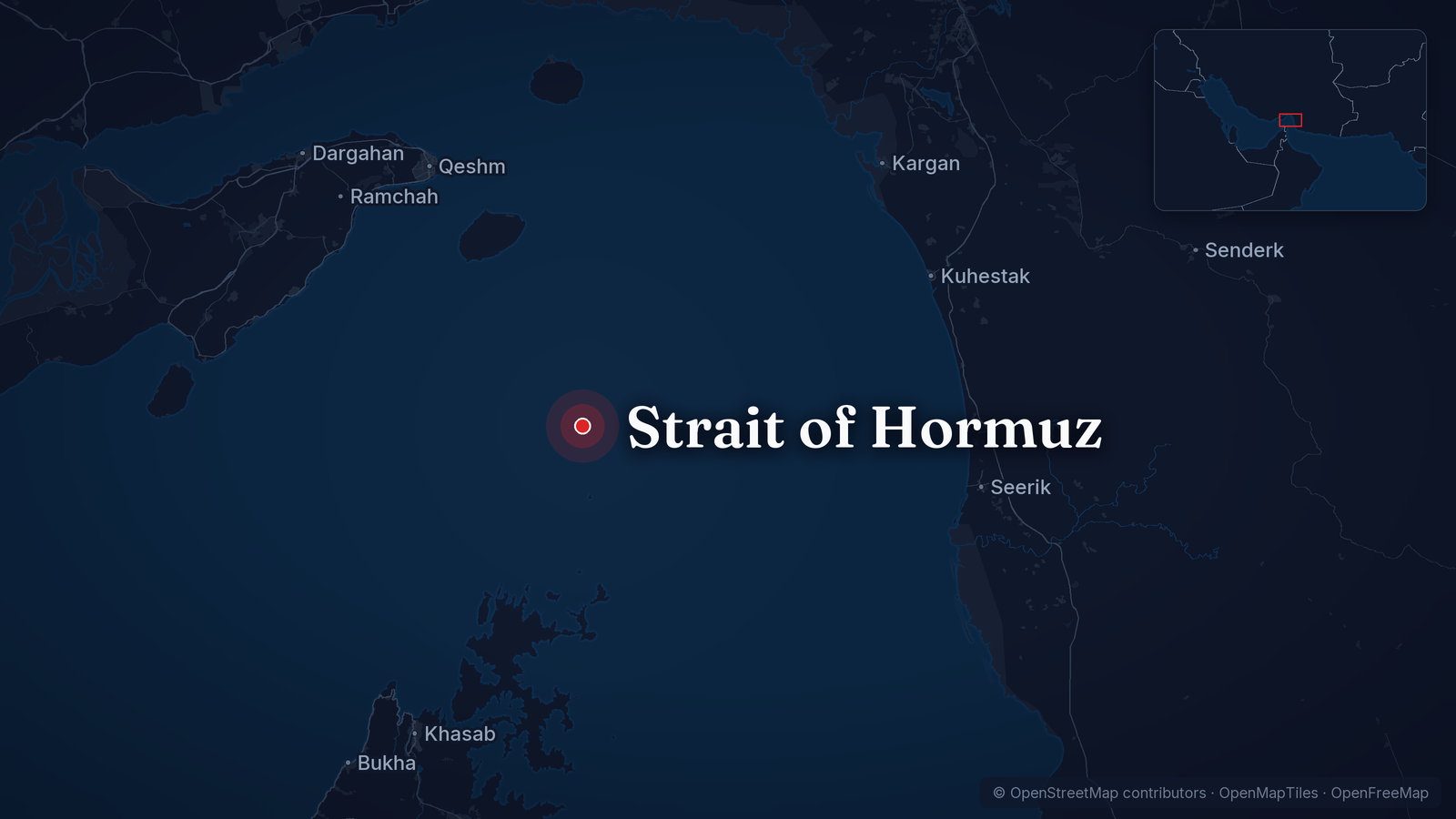
Map: © OpenStreetMap contributors, ODbL · Cropped for layout
This article is an automated aggregation of coverage from news outlets. Our editorials offer in-depth analysis curated by the NewsCord team.
IRGC says two oil tankers hit naval mines in Strait of Hormuz and caught fire. One of the two tankers sank after the mine strike.
Save coverage image
The Jerusalem Post was read line by line by the Watchdog: 3.0. See the score →
Mines, fires, and a drone
Iran’s Islamic Revolutionary Guard Corps (IRGC) Navy said on Monday that two oil tankers struck naval mines and caught fire while attempting to cross the southern part of the Strait of Hormuz through a route Tehran considers unauthorised. The United Kingdom Maritime Trade Operations agency reported two tanker attacks in the strait on Monday, including a tanker disabled and an engine room fire after an attack seven nautical miles north of Khasab, Oman. Iran’s regular navy said another tanker caught fire and became immobilised after striking a mine in restricted waters east of the strait, while the claims could not be independently verified and Iranian authorities did not identify the vessels involved.
A drone alert also raised concerns in Iraq’s semi-autonomous Kurdistan region after warning sirens sounded following a drone flying over the Khor Mor gas field on Monday, Reuters reported citing two security sources. Dana Gas said production at Khor Mor had already been halted the previous week following a suspected drone attack that sparked a fire and disrupted 2.8 gigawatts of electricity generation.
Competing counts and routes
Iran’s Army said another oil tanker that switched off its navigation systems caught fire and was heavily damaged after striking a naval mine in the prohibited zone east of the Strait of Hormuz, and it said it was the fourth tanker damaged east of the strait in the past 24 hours. Iranian authorities also claimed that four vessels had suffered fires after being hit by naval mines in the Strait of Hormuz, with the Revolutionary Guard Corps Navy reporting that two tankers experienced “several very powerful explosions” after colliding with mines on the southern route. The Iranian public broadcaster IRIB, as cited in one report, said the two “offending tanker vessels exploded a short distance from the two previous ones, bringing the total number of ships on fire and sinking in the Strait of Hormuz since yesterday to six.”
The Jerusalem Post, citing an IRGC statement carried by state media, said the IRGC reported on Monday that six tankers caught fire in similar incidents on Sunday and Monday. The same reporting said Iran’s navy had also claimed on Saturday that an oil tanker caught fire after hitting a naval mine in the eastern Strait of Hormuz, and Reuters could not immediately verify the report.
What comes next for shipping
Iran’s Army Navy said security in the Strait of Hormuz cannot be secured through rhetoric and false claims, and it said safe passage requires compliance with maritime regulations and coordination with Iran’s Armed Forces. Iran’s Navy warned that “disabling tracking systems and entering prohibited or unsafe maritime zones without authorization exposes offending vessels to grave risks,” while it also asserted that it maintains constant control and supervision over shipping traffic east of the Strait of Hormuz. The Iranian Revolutionary Guard Corps (IRGC) Navy described the actions as punitive measures in response to the U.S. military's illegal blockade and violations of Iran's regulations governing the Strait of Hormuz, according to a statement carried by Iranian Mehr news agency.
The United Nations’ International Maritime Organization recorded 136 security incidents involving vessels in the Strait of Hormuz and the wider Middle East between March 1 and November 11, including 35 in October alone. A US official confirmed to Al Jazeera that the aircraft carrier USS Theodore Roosevelt had arrived in the region, bringing the number of American aircraft carriers operating in the US Central Command area to three as tensions with Iran remained high and diplomatic efforts to end the war and reopen the Strait of Hormuz remained stalled.