Israel And Lebanon Resume Peace Talks In Washington Over Disarming Hezbollah
Key Takeaways
- Talks resumed in Washington to discuss disarming Hezbollah and improving Lebanon-Israel ties.
- Israeli Ambassador Yechiel Leiter and Lebanese Ambassador Nada Hamadeh Mouawad lead delegations.
- Outlook remains uncertain with warnings that Iran-US understanding could empower Hezbollah.
Talks resume in Washington
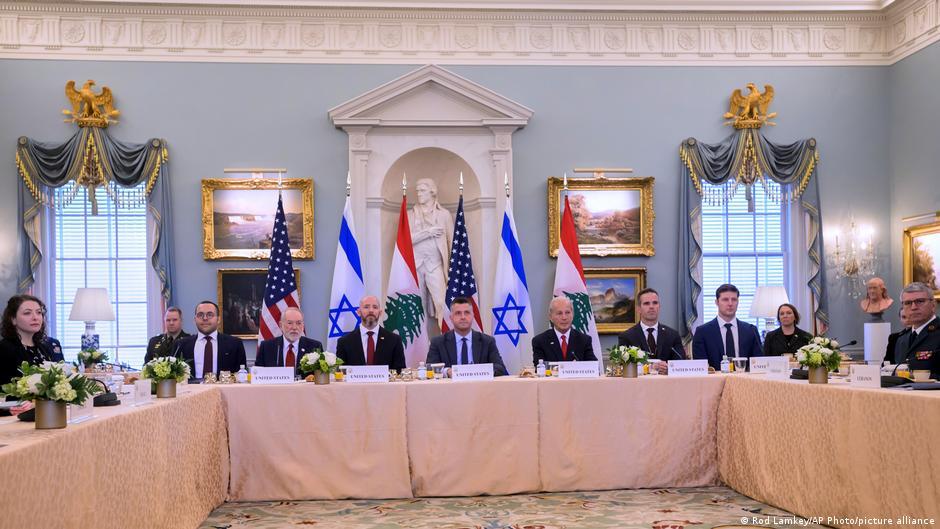
Israeli and Lebanese officials held a third round of peace talks in Washington to discuss disarming Hezbollah and improving relations between the two countries, with the talks continuing into the day but progress still unclear.
“More than a million people were displaced from southern Lebanon due to the escalation between Israel and the Iranian-backed Shiite Hezbollah militia”
Israel’s delegation is led by Ambassador Yechiel Leiter, while Lebanon’s delegation includes Ambassador Nada Hamadeh Mouawad and former Ambassador Simon Karam.
The latest conflict started on March 2 after Hezbollah launched rockets into Israel, and on April 26 Israeli Prime Minister Benjamin Netanyahu ordered stronger attacks on Hezbollah targets in Lebanon.
The News On AIR report says Israel wants to keep the freedom to carry out military operations against Hezbollah until a final agreement is reached, while Lebanon is demanding that Israel withdraw from Lebanese territory, stop airstrikes, and end the destruction of border villages.
The same report says the Israeli military has reported repeated rocket launches from Lebanon and said it has destroyed several Hezbollah sites and infrastructure.
Leiter attacks the premise
U.S.-sponsored talks between Lebanon and Israel resumed in Washington as Israel warned that a new U.S.-Iran understanding could give Hezbollah added momentum and complicate efforts to stabilize security in southern Lebanon.
Israel’s ambassador to Washington, Yechiel Leiter, described the Lebanese-Israeli peace talks underway as 'a train wreck rushing toward the abyss,' and said the U.S.-Iran memorandum of understanding signed on June 17 had given Tehran unwarranted leverage in Lebanon.

Leiter told reporters, 'We are facing a disaster. The fundamental premise was that Iran was out of the equation,' and said the government’s role is to exercise sovereignty while Iran should have no illicit activity or malign influence in Lebanon.
Lebanese President Michel Aoun confirmed in a statement from his office that U.S. Secretary of State Marco Rubio and Vice President J. D. Vance pledged to activate a tripartite committee comprising the United States, Lebanon, and Iran to cement a ceasefire in Lebanon.
The fifth round of talks runs until June 25, with representatives from the two countries and senior military officers focusing on laying the groundwork for a possible Israeli withdrawal from certain areas in southern Lebanon.
Framework agreement and fallout
A trilateral framework agreement reached in Washington under U.S. sponsorship is described by DW as paving the way for a political settlement under U.S. supervision, but many Lebanese doubt it can end the fighting because it did not include Hezbollah as a party.
“Israeli and Lebanese officials held a third round of peace talks in Washington to discuss disarming Hezbollah and improving relations between the two countries”
Hezbollah rejected the agreement, and DW reports that Naim Qassem, Hezbollah’s secretary-general, described it as “humiliating and shameful” and a “betrayal of Lebanon’s sovereignty,” warning that it “grants” Israel the ability to permanently annex Lebanese lands.
DW also says the Israeli army currently controls about 600 square kilometers of southern Lebanon, while Hezbollah supporters clashed with security forces near government buildings after supporters took to the streets in Beirut and set tires on fire.
Raymond Khouri, a 39-year-old Beirut resident, told DW that Article 13 could mean not holding perpetrators to account because it states that “all hostilities or opposition in international political or legal forums” should cease.
In a separate account, Naharnet reports Joseph Aoun said he is "not fond of Israel," but told journalists, "I tell you, I am not fond of Israel, but give me another solution, whatever it may be, and I will proceed with it" as direct negotiations are described as the only way to pull Lebanon out of war and hostilities.
More on Lebanon

IDF Targets Hezbollah Cell in Airstrike Near al-Aaqaide, Close to Nabatieh
10 sources compared
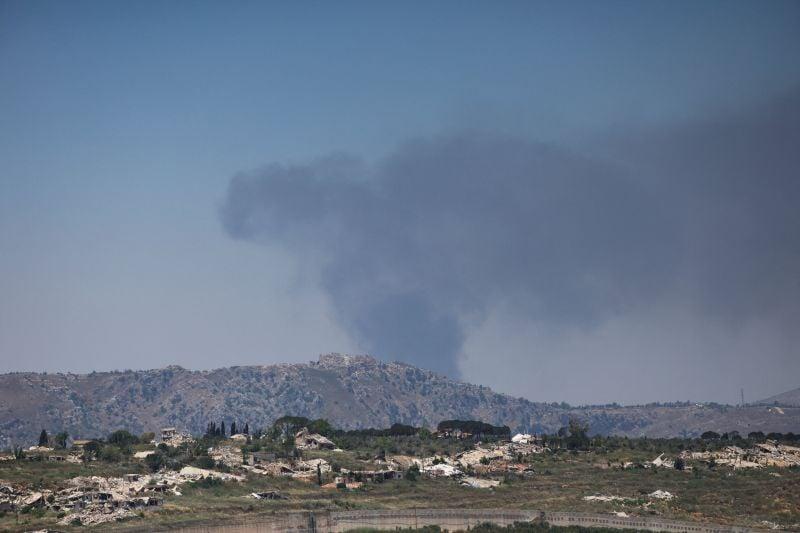
Israel And Lebanon Negotiate Hezbollah-Free Zone Before Israeli Pullback From Southern Villages
12 sources compared

Israel’s Givati Brigade Completes Mission In Southern Lebanon After Eight Months
15 sources compared

Syria Signals Diplomacy After Asaad Al-Shaibani Lebanon Trip, Rejects Military Intervention Against Hezbollah
29 sources compared