
Israel assassinates Iranian intelligence minister Esmail Khatib
Key Takeaways
- Israel killed Iran's Intelligence Minister Esmail Khatib in Tehran overnight strike.
- Khatib's death followed Ali Larijani and Basij commander Gholam Reza Soleimani killings.
- Iran retaliated with missiles and drones against Israel and Gulf states.
Assassination Confirmed
Israeli Defense Minister Israel Katz confirmed on Wednesday that the Israel Defense Forces had assassinated Iranian Intelligence Minister Esmaeil Khatib in an overnight strike.
“Israel says Iran's intelligence minister killed in overnight strike Israeli Defense Minister Israel Katz on Wednesday said that Iranian Intelligence Minister Esmaeil Khatib was killed in an overnight Israeli strike in Tehran, according to a statement issued by Katz's office”
This marked the third top Iranian official killed in two days, following the deaths of Iran's security chief Ali Larijani and Basij militia commander Gholamreza Soleimani on Tuesday.

The operation was described as enabled by joint U.S.-Israeli intelligence efforts according to Israeli officials.
Katz announced that he and Prime Minister Benjamin Netanyahu had authorized the military to eliminate any senior Iranian official without requiring additional approval.
The defense minister stated that 'significant surprises are expected throughout this day on all fronts' which would 'escalate the war we are conducting against Iran and Hezbollah in Lebanon.'
The IDF confirmed the strike in a separate statement, describing Khatib's ministry as having 'advanced intelligence capabilities' conducting operations worldwide against Israeli and American targets.
Target Background
Khatib, a 60-61 year old Shiite cleric and former Islamic Revolutionary Guard Corps member, had served as Iran's intelligence minister since August 2021 under President Ebrahim Raisi.
He was retained by successor President Masoud Pezeshkian in an unusual move given that traditionally new presidents replace top ministers with their own close associates.

The U.S. Treasury Department had sanctioned Khatib in 2022 for alleged cyber operations against Washington and its allies.
The Treasury accused him of directing networks involved in 'cyber espionage and ransomware attacks in support of Iran's political goals.'
The Israeli military described Khatib as playing a 'significant role in the brutal crackdown on the recent anti-government protests in Iran' and operating against Iranian citizens during the Mahsa Amini protests.
His reported death removes another pivotal figure from Iran's core political and security establishment at a moment of acute crisis following the deaths of Larijani and Soleimani.
Iranian Response
Iran initially did not confirm Khatib's death, though state television aired live footage of funeral processions for Larijani and Soleimani in Tehran.
“According to Press TV, the ceremony took place Wednesday as officials and mourners gathered to honour the two figures”
Thousands of mourners waved Iranian flags at the funeral, showing large pro-government events organized amid Israeli airstrikes.
President Pezeshkian later described Khatib's killing as an 'unfair assassination' in a post on X.
He mourned the loss of his 'dear colleagues, Esmaeil Khatib, Ali Larijani, and Aziz Nasirzadeh, along with some of their relatives and others.'
Iran's Foreign Minister Abbas Araghchi suggested the killings would not destabilize Iran's political system, stating 'the presence or absence of a single individual does not affect this structure'.
The Revolutionary Guards warned people to stay away from major oil and gas facilities in Saudi Arabia, the UAE and Qatar, claiming these sites could become potential targets in the coming hours.
Regional Escalation
The assassination occurred amid escalating regional violence, with Israel simultaneously intensifying strikes on Lebanon.
Israeli strikes killed at least 12 people in central Beirut, including the director of Hezbollah's political programming, Mohammad Shari, and his wife.

Israeli forces flattened an apartment building in the Zuqaq al-Blat neighborhood shortly after issuing evacuation warnings.
This continued a pattern of strikes hitting areas far from Hezbollah's southern strongholds.
The conflict has displaced more than 1 million people in Lebanon, roughly 20% of the population, according to the Lebanese government.
In retaliation for the leadership killings, Iran fired multiple-warhead missiles at Israel, killing two people in Tel Aviv suburb Ramat Gan.
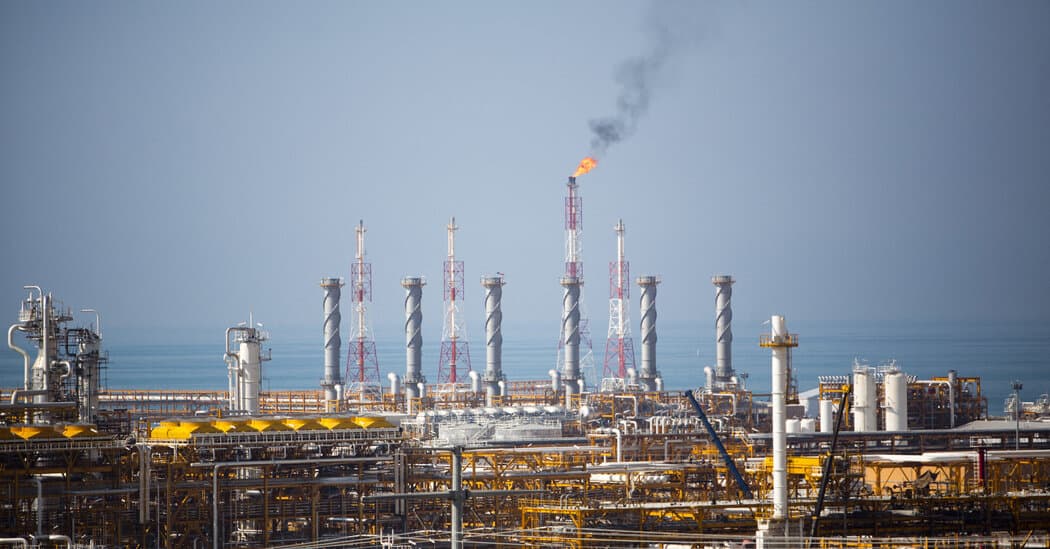
Iran also targeted energy infrastructure in the Persian Gulf, with reports of attacks on Iran's South Pars gas field shared with Qatar.
Qatari officials condemned the strikes as 'a dangerous & irresponsible step amid the current military escalation.'
Global Impact
The assassination sent shockwaves through global markets, with Brent crude oil prices rising around 5% to trade above $108 per barrel.
“BREAKING Iran confirms killing of Intelligence Minister Esmaeil KhatibQatar, Kuwait, UAE, Saudi Arabia intercept missiles, dronesIran threatens to hit energy facilities in Saudi Arabia, Qatar and the UAE Click to pause breaking news tickerpause-square-backgroundClose Breaking News Tickerclose”
This marked the fifth straight session above the $100 mark - its longest such streak since August 2022.

The surge came amid escalating supply concerns after attacks on energy infrastructure in the region.
The U.S. military confirmed dropping multiple 5,000-pound deep penetrator bombs on Iranian missile sites along Iran's coastline near the Strait of Hormuz.
The IAEA reported that the Bushehr nuclear power plant complex was hit by a projectile but suffered no damage.
International reactions were mixed, with France's special envoy to Lebanon criticizing both Hezbollah and Israel, calling Israel's response 'disproportionate and counterproductive.'
White House spokesperson Karoline Leavitt praised Khatib's death as 'a good thing for the United States and the American people.'
Germany's Chancellor Friedrich Merz stated his government would have advised against the Iran attack if consulted, saying 'to this day, there is no convincing plan as to how this operation might succeed.'
More on Iran

Israel Assassinated Iran's Supreme National Security Council Secretary Ali Larijani and Basij Commander Gholamreza Soleimani
12 sources compared
Israel Kills Iranian Intelligence Minister Esmail Khatib
33 sources compared

Iran accuses Israel of hitting South Pars gas field as markets surge
22 sources compared

Israel Kills Iran's Security Chief Ali Larijani in Overnight Strike
51 sources compared