Iran · 21 March, 2026 · 3 min read
Israel Attacks Tehran and Beirut as U.S. Deploys Marines
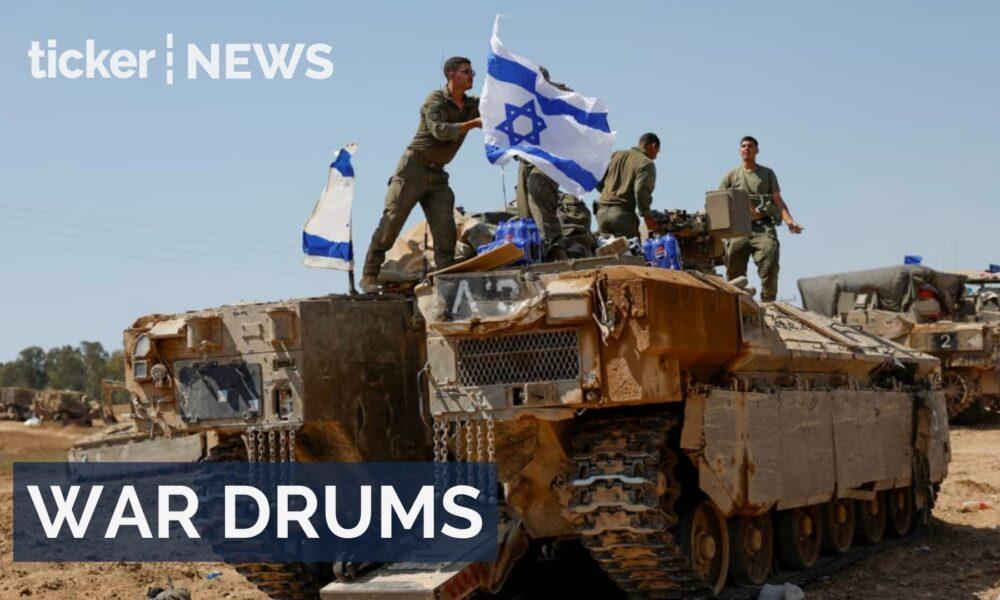
The United States deployed additional Marines to the Middle East amid escalating conflict. Israel attacked Tehran and Beirut; Iran fired missiles at Israel and Gulf states.
Israeli strikes on Beirut and related civilian-military actions.
6 of 7 outlets skipped it: ali Mohammad Naini, spokesperson for Iran's Islamic Revolutionary Guard Corps, was killed.
7outlets compared
Same story, two versions
tap a side to read it in full
The Straits Times
“"We are getting very close to meeting our objectives as we consider winding down our great Military efforts in the Middle East."”Read the original ↗
The National
“"No, I’m not putting troops anywhere," the US President said, while criticising Nato allies as “COWARDS” over reluctance to help reopen the strait.”Read the original ↗
Shows how outlets frame the same moment differently: one emphasizes a potential wind-down, while others highlight the denial of troop deployment, signaling divergent editorial framing around U.S. posture.
Regional Escalation
Israel launched significant military strikes on both Tehran and Beirut in a major escalation of the regional conflict that has entered its fourth week. The Israeli military confirmed fresh attacks on Tehran while simultaneously targeting Hezbollah in the Lebanese capital Beirut, marking a direct confrontation with the Iran-backed militia.
“Israel also launched new attacks on Iran on Saturday, including on the capital Tehran, its military said.”
Hezbollah had previously fired on Israel in support of Tehran on March 2, prompting Israel's intensified military response. The strikes represented a dangerous escalation in the conflict that began when Israel and the United States jointly attacked Iran on February 28, with the violence now threatening to engulf multiple countries in the region.

Military Buildup
The United States significantly escalated its military presence in the region by deploying 2,500 Marines along with the amphibious assault ship Boxer and accompanying warships to the Middle East. This deployment represents the second major marine reinforcement in recent weeks, following the dispatch of 5,000 Marines from the Japan-based USS Tripoli.
Despite the troop buildup, President Trump publicly stated that he is 'not putting troops anywhere' while simultaneously criticizing NATO allies as 'cowards' for their reluctance to help reopen the vital Strait of Hormuz. The U.S. currently has approximately 50,000 troops stationed in the region, raising concerns about the potential for direct military involvement in Iran.

Economic Crisis
The conflict has triggered a severe economic crisis with global oil prices jumping 50% since the war began, threatening worldwide economic shock. Vital energy infrastructure in Iran and neighboring Gulf states has been extensively damaged, leading to the effective closure of the strategically critical Strait of Hormuz. This vital waterway, which handles around a fifth of global oil and liquefied natural gas supplies, has been largely inaccessible to most shipping since the conflict began.
“Key energy infrastructure in Iran and nearby Gulf states has been damaged, causing oil prices to spike by 50%.”
The economic fallout has already impacted international airlines, with United Airlines announcing a 5% reduction in scheduled flights for the second and third quarters in anticipation of prolonged higher oil prices. The Trump administration has responded by waiving sanctions for 30 days to allow the sale of 140 million barrels of Iranian oil that had been stranded on tankers.
International Reactions
International reactions to the escalating conflict have been sharply divided, with key allies expressing strong disagreement over U.S. and Israeli tactics. Germany and France have refused to participate in efforts to reopen the Strait of Hormuz, insisting that 'fighting must stop first' before any international intervention. German Chancellor Friedrich Merz indicated he would speak with President Trump over the weekend to address the growing rift.
Meanwhile, Iran has demonstrated defiance through new Supreme Leader Mojtaba Khamenei, who issued a defiant message marking Nowruz, the Persian New Year, claiming Iranians had 'dealt a disorienting blow to the enemy.' U.S. intelligence officials have raised questions about Khamenei's condition, noting his absence from public appearances since his father's death in the initial Israeli attack. President Trump has also revealed significant policy disagreements with Israeli Prime Minister Netanyahu, particularly regarding attacks on Iranian energy infrastructure.

Humanitarian Toll
The human cost of the escalating conflict has been severe, with over 2,000 casualties reported since the attacks on Iran began on February 28. In Lebanon alone, Israeli military operations have resulted in more than 1,000 deaths and over 1 million people displaced, creating a massive humanitarian crisis. The Israeli military issued evacuation warnings for seven neighborhoods in southern Beirut before launching airstrikes, while Lebanese state media reported that an Israeli air strike hit a house in the southern town of Ghandouriyeh, killing one person and wounding two others.
“Over 2,000 casualties have been reported since the start of attacks on Iran on February 28.”
The conflict has seen extensive regional missile exchanges, with Kuwait and Saudi Arabia intercepting Iranian missiles and drones, while Iran reportedly fired intermediate-range ballistic missiles at the US-UK military base at Diego Garcia in the Indian Ocean. As the violence spreads, international humanitarian organizations are increasingly concerned about the ability to provide assistance to civilian populations caught in the crossfire.
