Lebanon04 March, 20266 min read
Israel Bombs Beirut Suburbs And Baalbek In Widened Assault On Lebanon
Israel struck Beirut’s southern Dahiyeh suburb and Baalbek in a widened assault Hezbollah launched rockets, missiles and swarm drones into northern Israel, triggering Israeli retaliation

18 outlets told this the same way.
Outlets did split on Lebanon’s Judiciary Prepares To Apply General Amnesty Law No. 70, Judge Ahmed Rami Al-Hajj Says →
Hezbollah-Israel escalation
A sharp escalation began after Hezbollah carried out cross‑border attacks, which it described as retaliation for actions against Iran, and Israel responded with intensified air strikes and limited ground incursions targeting Hezbollah positions. Al Jazeera reported that “Israeli forces have intensified air strikes and limited ground incursions into Lebanon, saying they are targeting Hezbollah, after Hezbollah launched its first strike on Israel in over a year (which it described as retaliation for an Israeli‑US campaign on Iran).” Genocide Watch likewise described the timing and motive: “Early Monday Israel and Lebanon’s Iran‑aligned Hezbollah traded strikes after Hezbollah carried out cross-border attacks it said were retaliation for the reported killing of Iran’s Supreme Leader, Ali Khamenei.”
“Israeli forces have intensified air strikes and limited ground incursions into Lebanon, saying they are targeting Hezbollah, after Hezbollah launched its first strike on Israel in over a year (which it described as retaliation for an Israeli‑US campaign on Iran). Since Monday, more than 50 people have been killed in the ensuing exchanges.”
The Guardian summarized initial strikes and Israeli claims about Hezbollah casualties: “After cross-border attacks, Israel struck what it called Hezbollah targets in southern Lebanon, the Bekaa Valley and the Dahieh suburb of Beirut, saying strikes in Dahieh killed several senior Hezbollah officers.” Associated Press also noted the pattern of action and orders tied to the strikes: “The latest exchange began early Monday when Hezbollah fired rockets and drones into northern Israel; Israeli reprisals have killed more than 70 people, wounded over 400, and displaced tens of thousands...”

Beirut and Baalbek strikes
Air strikes struck densely populated areas of Beirut’s southern suburbs, including Haret Hreik and the Dahieh, and hit the eastern city of Baalbek. In Baalbek a strike on a residential building and other attacks caused multiple deaths and injuries. Al Jazeera described recent strikes hitting Beirut’s southern suburbs and Baalbek, saying "a strike on a residential building killed at least five and wounded 15."
thenationalnews reported widespread damage and an escalated toll, saying "Israeli air strikes and ground operations across Lebanon have caused extensive damage and dozens of casualties… The ministry put the toll from the latest escalation at least 50 dead and 335 wounded." Genocide Watch similarly listed strikes across Beirut’s southern suburbs and other areas and cited Lebanon’s health ministry, saying "Lebanon’s health ministry said at least 31 people were killed."

The Guardian reported that "Lebanon’s health ministry gave a preliminary toll of at least 31 dead and 149 injured; airstrikes and rocket fire caused widespread damage and mass displacement in southern Beirut." The reports give differing casualty figures: Al Jazeera reported at least five killed and 15 wounded from a residential strike, thenationalnews reported a ministry toll of at least 50 dead and 335 wounded, and Genocide Watch and The Guardian cited Lebanon’s health ministry with at least 31 dead and differing injured totals.
Evacuations and displacement reports
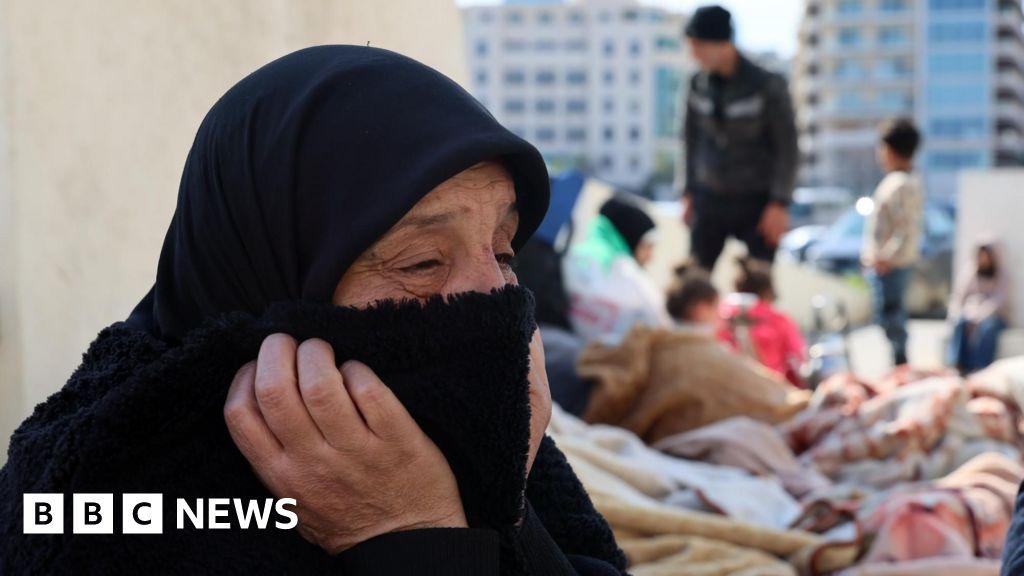
Al Jazeera said Syria closed its main crossing with Lebanon after an Israeli warning, and Syrian authorities recorded more than 25,000 people crossing into Syria over two days. Al Jazeera said Lebanon has registered roughly 65,000 displaced people in about 350 shelters, with another 10,000–20,000 estimated to be staying with relatives or on the streets. El País reported that the Israeli army issued an 'urgent notice' ordering about 250,000 residents of southern Lebanon to move north of the Litani River.
“Syria closed its main crossing with Lebanon after an Israeli warning; Syrian authorities recorded more than 25,000 people crossing into Syria over two days. Lebanon has registered roughly 65,000 displaced people in about 350 shelters, with another 10,000–20,000 estimated to be staying with relatives or on the streets.”
El País said the Lebanese Ministry of Health reports at least 72 deaths, including seven children, and more than 400 injured from the recent campaign, plus about 80,000 displaced people sheltering in roughly 300 government facilities. The Guardian documented that Israel mobilized roughly 100,000 reservists and ordered evacuations for 55 towns and villages near suspected Hezbollah sites, urging people to move at least 1 km away.
Genocide Watch documented that the Israeli military ordered evacuations for 55 towns and villages, told residents to move at least 1,000 metres from suspected Hezbollah sites, and mobilized about 100,000 reservists. The sources present differing figures and emphases: Al Jazeera reported border crossings and roughly 65,000 registered displaced (plus 10,000–20,000 with relatives or on the streets), El País reported a 250,000-person evacuation notice and about 80,000 in government facilities, and The Guardian and Genocide Watch documented large-scale evacuations and mobilization of roughly 100,000 reservists.
Strikes and political response
Israeli statements and independent reporting describe strikes on strategic Hezbollah infrastructure and claim senior militant casualties, while Lebanese authorities and the government criticized non-state armed actions. Al Jazeera reported strikes on locations including Haret Hreik, the southern town of Khiam, the eastern city of Baalbek, and areas including Aramoun and Saadiyat. Al Jazeera said the Israeli military issued forced-displacement orders for Haret Hreik and dozens of southern towns, saying it seeks to create a larger buffer zone, and Lebanese sources say Israeli forces advanced from seven border positions and entered Khiam.
Breaking Defense said Hezbollah fired missiles from southern Lebanon and Israel responded with multiple strikes in southern Lebanon and a Beirut suburb, and open-source footage shows some launches were intercepted. Breaking Defense reported Lebanon’s cabinet, led by Prime Minister Nawaf Salam, condemned armed actions outside state control, called Hezbollah’s operations illegal and demanded the group 'hand over its weapons'.
thenationalnews recorded that Israel said it struck more than 100 targets in 24 hours, carried out widespread raids across Beirut’s southern suburbs including Haret Hreik, Laylaki, Hadath and Jamous, and expanded troop positions in the south, entering part of the border town of Khiam. thenationalnews also said Hezbollah declared open war, carried out more than a dozen attacks on Israeli forces since Monday, and said it was acting to avenge the killing of the country’s supreme leader.
Regional conflict and warnings
The exchanges are unfolding amid a wider regional conflagration that has prompted travel warnings, embassy closures and fears of further escalation involving Iran and other proxies, though analysts caution about uncertainty and restraint by some groups.
“The U.S. State Department raised its travel advisory for Oman to Level 3 (‘reconsider travel’), saying Oman is now part of the wider Persian Gulf war zone; it noted Oman had recently tried to mediate U.S.-Iran nuclear talks that did not prevent the current conflict involving the U.S., Israel and Iran.”
The New York Times reported that "The U.S. State Department raised its travel advisory for Oman to Level 3 ('reconsider travel'), saying Oman is now part of the wider Persian Gulf war zone; it noted Oman had recently tried to mediate U.S.-Iran nuclear talks that did not prevent the current conflict involving the U.S., Israel and Iran."
PBS described the broader regional spread and casualty counts in multiple countries: "Following reported U.S. and Israeli strikes on Iran, the conflict has rapidly widened across the region… Fighting spread to Lebanon and northern Israel — with Hezbollah firing missiles and drones and Israel striking sites in Beirut’s southern suburbs — and heavy casualties were reported (the Iranian Red Crescent cited about 555 killed in Iran; other counts include 11 dead in Israel and dozens in Lebanon)."
France 24 noted related incidents and international condemnations: "The United States and several Arab states jointly condemned Iran for recent strikes on Gulf states hosting US troops, calling attacks on civilians and neutral countries reckless and destabilizing."
Analysts quoted by Breaking Defense and Axios pointed to Hezbollah’s diminished but potent role and the risks of wider escalation: "Analysts say it was uncertain whether Hezbollah would enter hostilities after being weakened in recent years… Despite nearly daily Israeli strikes over the past year that have degraded its capabilities, Hezbollah remains Iran’s most significant regional proxy. Israel has warned it would retaliate harshly if Hezbollah opened a new front."