Lebanon02 March, 20263 min read
Israel Bombs Beirut's Southern Suburbs, Kills at Least 52, Displaces Tens of Thousands
Israeli airstrikes hit Beirut’s southern suburbs, including the Hezbollah stronghold Dahiyeh Hezbollah launched rockets and drones toward northern Israel, including at a Haifa missile-defense site
19 outlets told this the same way.
Outlets did split on Lebanon’s Judiciary Prepares To Apply General Amnesty Law No. 70, Judge Ahmed Rami Al-Hajj Says →
Lebanon-Israel strikes overview
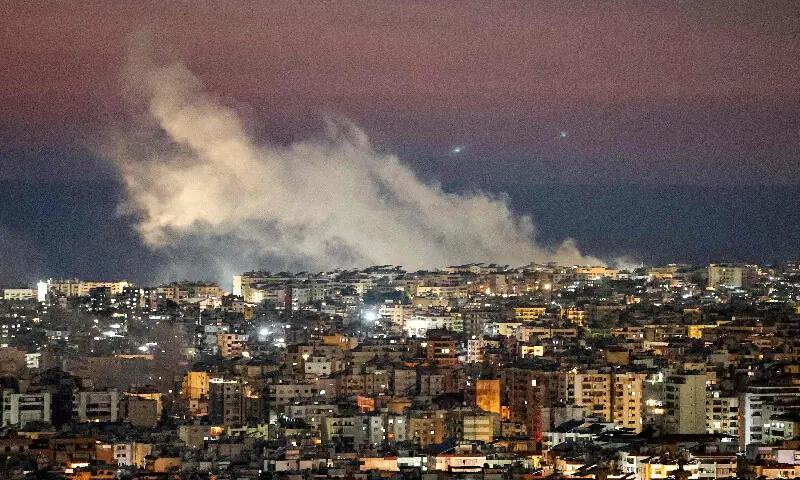
In the early hours of March 2, 2026, Israeli warplanes carried out heavy strikes on Dahieh, Hezbollah’s stronghold in Beirut’s southern suburbs, and across southern and eastern Lebanon after Hezbollah fired rockets and launched drones toward northern Israel; sources report large numbers of deaths, injuries and displacement but disagree on the toll. Mirage News summarized Human Rights Watch’s account that "Hezbollah fired rockets and drones into northern Israel; Israel then carried out more than 70 strikes across Lebanon — including southern and eastern Lebanon and Beirut’s southern suburbs — killing at least 52 people, injuring at least 154, and displacing tens of thousands, according to Lebanon’s Ministry of Social Affairs." IBTimes India described how the strikes forced residents to flee and prompted ambulances to evacuate casualties, and said no official toll had been released.
“Human Rights Watch warned that civilians face grave risk as fighting between Israel and Hezbollah escalated on March 2, 2026. In the early hours of that day Hezbollah fired rockets and drones into northern Israel; Israel then carried out more than 70 strikes across Lebanon — including southern and eastern Lebanon and Beirut’s southern suburbs — killing at least 52 people, injuring at least 154, and displacing tens of thousands, according to Lebanon’s Ministry of Social Affairs.”
The BBC noted Israel struck Hezbollah targets after the militia "said it fired rockets and launched drones toward Haifa." At least one major outlet gave a lower official toll: The New York Times reported that the strikes killed "at least 31 people," reflecting a clear discrepancy in casualty figures across sources.
Revenge claims over Khamenei
Hezbollah framed its strikes as retaliation for the killing of Iran's supreme leader, and several sources link the immediate escalation to that event. The Times of Israel said Hezbollah fired rockets into northern Israel saying the strike was "revenge" for the death of Iran's Supreme Leader Ali Khamenei, while IBTimes India reported Hezbollah invoked "Khamenei's killing" as motive. The New York Times likewise reported Hezbollah said it was "acting to avenge the death of Iran's supreme leader," a claim placed within the wider narrative of intensified U.S. and Israeli strikes on Iran.
Displacement after Lebanon strikes
The strikes prompted large-scale displacement and extensive evacuation orders, but the scale reported varies between outlets. Mirage News said the strikes killed at least 52, injured 154 and 'displac[ed] tens of thousands, according to Lebanon’s Ministry of Social Affairs,' and noted that Israeli forces 'issued evacuation warnings for more than 50 southern Lebanese towns.'
“Israel then carried out more than 70 strikes across Lebanon — including southern and eastern Lebanon and Beirut’s southern suburbs — killing at least 52 people, injuring at least 154, and displacing tens of thousands, according to Lebanon’s Ministry of Social Affairs.”
Saudi Gazette likewise reported Israel 'ordered residents of more than 50 villages in south Lebanon and the Bekaa Valley — including Bint Jbeil — to evacuate and stay at least 1 km (0.6 mile) from buildings,' comparing the scale to previous mass displacement orders. Al Jazeera described 'a mounting humanitarian crisis as hundreds of thousands flee southern Lebanon and Beirut’s southern suburbs,' a larger figure that conflicts with the 'tens of thousands' cited elsewhere.
Civilian risk and responses
Human-rights organisations and Lebanese officials warned of grave civilian risk and condemned the moves, while Israeli leaders vowed strong military responses. Mirage News relayed Human Rights Watch’s warning that civilians face "grave risk" and its call for allied countries to pressure both Israel and Hezbollah to respect the laws of war and minimize civilian harm. Lebanon’s Prime Minister Nawaf Salam condemned the rocket fire, warned against dragging Lebanon into a wider conflict, and pledged measures to protect the population, as reported by IBTimes India and AP7AM.
The BBC noted that Israeli Defence Minister Israel Katz ordered the military to "act forcefully" and said Hezbollah’s deputy leader, Naim Qassem, was a "marked target for elimination." Mirage/HRW also cited a history of alleged Israeli violations that HRW says make further abuses likely.
Middle East escalation coverage
Observers and regional outlets framed the exchange as part of a widening Iran–Israel–US confrontation that has spread across the Middle East in recent days. The New York Times placed the clashes in the context of a U.S.-Israeli operation that it said killed Iran’s supreme leader and of intensified strikes on Iran, noting President Trump said the U.S. plans to continue its assault for “four or five weeks.” Vijesti.me, reporting broader escalation, said Israel’s chief of staff Eyal Zamir described an “offensive campaign against Hezbollah” and warned of “many, long days of fighting.”
“Hezbollah said it was acting to avenge the death of Iran’s supreme leader, Ayatollah Ali Khamenei, who was killed Saturday in a joint U.S.-Israeli operation by an Israeli missile based on U.S. intelligence.... In an interview with The New York Times, President Trump said the U.S. plans to continue its assault on Iran for ‘four or five weeks.’”
The Times of Israel emphasized this was the first Hezbollah rocket fire since a November 2024 ceasefire. These accounts depict a regionally escalatory dynamic, but the differing casualty and displacement figures reported by outlets underline continuing uncertainty.