Gaza Genocide05 June, 20263 min read
Israel Expands in Southern Syria With Settler Land Purchases and Detentions
This article is an automated aggregation of coverage from news outlets. Our editorials offer in-depth analysis curated by the NewsCord team.
Dual-nationality settlers buy land in Yarmouk Basin amid broader southern Syria settlement push. Seven Syrians detained in a nighttime Israeli raid; dozens detained overall.
Golan land and detention
Israel’s expansion in southern Syria is described as continuing through both military means and land purchases by settlers of Jewish origin with multiple nationalities, including deals in the Yarmouk Basin in Daraa Governorate that a local source says are conducted through individuals connected to Jewish agencies. The same reporting links the expansion to an Israeli delegation visiting archaeological sites in the area, including hills believed to contain ancient Jewish cemeteries, and to purchases of former military sites of the Syrian army in the Daraa countryside, including the headquarters of Brigade 61 and Battalion 128 of the 5th Division. In parallel, AFP reporting centers on families in southern Syria waiting for news of sons detained by Israel, including Fatima al-Safdi, who says her two sons, Mohammad (40) and Ahmed (36), were among seven people the Israeli army said it arrested on June 12 during a nighttime operation in the village of Beit Jen southwest of Damascus.
The article says Beit Jen lies near the border with the Golan Heights, parts of which Israel occupies, and it describes Israeli forces intermittently pushing into deep southern Syria while maintaining a permanent position atop Mount Hermon. A spokesman for the Israeli army told AFP in Jerusalem that troops arrested individuals in Syria when there was suspicion of involvement in terrorist activity against the state of Israel, and that in some cases the army continues to detain individuals for security and preventive purposes, in accordance with Israeli law and the rules of international law.

Voices accuse and justify
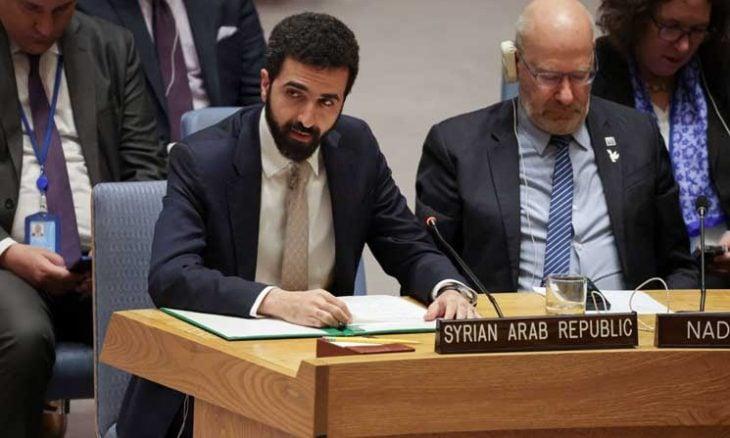
Yemen Monitor quotes Syria’s permanent representative to the United Nations, Ibrahim Alabi, saying Israel is “desperately intent on dragging his country into escalation,” and calling on the international community to end Israel’s aggressive policies during remarks at a private session of the United Nations Security Council. Alabi’s account says Israel increases its assaults, the kidnapping of children and the elderly, and the spraying of pesticides and chemical substances, and he frames Israel’s actions as turning Syrian lands it has penetrated into a launching pad for attacks on brotherly Lebanon. In a separate AFP-focused narrative, Fatima al-Safdi tells AFP, “I sometimes hear a knock at the door, I rush to open it, but there is no one outside,” describing how she waits for her sons’ release after nearly a year in detention.
The same AFP report includes the Israeli army’s justification that detention is tied to suspicion of terrorist activity and that “Detention orders and their duration are subject to judicial review, as required by law.” Al Jazeera’s Syria coverage adds a different dimension by quoting Israeli affairs expert Raed Nairat arguing that Israel has no retreat in its strategy except under constraints, and that the alternative to “Absolute Victory” is land control, as Nairat told Al Jazeera.

Regional stakes and Gaza link
The dispute is portrayed as widening beyond Syria, with lejdd.fr describing Israel as alarmed by Turkey’s posture toward Gaza and arguing that Ankara’s stance is “decidedly hostile to Israel, especially on Gaza,” while also accusing Turkey of using the Druze as a pretext for illegal action in Syria. In that account, Ofer Guterman of the Institute for National Security Studies says Israel fears a lasting deployment of pro-Turkish forces in southern Syria and argues that “Erdogan knows this and he sees Syria as a unique opportunity to strengthen his military weight and to reap economic benefits.” The same report says Turkey told Israel it would negotiate only on one condition, “the end of the war in Gaza,” and it quotes a senior Israeli official to JDD saying, “we will not allow Turkey to deploy in Syria, notably south of Damascus.”
Marianne’s local reporting adds another set of stakes by describing Israel’s military presence in southern Syria as an “influence zone” that forbids access to the region by the army of the new regime in Damascus, and it quotes Israel Katz warning, “We are here to stay.” BBC background on the Golan Heights frames the strategic stakes in terms of control and vantage, noting that the region’s highest point is Mount Hermon at 2,814 meters above sea level and that control gives Israel “an excellent vantage point to monitor Syrian military movements, both by eye and by radar.”