
Israel Kills Iran's Intelligence Minister Esmail Khatib
Key Takeaways
- Iran confirms Esmail Khatib killed in Israeli strike in Tehran.
- Iranian President Masoud Pezeshkian condemned the assassination as cowardly.
- Iranian leadership extended condolences after the intelligence minister's death.
Assassination Confirmed
The assassination of Iranian Intelligence Minister Esmail Khatib by Israeli forces marked a significant escalation in the ongoing Middle East conflict.
“Source: Hindustan Times --Agencies March 18, 2026 08:31 pm Iran has confirmed that Intelligence minister Esmail Khatib was killed in Israeli strikes on Wednesday”
"The cowardly assassination of my dear colleagues Ismail Khatib, Ali Larijani, and Aziz Nasirzadeh, alongside some of their family members and accompanying team, has left us in deep mourning," Iranian President Masoud Pezeshkian wrote on X.

"I extend my condolences to the great people of Iran for the martyrdom of two cabinet members, the secretary of the Shura, and the military and Basij commanders. I am certain their path will continue more steadfastly than before," Pezeshkian added.
Earlier today, Israel's defence minister Israel Katz stated that Khatib was killed in targeted overnight airstrikes, adding that "significant surprises are expected throughout this day on all the fronts."
Katz also stated that he and Israeli Prime Minister Benjamin Netanyahu have given the Israeli military standing authorisation to eliminate other senior Iranian officials in their sights without the need for prior approval.
Targeted Context
The targeted killing of Khatib occurred amid a rapidly deteriorating security situation in the region, with Israel launching a series of coordinated strikes against Iranian leadership targets.
The Israeli military described Khatib's Intelligence Ministry as central to the regime's "repressive and terrorist activities," claiming he personally had a "significant role in mass detentions and killings of people participating in mass street protests in January and in 2022-2023 after the killing of student Mahsa Amini."

The ministry was accused of wielding "advanced intelligence competencies, including surveillance, espionage, and the execution of covert operations worldwide, particularly against the State of Israel and Iranian citizens."
The killing of Esmail Khatib marks the third assassination of Iran's top leaders in two days, following the deaths of Iran's security chief Ali Larijani and Basij commander Gholamreza Soleimani in Israeli strikes on Tehran.
Ahead of the targeted assassinations, the US State Department had offered a $10 million reward for any information about Iranian Supreme Leader Mojtaba Khamenei and other senior officials.
International Reactions
The assassination drew immediate condemnation from international actors, with Russia issuing a strong rebuke to Israel and the United States.
“Iran’s intelligence minister killed by Israel; U”
"We unequivocally condemn any actions aimed at harming the health of, or indeed murdering or eliminating, members of the leadership of sovereign and independent Iran, as well as those of other countries," Kremlin spokesman Dmitry Peskov told reporters, highlighting the broader diplomatic implications of the targeted killings.
Iranian Supreme Leader Mojtaba Khamenei extended condolences to his cabinet after Hojjatoleslam Seyyed Khatib's assassination, stating "I hereby extend my congratulations and condolences to you, the respected cabinet, the colleagues in the Ministry of Intelligence, and especially to the family of the late Hojjatoleslam Seyyed Esmail Khatib, the hard-working minister of intelligence and a devoted veteran."
Following the killing of Larijani, Israeli PM Netanyahu had declared that Israel "did the job for free" in a televised statement, while Pezeshkian vowed that "their path will continue more steadfastly than before," indicating that Iran would not be deterred by the targeted elimination of its leadership.
Strategic Significance
The systematic elimination of Iranian leadership represents a significant shift in the conflict dynamics, with Israel signaling its willingness to directly target the highest levels of Iranian government and security apparatus.
"Khatib's elimination joins dozens of other eliminations of senior commanders of the Iranian terrorist regime and significantly degrades the regime's command and control structures," the Israeli military claimed, suggesting a deliberate strategy of decapitation strikes designed to weaken Iranian capabilities.

The coordinated attacks on multiple high-level targets within such a short timeframe indicate a sophisticated intelligence operation and the potential for deeper Israeli penetration of Iranian security networks.
"Earlier today, Israel's defence minister Israel Katz stated that Khatib was killed in targeted overnight airstrikes" and that "Katz also stated that he and Israeli Prime Minister Benjamin Netanyahu have given the Israeli military standing authorisation to eliminate other senior Iranian officials in their sights without the need for prior approval," signaling a long-term strategy of targeted leadership elimination.
The assassination campaign comes as Israel simultaneously intensified its military operations in Lebanon, striking central Beirut and targeting Iran-backed Hezbollah installations, further indicating a regional strategy to confront Iranian influence across multiple fronts.
More on Iran
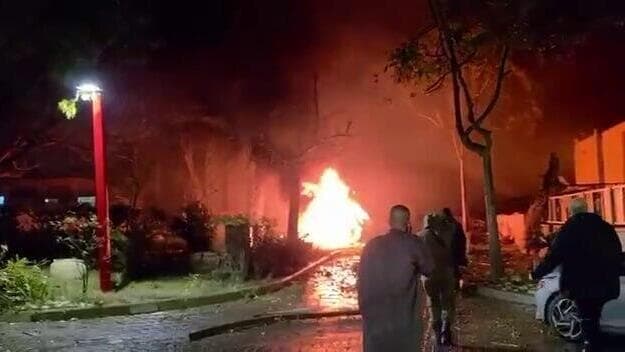
Iran Attacks Israeli Towns Dimona and Arad Near Israel's Main Nuclear Research Center, Dozens Wounded
43 sources compared
Iran Attacks Dimona in Retaliation for Natanz Strike
44 sources compared

Iran Attacks Diego Garcia with Long-Range Missiles, Targeting U.S.-UK Base
82 sources compared
Trump Defends Iran War by Citing Pearl Harbor
12 sources compared