Israel Says Hezbollah Drones Kill Troops in Southern Lebanon, Hundreds Reported
Key Takeaways
- Hezbollah opposes negotiations with Israel, accusing Lebanese authorities of surrendering sovereignty.
- Ceasefire talks mediated in Washington with delegations seeking extension of truce.
- Israel pressure for a rapid two-week negotiation window under U.S. mediation.
Drones in Southern Lebanon
Israel has acknowledged that Hezbollah’s drones have become a “complex threat” to invading Israeli troops in southern Lebanon, with a senior Israeli officer stationed in Lebanon saying, “The drone threat has evolved. Over the past two months, we’ve been dealing with hundreds of them,” according to Haaretz military affairs correspondent Yaniv Kubovich as quoted by PressTV.
The same report says an Israeli soldier on his third deployment to Lebanon since October 2023 admitted, “The situation is worse than before. In previous rounds, the Israeli army had freedom to operate and launch attacks anywhere in southern Lebanon,” while adding, “Hezbollah is firing intensively.”
PressTV also reports that Hezbollah has used one-way attack drones against Israel for years and, in recent weeks, unveiled more small first-person-view (FPV) drones and drones attached to fiber-optic cables.
Kubovich stressed that “the threat is not theoretical, as evidenced by casualties among troops,” referring to the killing of an employee of the Israeli ministry of war while he was demolishing homes in southern Lebanon with a bulldozer.
The article describes the drone threat as “a very significant challenge,” and quotes an Israeli officer saying there is “a clear gap between recognizing the threat and effectively responding to it.”
It further quotes an Israeli soldier explaining that remotely operated suicide drones “hover in the air or wait on rooftops,” and “The moment there’s movement, they detonate over the troops,” adding that they are “extremely difficult to detect- small, silent, and fast.”
PressTV also cites Ynet saying Hezbollah has increasingly relied on “cheap, upgraded drones fitted with explosives and fiber-optic cables,” and says the drones can reach targets “up to 10 kilometers away in southern Lebanon.”
Escalation and the Ceasefire
The drone discussion sits inside a wider escalation timeline described across the Lebanon coverage, beginning with Hezbollah launching military operations against the Israeli regime on March 2, as PressTV reports, “in response to its aggression against Iran, its repeated violations of the 2024 ceasefire, and its continued occupation of Lebanese territory in the country’s south.”
PressTV adds that after the Iran-US ceasefire on 8 April, Tel Aviv was compelled to accept a ceasefire in Lebanon as well, and says the Israeli military “quickly resumed its assaults on southern Lebanon,” issuing evacuation threats for several areas even after the initial ten-day truce between Tel Aviv and Beirut was extended for an additional three weeks.
Le Point describes the conflict’s trigger as March 2, when Hezbollah fired rockets toward northern Israel to retaliate for “the American-Israeli bombardments that killed Iran's supreme leader, Ayatollah Khamenei, on February 28 in Tehran,” and says the escalation has left “more than 2,500 dead in Lebanon.”
Le Monde.fr frames the diplomatic track as delegations heading to Washington for new negotiations to obtain an extension of the truce, and says Lebanon will attend a preparatory meeting in Washington on Thursday, April 23, with an agenda to extend the ceasefire and stop Israeli demolition operations in southern villages and localities.
Le Monde.fr also provides a specific tally of violations recorded by a Lebanese government agency: “Between April 17 and 19, the National Center for Natural Hazards and Early Warning, a Lebanese government agency, recorded 220 Israeli violations,” including air strikes, artillery fire, and house demolitions that “killed at least three people.”
It adds that “Israeli violations continue” and “They killed four people in Lebanon on Wednesday alone,” while Hezbollah claimed “six operations against Israeli military targets” between April 17 and 22 that “killed two Israeli soldiers.”
In parallel, Le Point describes a ceasefire announced on April 15 and says that “the next day, Israel formalized the establishment inside Lebanese territory of a security zone ten kilometers deep, devoid of any human presence,” with destruction continuing.
Leaders Trade Accusations
As the ceasefire and drone threat evolve, the sources show a parallel intensification in political rhetoric between Hezbollah and Lebanon’s state leadership, with direct quotes and named figures shaping the narrative.
Courrier international reports that on the day before April 28, “an exchange of barbs pitted Hezbollah’s leader, Naim Qassem, and the Lebanese president, Joseph Aoun,” over negotiations between Israel and Lebanon, and it says Hezbollah’s secretary-general delivered the first “verbal escalation” in a statement read on Hezbollah’s channel Al-Manar.
Courrier international quotes Naim Qassem saying direct negotiations with the Israeli state are “a 'free, humiliating and unnecessary concession, whose sole justification is submission without reciprocity,'” and it says he called on the Lebanese government to reverse “the 'grave errors that plunge Lebanon into a cycle of instability,'” including talks with Israel and the decision to ban the party’s military wing.
Courrier international also describes Joseph Aoun responding without naming Hezbollah, saying, “Treason is committed by those who drag their country into war to serve external interests,” and it adds that he vowed he will not accept “a humiliating agreement.”
Boursorama similarly frames the dispute as a “face-off between the president and Hezbollah,” quoting the Lebanese leader’s argument that “What we are doing is not treason; treason is rather committed by those who drag the country into a war for the benefit of foreign interests,” while also citing AFP’s report that Joseph Aoun is committed to negotiations and that “there will be no turning back.”
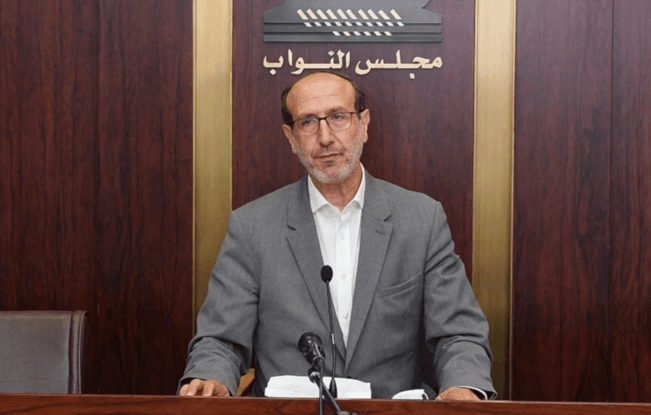
On the Hezbollah side, Al-Manar TV Lebanon reports that the Hezbollah Loyalty to the Resistance Bloc condemned the Lebanese authority for pursuing negotiations with ‘Israel’ and said “The path of direct negotiation with the enemy is rejected and condemned,” adding “We are in no way concerned with any outcomes it produces.”
Al-Manar TV Lebanon also says the bloc accused the Lebanese authority of using “treason rhetoric” against “a national sect that backs the Resistance,” while it hails resistance operations and claims “Resistance fighters continue to inflict dozens of dead and wounded on Israeli forces in southern Lebanon.”
Different Frames of the Same Truce
The sources also diverge in how they frame the same underlying confrontation—especially the ceasefire’s fragility, the meaning of “agreement,” and the role of media pressure—while still citing overlapping named actors and dates.
Le Monde.fr describes a concrete negotiation agenda in Washington on Thursday, April 23, saying Lebanon’s agenda is “extending the ceasefire between the State of Israel and Hezbollah and stopping Israeli demolition operations in the villages and localities of the south,” and it quotes Joseph Aoun saying Lebanon will accept “no compromise, no concessions, and no acceptance of anything that does not serve Lebanese sovereignty and the interests of all Lebanese.”
It then quantifies violations with the Lebanese National Center for Natural Hazards and Early Warning recording “220 Israeli violations” between April 17 and 19, and it states that “Israeli violations continue” and “They killed four people in Lebanon on Wednesday alone,” while Hezbollah claimed “six operations” between April 17 and 22.
By contrast, Al-Hurra focuses on a “two‑week deadline” discussed by Israeli media, saying the Israeli Broadcasting Authority quoted an Israeli official that Lebanon has been given two weeks to make progress through negotiations and that Israel is prepared, if no results are achieved, to return to “fighting and intensified activity.”
Al-Hurra adds that political analyst Elias Zoghbi argues the two-week deadline “does not conflict” with the extension of the truce for three weeks, describing it as “tools of 'diplomatic and media pressure before any third meeting,” and it reports a presidential palace source saying the Israeli Broadcasting Authority report “did not reach the Lebanese state through any official notification.”
Al-Hurra’s presidential palace source also lays out preconditions for any agreement, saying “each phase has its own approach,” and it quotes a Lebanese government source saying “any 'agreement first requires a permanent ceasefire, then an Israeli withdrawal, the return of the prisoners, the return of the displaced, and the start of reconstruction.'”
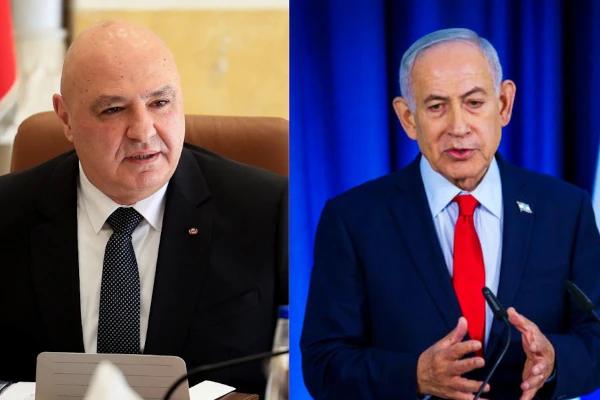
Meanwhile, i24NEWS frames the same diplomatic pressure as an Israeli request to the United States to limit negotiations to “two to three weeks,” saying Prime Minister Benjamin Netanyahu spoke with U.S. President Donald Trump to set a clear deadline for discussions expected to continue until mid-May.
What Comes Next
Across the reporting, the stakes are presented through both military and political consequences, with multiple sources describing what happens after the next deadline and how each side defines “security” and “withdrawal.”
PressTV says Israel’s military has continued to occupy parts of southern Lebanon and imposed a so-called “Yellow Line,” describing it as a coercive military buffer resembling the regime’s notorious control measures in the besieged Gaza Strip, while also stating that “nearly 2,500 people have been killed in Lebanon since the Israeli regime launched its renewed offensive early in March.”
Le Point describes a ceasefire announced on April 15 but says Israel formalized a security zone “ten kilometers deep, devoid of any human presence,” and it quotes an Israeli diplomatic source saying the goal is to dismantle infrastructure built by Hezbollah and eliminate any “terrorist presence south of the Litani River.”
It also quotes Hussein Hajj Hassan, a deputy of the Party of God, saying, “For fifteen months, we did not retaliate for the thousands of ceasefire violations committed by Israel that cost us more than five hundred martyrs,” and it frames Hezbollah’s posture as refusing to submit under pressure from the IDF and the Lebanese government.
In the diplomatic arena, Al-Hurra reports that the Lebanese government source says any agreement requires “a permanent ceasefire” followed by “an Israeli withdrawal,” “the return of the prisoners,” “the return of the displaced,” and “the start of reconstruction,” while it also reports that the Israeli Chief of Staff said, “On the battlefront there is no ceasefire, and the fighting will continue to remove threats to the northern towns.”
i24NEWS adds that Israeli commanders are applying political directives, quoting Chief of Staff General Eyal Zamir as recalling the objective “to prevent direct fire against Israeli towns and to ensure the safety of northern residents,” and it states that “any action north of the Litani River requires prior political authorization.”
Courrier international adds that Israeli Prime Minister Benjamin Netanyahu stated that the threat of Hezbollah rockets and drones required continuing military action in Lebanon despite the “three-week ceasefire extension on April 23,” and it says Israeli Foreign Minister Gideon Sa’ar called on the Lebanese government to take “decisive” measures against the Shiite group and its fighters.
More on Lebanon
Israeli Strikes Kill At Least 12 In Southern Lebanon Despite Ceasefire
19 sources compared

Israeli Strikes Kill At Least 15 In Southern Lebanon Despite Ceasefire
17 sources compared

Israeli Airstrikes Kill Nine in Tyre and Ain Baal as Lebanon Toll Reaches 1,368
14 sources compared
Israeli Army Kills Three Lebanese Civil Defense Volunteers at Majdal Zoun Funeral in Sour
10 sources compared