Lebanon · updated 1h ago · 3 min read
Nawaf Salam Says Reconstruction Needs Exceed Lebanese State Capacity in Nabatieh
Salam says reconstruction needs exceed Lebanese state's capabilities and require substantial funding. Government aims to revive the south; launched 23 tenders in Nabatieh District.
Israel threatens Beirut invasion if Hezbollah does not disarm.
www.jpost › Israel News was read line by line by the Watchdog: 4.7. See the score →
10outlets compared
Same story, two versions
tap a side to read it in full
Naharnet
“Israel would launch a full-scale military invasion reaching as far as Beirut, if Hezbollah does not hand over its weapons”Read the original ↗
Today
“if Hezbollah did not surrender its weapons, Israel could launch a ground offensive reaching as far as Beirut”Read the original ↗
Both cite the same warning, but one frames it as invasion, the other as a ground offensive.
Rebuilding beyond state reach
Lebanese Prime Minister Nawaf Salam told people in Nabatieh that the scale of needs from the latest war between Hezbollah and Israel exceeds the capabilities of the Lebanese state and requires substantial funding.
Salam said, "I understand the magnitude of the crisis. I know your fatigue and I understand the suffering of those who lost their homes," and he added that "the scale of needs exceeds the capacities of the Lebanese state and its ability to bear these burdens alone."
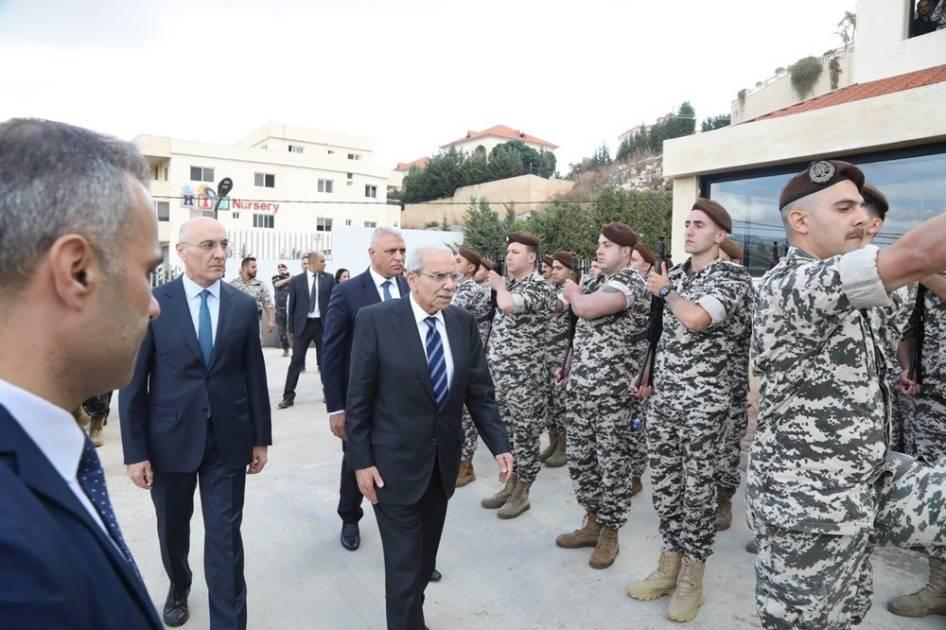
Salam announced the launch of 23 tenders in the Nabatieh District, including projects to remove obstacles and repair roads, rehabilitate shelter centers, and secure ambulances and medical devices.
Salam also said, "We still need substantial funding, but I want you to trust that we are pursuing, and will continue to pursue, to secure all that we can to revive the south," during a visit he began in Nabatieh.
The Lebanese Prime Minister framed the reconstruction push as part of a broader effort to restore state institutions, saying, "I am here today to reaffirm the return of state institutions to work."T
Bombardment and new injuries
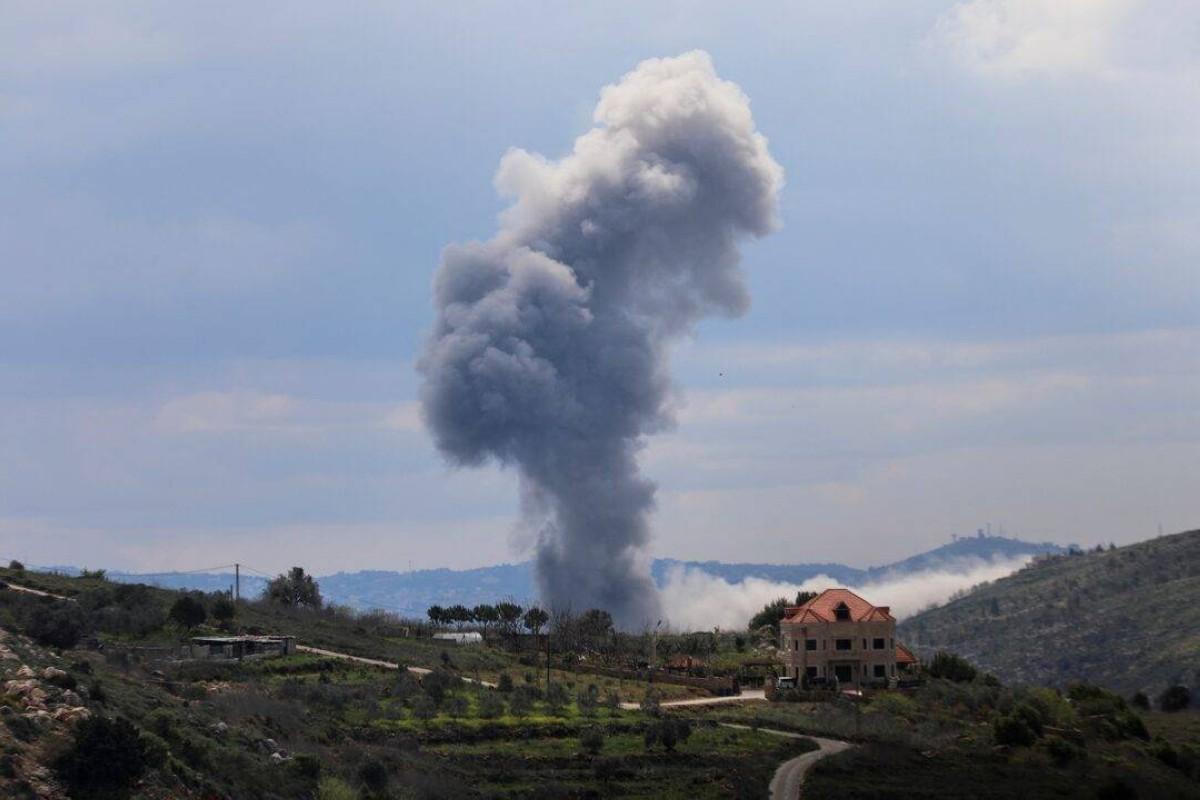
Israeli artillery bombed Beit Yahun, al-Manṣūri, Wadi Zakbīn, and Wadi al-Salūqi in southern Lebanon at dawn, while Israeli forces opened fire with their machine guns toward the town of Hudātha and the outskirts of Burʿašīt, according to Lebanon’s official national news agency, NNA. The Lebanese National News Agency also reported that Israeli airstrikes continued to target wide areas in southern Lebanon and the Beqaa valley in eastern Lebanon after the ceasefire announced on April 16 was extended on April 23 for three weeks and extended again on May 15 for 45 days. In Nabatieh al-Fawqa, a Lebanese Army statement said a serviceman and three civilians were injured as the army accompanied residents to check their properties, and the incident was caused by the explosion of a suspicious object after investigations and an engineering survey.
Mont-Carlo International reported that the Israeli army conducted two airstrikes on Nabatieh al-Fawka and Jharmaq in Jizan, while artillery struck Beit Yahoun, Hadatha, Brashit and al-Mansouri, in addition to al-Khutayem, Kafr Tabnit, Zotar al-Sharqiyeh, Mazra’at al-Majidiya and Wadi al-Salouqi and five. The same report said Merkava tank shells were fired toward a house in the Deir area in Brashit, and it described explosions in Majdal Zoun, along with a series of explosions in Hawla and Beit Yahoun and Aita al-Jabal.
Threats, disarmament, and talks
Lebanon’s political and security landscape remained shaped by warnings tied to Hezbollah disarmament, with al-Modon reporting that U.S. Ambassador Michel Issa warned Sheikh Ali al-Khatib that Israel would launch a full-scale military invasion reaching as far as Beirut if Hezbollah did not hand over its weapons.
Al-Modon said Israel demanded that the Lebanese Army deploy in Jabal Al-Rihan and Iqlim Al-Tuffah to dismantle Hezbollah infrastructure there, and it warned against a repetition of the Ali al-Taher scenario.
Naharnet reported that diplomatic sources told the daily that Tel Aviv demanded a list of the names of all officers and personnel scheduled to deploy into trial zones and wanted direct military coordination with the Lebanese Army.N
The Lebanese Army has firmly rejected Israel’s stipulation that no personnel in the pilot zones be affiliated with Hezbollah or even belong to the Shiite community, according to Naharnet’s account of al-Modon.N
Separately, Al-Arabiya said Israel continues to occupy large areas in the south and carries out frequent strikes despite the ceasefire, while Salam stressed the need to mobilize capabilities and support to achieve complete Israeli withdrawal and rebuild the state.