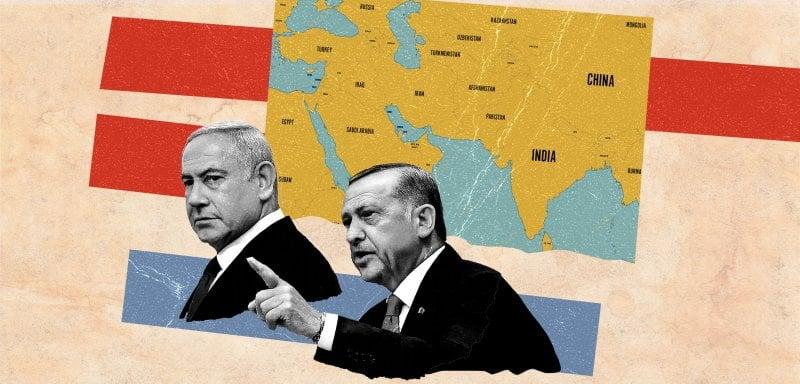
Israel Warns Saudi Arabia, Egypt, Turkey, and Pakistan Are Building the Quad Security Platform
Key Takeaways
- Pakistan, Turkey, Saudi Arabia, and Egypt are uniting as new regional power brokers.
- Fear of US abandonment drives diplomacy-focused alignment, not a formal military bloc.
- Analysts label the shift as Six-Party Coalition or Sunni Axis; formal bloc debated.
New axes take shape
A set of new regional alignments is taking shape across West Asia and beyond, with multiple outlets describing competing “axes” built around diplomacy, security cooperation, and—depending on the account—nuclear deterrence.
“Au Moyen-Orient, la situation en Iran, avec la répression sanglante des manifestations et les spéculations sur d’éventuelles frappes américaines, fait passer au second plan un basculement régional aux conséquences majeures”
In a South China Morning Post analysis, Andreas Krieg, an associate professor of defence studies at King’s College London, said “Fear of US abandonment is pushing states to build more diplomatic mass,” even as he cautioned that “hard security balance would still be dominated by Washington.”
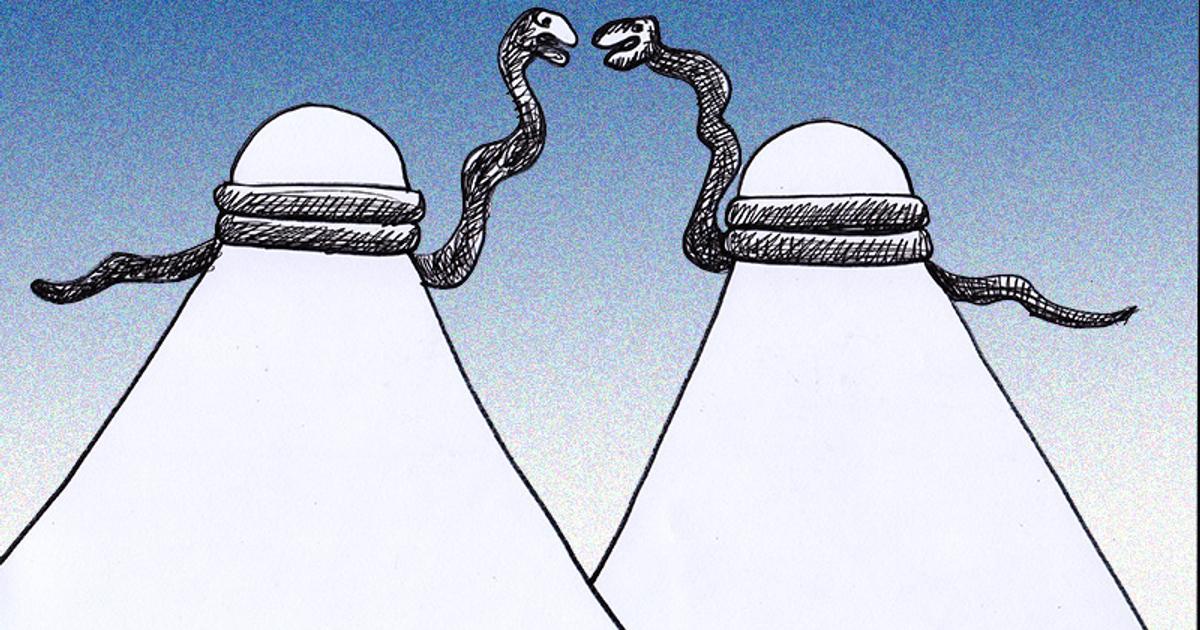
The same piece describes a “mixed system” in which multilateral formats “increasingly handle the grand strategic questions,” while other elements remain tied to the United States and “whatever survives of Tehran’s proxy network.”
A separate West Asian report on the Israeli platform Natsiv Net frames the effort as a four-way alliance including Saudi Arabia, Egypt, Turkey, and Pakistan, aimed at “redefining the region’s balance of power under a Pakistani nuclear umbrella.”
That Natsiv Net account says the four countries are “leading a new security calculus in the Middle East” and seek to “forge an independent strategic axis” known as the “Quad Security Platform,” with the goal of reducing reliance on external powers such as the United States.
In parallel, a West Asian analysis from رصيف22 describes two competing axes that “could reshape the regional balance of power,” with one axis including “Saudi Arabia, Pakistan, Turkey, and Egypt” and another “labeled the ‘Six-Party Coalition,’” formed primarily by “Israel and India.”
Taken together, the sources depict a region where alliance-making is accelerating and where the United States remains a central reference point even as actors attempt to build alternative structures.
Timeline and triggers
The sources connect the current alliance-building momentum to a longer period of shifting alignments since the Arab Spring, while also pointing to specific recent moves that they say helped crystallize the competing blocs.
The رصيف22 analysis says that “Since the outbreak of the Arab Spring in 2011, alliances in the Middle East and North Africa have remained fluid and unstable,” and it describes how regional alignments have alternated between “a bipolar form” and “three poles or even a complex network.”

It then argues that “the rapid developments in the recent period indicate the crystallization of two competing axes,” adding that “their seeds go back to 2025.”
In that account, the 2025 groundwork includes “a defense pact between Saudi Arabia and Pakistan,” “visits by Turkish President Recep Tayyip Erdoğan to Riyadh and Cairo,” and “the intensification of strategic competition between Riyadh and Abu Dhabi.”
The same piece also cites “the visit of the UAE President Mohammed bin Zayed Al Nahyan to New Delhi” and “the signing of a defense agreement with India,” followed by “Indian Prime Minister Narendra Modi's visit to Israel and his meeting with Prime Minister Benjamin Netanyahu.”
The Natsiv Net report described by النيلين adds further detail by tying the Quad Security Platform concept to a specific clause-based defense mechanism, saying the agreement includes “a clause akin to NATO's Article 5,” where “any attack against one of the two would be considered an attack against both.”
It also points to September 2025 as a key moment, stating that “after the signing of the Joint Strategic Defense Agreement in September 2025” the nuclear umbrella concept shifted “from a theoretical idea to a core element in the regional deterrence balance.”
Voices and claims
The sources attribute the alliance shift to both strategic calculations and explicit warnings, with named analysts and named officials appearing in the reporting.
“The Israeli platform Natsiv Net revealed efforts to form a regional four-way alliance including Saudi Arabia, Egypt, Turkey, and Pakistan, in a move aimed at redefining the region's balance of power under a Pakistani nuclear umbrella”
In the South China Morning Post piece, Andreas Krieg frames the driver as “Fear of US abandonment,” saying it is “helping forge a new Middle East,” and he argues that states are building “more diplomatic mass” even if they cannot yet form “an integrated military bloc.”
Krieg also describes the emerging system as “a mixed system,” where multilateral formats “increasingly handle the grand strategic questions” while the “hard security balance” remains tied to Washington and “whatever survives of Tehran’s proxy network.”
The رصيف22 analysis, while not quoting a single named official in the excerpt, lays out a set of interpretive questions and then describes Netanyahu’s initiative, stating that “Netanyahu, at the start of the current year, proposed establishing a ‘Six-Party Coalition’ intended to reorder the alliance system in the Middle East.”
It adds that Netanyahu’s proposal is meant to confront what he described as the “Shiite” and “radical Sunni” axes, and it says Netanyahu “reiterated the idea on several occasions in a short period,” emphasizing his vision in “closed security meetings.”
The Natsiv Net account described by النيلين includes a direct statement from Pakistan’s defense minister, saying “Pakistan's defense minister, Khawaja Muhammad Asif, stated that Pakistan's nuclear capabilities will be placed at the disposal of Saudi Arabia when needed as part of collective defense.”
That same report characterizes the alliance as a counterweight and also as a potential constraint, saying it could “constrain Israel's political maneuvering” with Washington by offering “an alternative based on regional ownership of resolving disputes.”
Competing frames of the same shift
The sources diverge in how they frame the alliance landscape, even when they describe overlapping country groupings and similar strategic themes.
South China Morning Post emphasizes a broad diplomatic rebalancing driven by “Fear of US abandonment,” describing a “mixed system” in which multilateral formats “increasingly handle the grand strategic questions,” while hard security remains dominated by Washington and “whatever survives of Tehran’s proxy network.”
By contrast, the Natsiv Net account described by النيلين presents a more concrete security architecture, asserting that the region is moving toward a four-way alliance under “a Pakistani nuclear umbrella” and naming the “Quad Security Platform” as an “independent strategic axis.”
The رصيف22 analysis, meanwhile, uses conceptual labels—“Six-Party Coalition” and “Sunni Axis”—to interpret convergence and repositioning, describing “two competing axes that could reshape the regional balance of power” and explicitly listing the first axis as including “Saudi Arabia, Pakistan, Turkey, and Egypt.”
It also describes the “Six-Party Coalition” as primarily “Israel and India,” and it ties Netanyahu’s initiative to a security narrative stretching “from West Asia to the Mediterranean, Africa, and South Asia.”
The divergence is also visible in how each account treats the role of nuclear deterrence: the Natsiv Net report says the umbrella mechanism is based on a clause “akin to NATO's Article 5,” while leaving “ambiguous the issue of nuclear warheads in the published text,” and it adds that Saudi officials described the agreement as covering “all military means.”
The South China Morning Post account does not describe a nuclear umbrella mechanism; instead, it stresses that “hard security balance” remains dominated by Washington and whatever persists of Tehran’s proxy network.
Risks and strategic consequences
The sources also lay out competing assessments of what these alliance shifts could mean for regional stability, escalation risk, and the strategic room available to key actors.
“Au Moyen-Orient, la situation en Iran, avec la répression sanglante des manifestations et les spéculations sur d’éventuelles frappes américaines, fait passer au second plan un basculement régional aux conséquences majeures”
The Natsiv Net account described by النيلين says that while the Quad Security Platform is “presented as a source of stability,” it “raises fears among several regional actors,” warning that “forming a military bloc of this kind could accelerate an arms race and create parallel leadership structures that increase the risk of miscalculation.”
It adds that “Iran views the alliance as a direct threat,” which “could push it to escalate activity by its proxies in the region,” and it says “the rise of Pakistan as an influential player in the Middle East worries both India, due to the historical rivalry with Islamabad, and the UAE.”
The same report claims that Saudi Arabia is working to deepen ties and that “normalization with Israel is conditional on resolving the Palestinian issue,” framing the alliance as affecting Israel’s strategic maneuvering with Washington.
It also states that the alliance could “constrain Israel's political maneuvering, especially in its dealings with Washington,” by offering “an alternative based on regional ownership of resolving disputes.”
On the operational side, the Natsiv Net report points to military and technological cooperation, saying “Turkey and Saudi Arabia are cooperating in producing the fifth-generation fighter jet KAAN and drone technologies,” and it says “reports in April 2026 indicated Pakistani fighters arriving in Saudi Arabia as part of activating the defense agreements.”
It further describes the defense pact’s scope by saying “Saudi Arabia and Pakistan signed in September 2025 an agreement stipulating that any attack on either would be considered an attack on both.”
More on Asia

Utsunomiya Captures Wild Black Bear After Four Days, Closing 94 Public Schools
13 sources compared

7.8 Quake Kills At Least 35 In Southern Philippines, Triggers 1-Meter Tsunami
28 sources compared

Iranian Drones Damage Kuwait International Airport Terminal, Killing 1 and Wounding Dozens
20 sources compared

Mark Carney Launches 10-Day Indo-Pacific Tour With Stops in India, Australia, Japan
11 sources compared