Asia23 April, 20268 min read
Japan Lower House Approves Bill To Create National Intelligence Committee In Tokyo
This article is an automated aggregation of coverage from news outlets. Our editorials offer in-depth analysis curated by the NewsCord team.
Lower House passed bill to create a national intelligence committee to centralize data gathering Legislation expected to enact before mid-July, backed by major opposition

Japan’s intelligence overhaul
Japan’s House of Representatives approved a bill to establish a national intelligence committee on Thursday April 23, 2026, clearing the powerful lower house by a majority vote with support from both ruling and opposition parties. The legislation is part of a set of related bills aimed at strengthening Japan’s intelligence (information gathering and analysis) functions, and it was passed during a plenary session in Tokyo. Prime Minister Sanae Takaichi and her cabinet ministers reacted after the vote, with the Global Times describing the scene in Tokyo on Thursday April 23, 2026.
Kyodo reported that the draft law was passed in the House of Representatives as part of efforts to bolster the government’s information-gathering capabilities, and Qazinform said the move was to create a new intelligence committee. Multiple outlets described the structure as a national intelligence committee chaired by the prime minister, paired with a national intelligence bureau serving as a secretariat.

The bill’s secretariat is described as having authority to “comprehensively coordinate” intelligence work across government ministries and agencies, with the authority to request that they share information. The enactment timeline described by the sources points to action before the current parliamentary session ends in mid-July, with Kyodo News saying enactment was likely during the ongoing Diet session and Global Times saying it was expected before the current parliamentary session ends in mid-July.
What the bill creates
The sources describe the bill as creating a vertically integrated intelligence system that consolidates fragmented functions across ministries and agencies. Global Times says the legislation calls for the establishment of a “national intelligence committee,” composed of the prime minister and Cabinet ministers to serve as the decision-making body, and a “national intelligence bureau” to handle operational duties. Qazinform adds that the committee will be chaired by the prime minister and composed of nine other Cabinet members, including the chief Cabinet secretary and foreign minister.
Kyodo News and other outlets describe the committee as a central command that consolidates intelligence apparatus into one place, and they tie the secretariat’s role to coordination of information sharing. Japan Wire by Kyodo News states that the committee’s secretariat will “comprehensively coordinate” intelligence collected by the National Police Agency, the Foreign Ministry, the Defense Ministry and other organizations, with the authority to ask them to share information. News On Japan similarly describes a new National Intelligence Bureau created as the council’s secretariat, and it says the proposed council would be chaired by the prime minister as a command center for collecting and analyzing information.
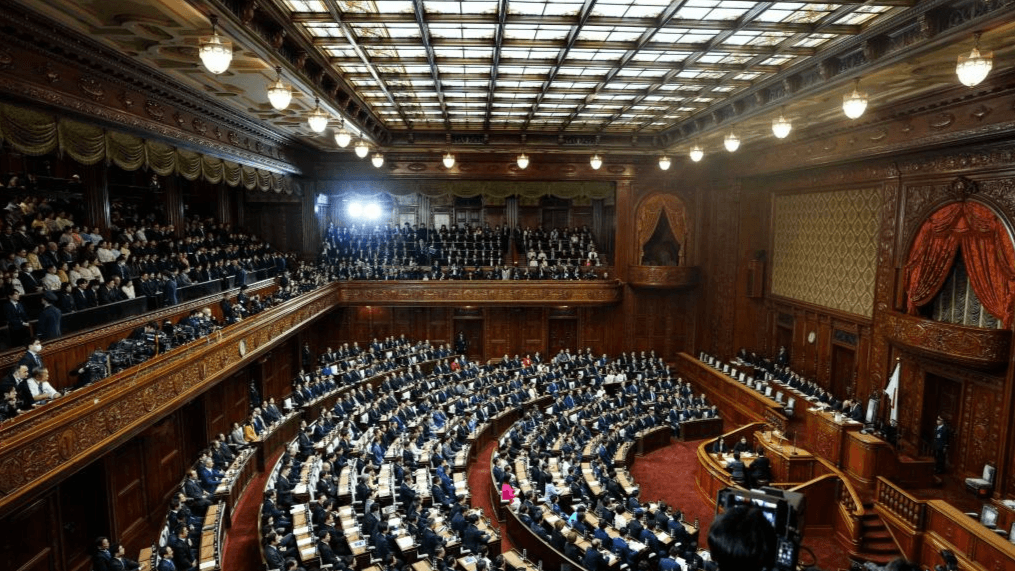
Arab News Japan describes the bill as creating a new National Intelligence Council chaired by the Prime Minister and centralizing information gathering and analysis related to decision-making. Across the sources, the bill’s scope is described as including “important intelligence activities” in areas such as national security and counter-terrorism and “overseas intelligence activities” involving foreign espionage, as stated by 巴士的報.
Support, opposition, and debate
The bill’s passage came with explicit political backing and opposition, and the sources lay out who supported it and who resisted it.
“Backed by the ruling bloc of the Liberal Democratic Party and its junior partner, the Japan Innovation Party, the bill cleared the powerful lower house a day after a supplementary resolution to protect personal information was adopted.”
Jiji Press, via nippon, said the House of Representatives passed the bill with support from the ruling pair of the Liberal Democratic Party and the Japan Innovation Party, as well as the Centrist Reform Alliance and the Democratic Party for the People, while the Japanese Communist Party and some independent lawmakers opposed the bill.
Japan Wire by Kyodo News described the bill as backed by the ruling bloc of the Liberal Democratic Party and its junior partner, the Japan Innovation Party, and also said it was backed by major opposition parties, including the Centrist Reform Alliance and the Democratic Party for the People, after a supplementary resolution to protect personal information was adopted.
The bill’s passage also drew public protests, and 巴士的報 quoted a protester saying, “Right now, the Takaichi administration is trying to drag Japan into war, through actions like promoting weapons imports and exports, provoking China, and failing to offer the apologies it should have made afterward.”
Another rally participant said, “Takaichi is forcing all of these moves through. Promoting this bill and lifting the ban on arms exports mean heading towards war,” and another protester said, “I believe amending the Constitution is completely unacceptable.”
In contrast, Chief Cabinet Secretary Minoru Kihara defended the bill’s passage, telling a press conference that “In a complex and harsh international environment, the bill's passage will help the government make informed decisions based on high-quality information.”
Global Times also reported that amendments sought by the opposition, proposed by the centrist Reform Alliance to stipulate respect for personal data and privacy and assurance of political neutrality, failed to materialize, with efforts limited to a supplementary resolution.
The supplementary resolution is described in multiple sources as nonbinding and as addressing privacy and political neutrality, with NHKニュース saying it calls on the government to ensure personal information and privacy are not unnecessarily infringed and that the government should not gather information in a way that undermines political neutrality.
Privacy and neutrality safeguards
A central thread in the debate is whether the new intelligence structure will protect personal information and preserve political neutrality, and the sources repeatedly return to the supplementary resolution’s language. Global Times says worries are mounting that the bill could erode privacy rights and freedom of expression, and it describes how amendments sought by the opposition, proposed by the centrist Reform Alliance to stipulate respect for personal data and privacy as well as the assurance of political neutrality, failed to materialize. Instead, Global Times says efforts were limited to the adoption of a supplementary resolution calling for due consideration, and it adds that “As such resolutions carry no legal binding force, it remains unclear whether these concerns will be adequately addressed.”
Qazinform describes the supplementary resolution as nonbinding and put forward in response to calls for the law to protect private data, stating that it says “information on politicians or electoral activities will not be collected for the purpose of benefiting or disadvantaging specific political entities.” NHKニュース similarly says the supplementary resolution calls on the government to ensure that individuals’ personal information and privacy are not unnecessarily infringed and that the government should not gather information in a way that undermines political neutrality. Arab News Japan adds that addressing concerns about privacy violations and political neutrality was incorporated into the supplementary resolution, including questions about whether citizens participating in anti-government rallies would be included in investigations.
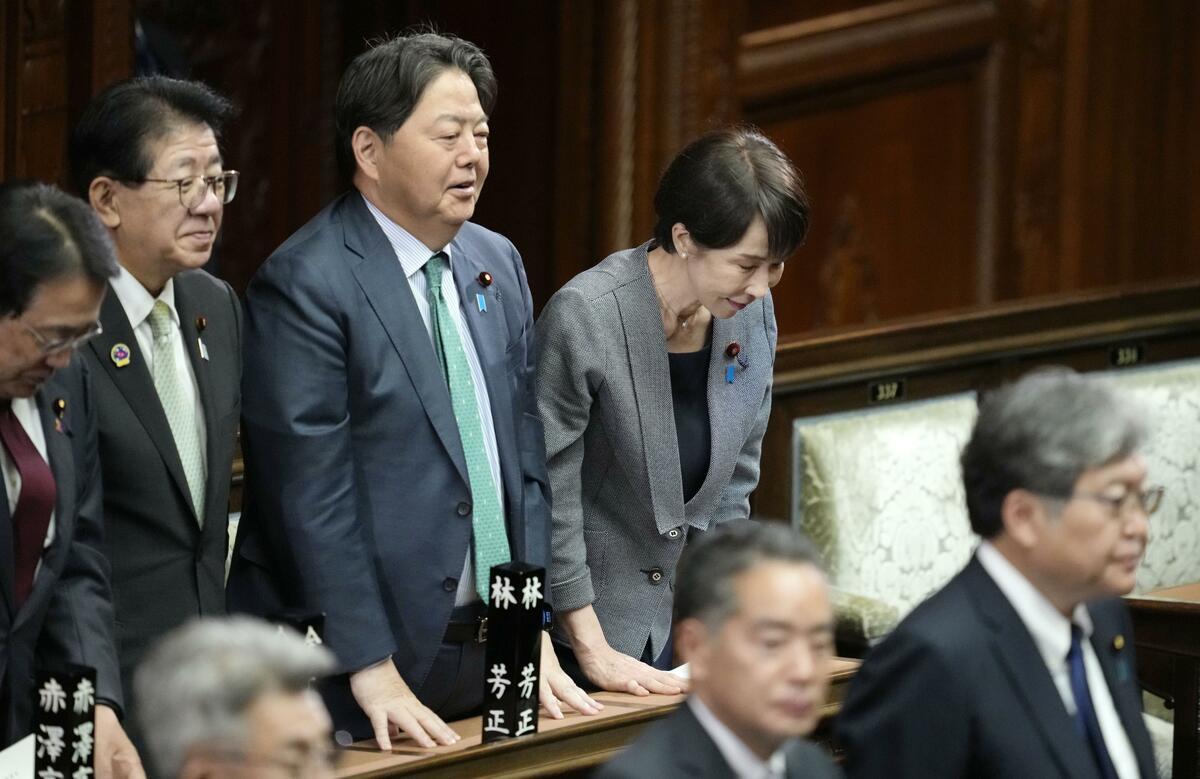
chinadailyhk reports that Social Democratic Party leader Mizuho Fukushima said that although the government claims it will not arbitrarily investigate “ordinary citizens,” “the boundary between "ordinary" and "non-ordinary" citizens remains unclear.” The Global Times also cites an April 17 article on the Social Democratic Party website that frames risks in terms of intelligence being intertwined with military activities and the difficulty of ensuring transparency, including a claim by Takaichi that disinformation campaigns by foreign actors would fall within the scope of investigation while civic groups with no links to foreign forces would not.
Timeline and next steps
After the lower house vote, the sources describe the next procedural step as review by the House of Councillors, where the ruling coalition is in the minority, and they outline a target for launching the new committee after enactment. Global Times says that with support from some opposition parties, the bills are expected to pass the House of Councillors as well, where the ruling bloc is in the minority, and it says enactment is expected before the current parliamentary session ends in mid-July. Japan Wire by Kyodo News specifies that the bill is expected to pass the House of Councillors and be enacted during the ongoing 150-day Diet session through July 17, and it says that following enactment, Takaichi’s LDP and JIP aim to launch the committee by summer.
Qazinform similarly says that following enactment, Takaichi’s LDP and JIP aim to launch the committee by summer. News On Japan says the bill was approved at a plenary session of the lower house with support from the ruling Liberal Democratic Party and Nippon Ishin, as well as the Centrist Reform Alliance and the Democratic Party for the People, and it says it is expected to clear the House of Councillors despite the ruling bloc’s minority status there. The sources also describe the committee’s operational scope as including election interference via social media disinformation, with Qazinform saying the committee was devised in response to national security concerns, including election interference via social media disinformation.
In addition, the Global Times and Qazinform both connect the legislative push to broader centralization of power under Prime Minister Sanae Takaichi, with Global Times saying the objective domestically is to strengthen the concentration of power in the hands of the prime minister by creating a vertically integrated intelligence system. Externally, Global Times quotes Xiang Haoyu, a distinguished research fellow at the China Institute of International Studies, saying the move aims to align Japan’s intelligence framework more closely with those of Western countries, particularly the US and its allies, including the Five Eyes intelligence network. The sources also include a statement from Chief Cabinet Secretary Minoru Kihara that the bill would contribute to “right decision-making based on more quality and timely information in the current severe and complex international environment,” as Japan Wire by Kyodo News reports.