
Israeli Army Arrests Hezbollah Radwan Force Member During Ground Operations in Southern Lebanon
Key Takeaways
- Israeli army began limited ground operations in southern Lebanon.
- Ground operations involve the 91st Division aiming to disrupt Hezbollah infrastructure.
- Arrest of a Hezbollah Radwan Force member reported during operations.
Arrests and Hidden Operations
Israeli and Hezbollah-linked reporting on Lebanon in recent days has centered on claims of covert activity, battlefield arrests, and intensifying ground moves along the southern border.
“Thursday, 23/04/2026 ArEnFrEs [](http://almanar”
Al-Manar TV Lebanon said that “The Israeli army is aware that Hezbollah carried out operations over the past two days but has not disclosed them publicly: Hebrew media,” framing the issue as Israeli awareness without public disclosure.
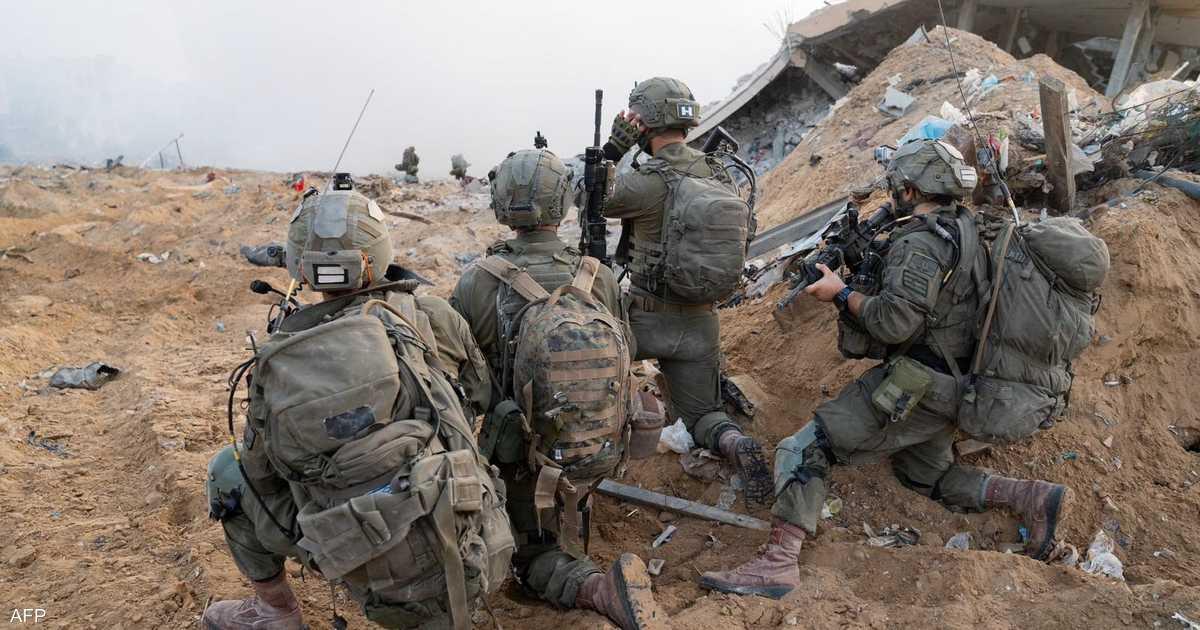
In southern Lebanon, the Israeli army announced “the successful capture of a member of Hezbollah’s elite Radwan Force during military operations deep inside southern Lebanon,” according to صوْت الإمارات.
That report said an Israeli military spokesperson stated that soldiers from the “300th Brigade, an infantry unit of the 146th Division” located and identified the fighter while he was engaged in operational activity.
The same account said the fighter was “preparing to launch a surprise attack against Israeli military positions in the border area,” and that he “offered little resistance, choosing to surrender and was immediately arrested.”
It added that the detainee was transferred to interrogation centers belonging to “one of the Israeli Military Intelligence Directorate’s (Aman) units” to obtain “field and tactical information regarding the deployment of the Radwan Force and the offensive plans prepared for the next phase.”
Defined Ground Operation
Xinhua’s report described Israel as announcing a “defined ground operation in southern Lebanon,” tying the move to a broader escalation after Hezbollah attacked Israel in early March.
The Xinhua piece, datelined “Cairo, March 16, 2026,” said the Israeli army “began in recent days what it described as a defined ground operation against Hezbollah in southern Lebanon,” and warned of “the deepening of the battle” after the Iran-backed group attacked Israel in early March.
It quoted Defense Minister Yisrael Katz saying Israel would “press ahead with its operations against the Lebanese party until security for residents of the north is achieved.”
Xinhua also said Katz warned Hezbollah Secretary-General Naim Qassem of a fate “similar to that of his predecessor Hassan Nasrallah and the former Iranian Supreme Leader Ali Khamenei.”
In the operational description, Xinhua reported that “forces of Division 91 began in recent days a defined ground activity targeting key sites in southern Lebanon to widen the front-line defense zone,” and that the army framed the operation as consolidating the defense area by “destroying terrorist infrastructure and eliminating terrorist elements.”
It said that “Before the entry of ground forces, the army through artillery and the air force attacked many terrorist targets in the region to remove threats,” and that after a security assessment at the Defense Ministry in Tel Aviv, Katz announced that Israel had begun a ground maneuver in Lebanon to “remove threats and protect the residents of the Galilee and the north.”
The same report said Israel linked the issue of returning refugees from southern Lebanon to “the security of residents of northern Israel,” and claimed that “hundreds of thousands of Shiite residents who left southern Lebanon for Beirut will not be able to return to homes south of the Litani River before ensuring security for residents of northern Israel.”
Evacuation Warnings and Talks
Alongside Israel’s described ground activity, multiple reports focused on evacuation warnings, airstrikes, and the prospect of talks aimed at a permanent ceasefire.
“Along the Lebanon–Israel border, the military scene is intensifying at a pace that suggests the south stands on the brink of a highly dangerous turning point”
سكاي نيوز عربية reported that “the Israeli army says it has begun limited ground operations in southern Lebanon,” adding that the forces began “a specific ground operation in southern Lebanon” that included “destroying Hezbollah infrastructure.”
The same report said the Israeli Broadcasting Authority stated that the Israeli government was preparing “to seek approval to mobilize up to 450,000 reserve troops,” describing the request as coming on the recommendation of “the Israeli army and the security establishment” to ensure “maximum readiness to handle developments on the northern front.”
It also said the Israeli army directed strikes against Hezbollah infrastructure in “the Lebanese capital Beirut,” and that an Israeli airstrike targeted “the southern suburbs of Beirut on Sunday evening” after a morning evacuation warning that included “several neighborhoods in the area.”
سكاي نيوز عربية further reported that “Israel and Lebanon are expected to hold talks in the coming days aimed at reaching a permanent ceasefire leading to the disarmament of Hezbollah,” while noting that “no agreement has yet been reached regarding the timing or terms of these talks.”
It added that Lebanon was working on forming a delegation “to conduct the talks, but no date has been set yet.”
In a separate account, Al-Hurra described the evacuation warnings as broadening to “ordering all residents in towns south of the Litani River to evacuate immediately and move to the north of the river,” and said Israeli Defense Minister Yisrael Katz announced “approval to take control of additional elevated areas in Lebanon to protect border residential clusters.”
Al-Hurra also reported that the Lebanese army said it detected Israeli forces penetrating into Lebanese territory and that it continued to coordinate with “UNIFIL and the committee overseeing the cease-fire” to halt Israeli strikes.
Competing Narratives on Capability
Reporting also diverged on how Israel interpreted Hezbollah’s capabilities and how Israel’s own assessment shifted after specific operations.
In a piece carried by التلفزيون العربي, the report said the Israeli tone toward Hezbollah’s capabilities appeared to be changing after “attacks carried out by the group recently,” and it cited Al-Arabiya TV correspondent Ahmed Darawsha.
Darawsha reported that Israel had insisted since the 2024 war that “The Radhwan Forces”, the elite unit in Hezbollah, had suffered a major blow during those military operations, “especially in what was known as Operation 'The Bejar'.”
The same report said Israeli rhetoric peaked at the outbreak of the current war when Israeli officials said they were “waiting for Hezbollah to enter the confrontation,” and that the initial attack “which was limited to firing only six missiles” reinforced Israel’s belief that the group “did not possess larger capabilities.”
It then described a change in those assessments after Hezbollah announced last week an operation called “The Devoured Swarm,” which the report said included “coordinated attacks launched from more than one site and targeted wide areas in the Galilee region.”
The report said Darawsha pointed out that Israeli reports after that operation spoke of “a surprise to the Israeli security establishment,” after information indicated Hezbollah managed to deploy units from the “Radhwan Brigades” in areas south of the Litani River.
It further said that Axios quoted American and Israeli officials saying Israel was considering expanding the ground operation to reach the “Litani River region,” under the pretext of destroying infrastructure used by Hezbollah in those areas.
In the same broader conflict framing, Al-Hurra said Hezbollah joined the confrontation “in support of Iran” after the assassination of Supreme Leader Ali Khamenei and launched “several missiles at Israel,” which Israel responded to with “airstrikes on the southern suburb of Beirut and other Lebanese areas.”
Scale, Casualties, and Next Steps
The stakes described across the reporting include both the scale of casualties and the possibility of further escalation, with multiple accounts tying the next phase to military objectives and political processes.
“Tel Aviv, Israel – In a significant development reflecting the intensity of the ground and intelligence confrontations on the northern front, the Israeli army announced the successful capture of a member of Hezbollah’s elite Radwan Force during military operations deep inside southern Lebanon”
Al-Arabiya TV’s correspondent, as relayed by التلفزيون العربي, said Israel continued its aggression against Lebanon since March 2 and that “by last Friday it had martyred more than 773 people, including 103 children, and injured 1,933 others, including 326 children.”
The same report said this aggression came days after “the start of a joint American-Israeli aggression on Iran on February 28,” and that Hezbollah, “Iran's ally,” attacked an Israeli military site on “March 2 this year” in response to Tel Aviv’s attacks on Lebanon despite a ceasefire since “November 2024.”
It also said that on March 3 Israel began “a limited ground incursion in the south,” accompanied by Hezbollah fighters in close-range clashes.
In parallel, Al-Hurra described the border situation as “intensifying at a pace that suggests the south stands on the brink of a highly dangerous turning point,” and it said Israeli Defense Minister Yisrael Katz announced “approval to take control of additional elevated areas in Lebanon to protect border residential clusters.”
Al-Hurra reported that Israeli sources described the 91st and 146th Divisions entering “new points in the border area,” while also saying the step was “not a wide ground maneuver but a defensive measure aimed at creating an additional protective layer.”
It contrasted that with the Lebanese army’s position that it had detected Israeli forces penetrating into Lebanese territory and that it continued to coordinate with UNIFIL and the ceasefire committee.
Meanwhile, Xinhua said Israel’s Chief of Staff General Eyal Zamir told the Northern Command that “we are determined to deepen the battle until we achieve all our objectives,” and it reported that “more than 400 Hezbollah elements have been killed so far.”
Taken together, the reporting depicts a conflict where military actions, reserve mobilization, and ceasefire talks are moving in parallel, with the Litani River repeatedly appearing as a geographic reference point for both evacuation and operational claims.
More on Lebanon

Hezbollah Drone Attack Wounds Israeli Reservist as Rockets Strike Upper Galilee
12 sources compared
Donald Trump Announces Three-Week Extension Of Israel-Lebanon Ceasefire After Oval Office Talks
35 sources compared
Israel Kills Lebanese Journalist Amal Khalil in Al-Tayri Airstrikes
87 sources compared

Israeli Strikes Kill At Least Four In At-Tiri, Lebanon, Leaving Journalist Amal Khalil Trapped
17 sources compared