Full story
Debris removal in Gaza
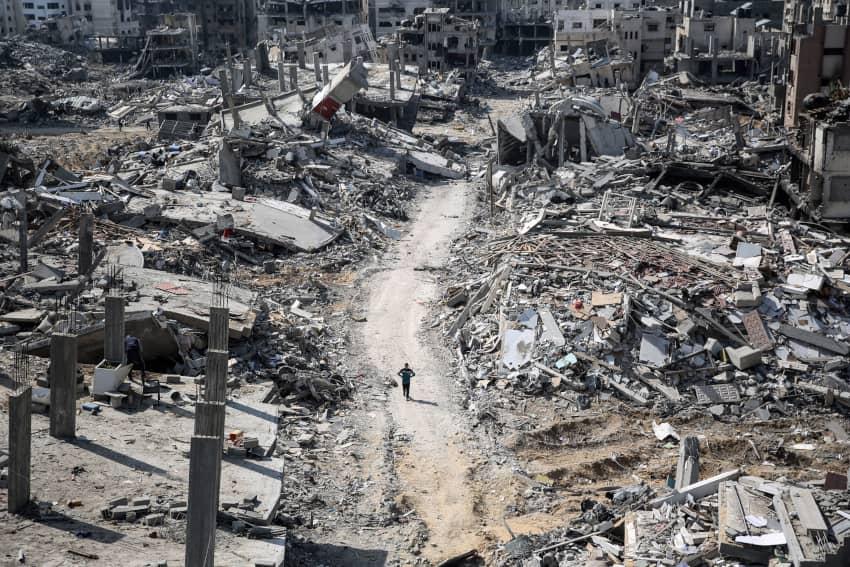
The Euro-Mediterranean Observatory on Human Rights denounced an Israeli army operation, in collaboration with civilian companies, to remove debris from residential neighborhoods destroyed during the Gaza war and move it to undisclosed locations.
“remove debris from residential neighborhoods destroyed during the Gaza war and move it to undisclosed locations”
The Geneva-based organization said the work is taking place in closed areas of the Gaza Strip under Israeli military control and includes the demolition of damaged structures, crushing and mixing construction debris, and transporting it before forensic teams, criminal investigators, and unexploded ordnance experts can inspect the sites.

The observatory cited a joint World Bank, United Nations, and European Union assessment published in April that put Gaza debris at approximately 68 million tons, based on damages recorded up to October 2025 and not including later destructions.
It said its initial on-the-ground data indicate that at least 10 million tons of debris have already been removed, crushed, and transported from their original locations in areas under Israeli military control.
The organization warned that these operations are not part of humanitarian programs organized to locate the disappeared, open roads, or prepare for reconstruction, but are carried out unilaterally and without independent supervision.
Trucks, teams, and missing
The observatory said about 400 excavation, demolition, crushing, and transport teams, operated by Israeli civilian companies under military protection, are working in various zones in the eastern and southern Gaza Strip.
It recorded the departure of about 100 Israeli trucks daily loaded with debris in recent weeks, transferring material to unidentified locations inside Israel and to areas of the southern occupied West Bank.

The organization said Israeli authorities have not reported the exact quantities removed, the routes used, the unloading sites, or the final destination of the materials.
It warned that crushing and moving building debris could alter scenes potentially related to attacks against civilians and hinder future investigations.
The observatory also warned of the risk to the remains of about 8,500 missing people who, according to Gaza Civil Defense estimates released in July, could remain under the rubble.
Forensics, evidence, and property
The observatory said the debris could contain evidence about bombardments, execution sites, possible mass graves, and bodies buried under homes, hospitals, shelters, and other destroyed civilian facilities.
“using heavy machinery without prior forensic evaluation could destroy or scatter human remains”
It argued that using heavy machinery without prior forensic evaluation could destroy or scatter human remains and hinder their identification, affecting families’ right to know the fate of their loved ones and recover their bodies.
The organization maintained that the debris also contains public and private assets, reusable materials such as iron, stone, and concrete, as well as property documents, official records, and personal belongings.
It concluded that removal, sale, or commercial exploitation of those materials without the owners’ consent or compensation could constitute an illegal confiscation of goods under international humanitarian law.
In a separate account, Al-Jazirah Net described the rubble as a repository of evidence of Israeli crimes and said the Monitor warns that dismantling and transport could threaten to erase material evidence of genocide before forensic teams and crime-scene experts can inspect and document the sites.