
Israeli Forces Seal Entrances in Salfit Governorate, Tighten West Bank Checkpoints
Key Takeaways
- Israeli forces closed entrances to towns and villages in Salfit governorate.
- Second consecutive day of tightened West Bank measures and closures.
- Arrests and injuries reported during West Bank incursions.
Gates Close in Salfit
Israeli forces closed entrances to towns and villages in Salfit governorate using “iron gates and military checkpoints,” according to WAFA Agency.
“Israeli occupation forces on Tuesday carried out a series of invasions, assaults, and abductions across the occupied West Bank, including Nablus in the northern West Bank, occupied Jerusalem, Bethlehem in the southern West Bank, Tulkarem in the northwestern West Bank, and Salfit in the central West Bank, resulting in injuries, home invasions, military roadblocks, and widespread disruptions to civilian movement”
WAFA said the closures happened on Monday night and that local sources reported the entrances were sealed off with iron gates installed at town and village entry points.
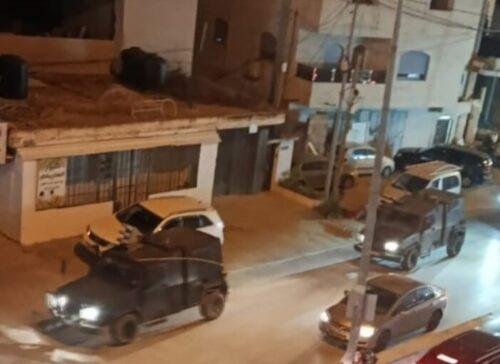
The report described “tightened military measures across most areas of the governorate,” including preventing “the movement of vehicles” and conducting “inspections and identity checks on passengers.”
WAFA framed the step as “a policy of collective punishment against Palestinian citizens.”
In a separate West Bank-focused report, Al-Masdar News said the occupation tightened measures for a second day in a row by closing “a large number of checkpoints and entrances” that “hindered the movement of residents and disrupted their daily lives.”
Al-Masdar News listed closures across multiple governorates, including Salfit, where it said the occupation forces closed “the city’s northern entrance” and entrances to “Deir Balout, Sadda Qarawa, Haris, Kifl Haris, the Ibra Road, Marda, Rafat, Kafr al-Dik, Bruqin, Deir Istiya, and Yasuf.”
The same Al-Masdar News report said the closures were part of “a policy of closures and military tightening” that affected “access to work, education, and medical care.”
Together, the reports depict a coordinated pattern of movement restrictions, beginning with Salfit and extending to other West Bank areas.
West Bank Invasions Expand
Beyond closures, IMEMC News described a broader campaign of invasions, assaults, and abductions across the occupied West Bank, naming Nablus, occupied Jerusalem, Bethlehem, Tulkarem, and Salfit.
The report said that on Tuesday Israeli occupation forces carried out “a series of invasions, assaults, and abductions,” resulting in “injuries, home invasions, military roadblocks, and widespread disruptions to civilian movement.”
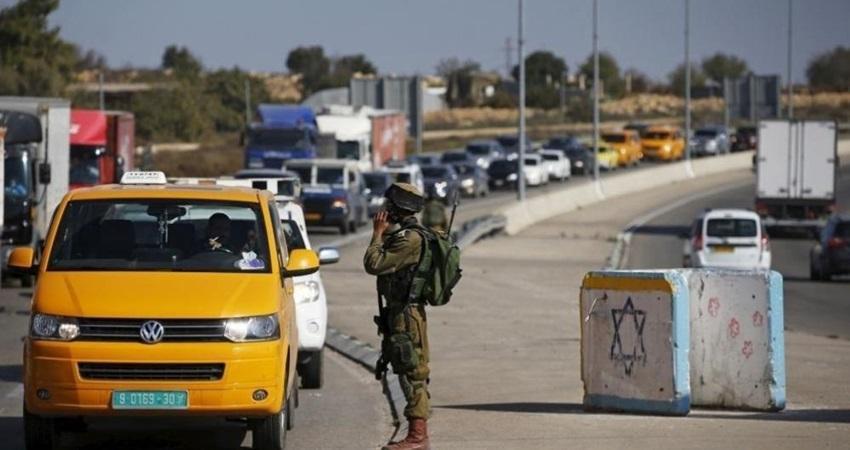
In Nablus, IMEMC News said Israeli forces invaded the eastern area of the city and “broke into homes in the Doctors’ Housing complex,” where they abducted a resident identified as Mohammad al-Asmar.
In occupied Jerusalem, it said forces invaded the Qalandia refugee camp and the nearby town of Kafr Aqab, with “military vehicles surrounded the perimeter of the refugee camp” and additional units invading Kafr Aqab while “firing live ammunition and tear gas in the Airport Street area.”
In Bethlehem, IMEMC News said Israeli forces closed two roads leading into the village of Husan, west of the city, including blocking the eastern entrance in the Al‑Matina area with concrete blocks and sealing the “Krum al‑Sharqa” road with earth mounds.
In Tulkarem, the report said forces launched a large-scale evening invasion of the Shweika neighborhood, deploying military vehicles, chasing young men, firing stun grenades, and closing the main road to prevent movement of residents and vehicles.
IMEMC News also described a tightened siege in the Tulkarem refugee camp, saying it “remains under a tightened siege,” while live fire continued inside the camp.
The report tied the escalation to an ongoing offensive, stating that the invasion came “amid an ongoing escalation in the governorate,” where the city and its two refugee camps have been subjected to continuous military offensive for “450 consecutive days.”
Injuries, Abductions, and Threat Leaflets
IMEMC News also detailed individual incidents that accompanied the wider operations, including an injury in Iraq Burin and multiple abductions during raids.
“Follow-ups - Al-Masdar News”
It said “a young man was injured on Tuesday evening in the village of Iraq Burin, south of Nablus” after Israeli soldiers assaulted him during an invasion of the area.
The report cited the Palestinian Red Crescent Society, saying its medical teams transported the “36‑year‑old man” to the hospital after he was “severely beaten by the soldiers.”
In occupied Jerusalem, IMEMC News said “No abductions or home invasions were reported during this operation,” even as it described live ammunition and tear gas in the Airport Street area.
In Nablus, it said soldiers searched the Doctors’ Housing complex home extensively before taking Mohammad al‑Asmar to an “undisclosed location.”
In Tulkarem, IMEMC News said soldiers forced several shop owners to close their businesses at gunpoint while firing tear gas and stun grenades at residents.
The report also said Israeli forces invaded the town of Anabta, east of Tulkarem, “distributing leaflets threatening residents with abduction.”
During the invasion and violent searches of homes, IMEMC News said the soldiers “abducted two siblings in the town.”
Arrests and Sealed Entrances
WAFA’s separate report described arrests in Hebron and Salfit during incursions in the occupied West Bank, adding another layer to the pattern of Israeli measures.
It said that on February 28, 2025, “Israeli occupation forces today arrested seven Palestinian nationals, including a woman,” during several incursions into the Hebron and Salfit governorates.
WAFA reported that the forces raided “several cities and neighborhoods in the city of Hebron,” as well as “the neighboring towns of Samu and Beit Ummar,” and that they “searched a number of homes, rummaged through them and altered their contents.”
The report said the arrests included “six Palestinians, including a woman,” while also stating that “the occupation forces continue to seal off the entrances to the cities, refugee camps, and the city of Hebron with iron gates.”
WAFA added that measures were intensified in Hebron’s old city “around the Ibrahimi Mosque,” where it said there were “reinforced military checkpoints and reinforced electronic gates.”
In Salfit, WAFA said Israeli forces “arrested at dawn this Friday a young man from the city of Qarawat Bani Hassan, west of the occupied city,” and that local sources told WAFA the forces raided the city, searched houses, and arrested “the young man Jihad Raafat Rayyan.”
WAFA also noted that the occupation forces raided “the village of Farkha, and the city of Bruqin overnight,” with “no arrests reported.”
While this WAFA account is dated February 28, 2025, it aligns with the other reports’ descriptions of iron gates, sealed entrances, and arrests during incursions.
Daily Life Is Isolated
Al-Masdar News described how the closures and military tightening isolated cities from surrounding areas and disrupted daily life across the West Bank.
“Israeli occupation forces on Tuesday carried out a series of invasions, assaults, and abductions across the occupied West Bank, including Nablus in the northern West Bank, occupied Jerusalem, Bethlehem in the southern West Bank, Tulkarem in the northwestern West Bank, and Salfit in the central West Bank, resulting in injuries, home invasions, military roadblocks, and widespread disruptions to civilian movement”
It said the occupation forces continued closing entrances and checkpoints in Ramallah and al-Bireh, including “the entrances to Attara, Rawabi, Jisr Yabroud, Taramsiya, Sinjil, Nabi Saleh, Abud, Deir Abu Mash'al, and Beit Ur,” and it also said the forces closed “the northern entrance to al-Bireh to outbound traffic” and “the Ein Sina entrance toward the outside.”
In Bethlehem, the report said the occupation forces closed “the main road leading to the towns of Beitir and Nahalin and to the villages of Husan and Wad Fuqin with a metal gate,” and it also said they closed “the entrances to the town of al-Khadr” and “the Sakanat housing compounds in Beit Jala.”
In Hebron, it said entrances to areas including “Ras al-Joura, Si’ir, Nabi Younis, al-Fuhūs, Zi’if, Jisr Halhul, Beit Ain, Tarqumiyya, and the Al-Arub refugee camp” were closed.
In Nablus, it said the entrances to towns and villages including “Yatma, Sura, Awarta, Al-Muraba’a, Udla, As-Sa’iya, Jama’in, and Beit Furik” were closed, “significantly hindering residents’ movement.”
In Tulkarm, Al-Masdar News said the occupation forces continued to close “the Jaba Bridge Gate at the southern entrance to the city” and “the Anab Gate to its east,” “completely preventing vehicle passage” and “isolating the city from its villages and towns.”
The report explicitly connected the closures to civilian impacts, stating the measures “disrupts daily life for residents, affecting their access to work, education, and medical care.”
It also said restrictions on freedom of movement “persist,” reinforcing that the closures were not isolated incidents but part of an ongoing regime.
More on Gaza Genocide
Spain, Ireland, and Slovenia Push to Suspend EU-Israel Deal as Germany and Italy Block
10 sources compared
RDNA Finds Gaza Needs More Than $71 Billion Over Next Decade for Recovery
11 sources compared
EU, UN Estimate Gaza Recovery Needs $71.4 Billion Over Next Decade
24 sources compared
Northern Israel Residents Shut Schools And Shops To Protest Lebanon Ceasefire
11 sources compared