Lebanon · updated 2h ago · 3 min read
Israel’s Attacks Displace Over 1.2 Million in Lebanon, UNHCR Warns Crisis Isn’t Resolved
Peak displacement exceeded 1.2 million in April from Israeli attacks on Lebanon. Current displaced population about 330,000, per IOM estimates.
Whether to foreground displacement permanence or immediate attacks.
6 of 9 outlets skipped it: casualties/deaths and injuries occurred in the latest fighting.
www.jpost › tags › hezbollah was read line by line by the Watchdog: 3.1. See the score →
12outlets compared
Same story, two versions
tap a side to read it in full
Naharnet
“Israeli forces carried out overnight into Tuesday detonations in the border villages of Kounine and Kfartebnit”Read the original ↗
Al Jazeera emphasises displacement becoming permanent and reversible. Naharnet and others prioritise routine overnight strike updates.
Displacement becomes permanent
More than six months after Israel intensified its war on Lebanon, a displacement crisis is slowly solidifying, with more than 1.2 million people displaced at its highest point in April by Israeli attacks on Lebanon.
“displacement patterns remain “highly fluid and often reversible””
The International Organization for Migration (IOM) estimates that today the figure stands at about 330,000, but UNHCR’s Nadine Mazloum said the drop should not be interpreted as permanent, adding that displacement patterns remain “highly fluid and often reversible”.

Mazloum said the “overall number of displaced people has fallen substantially from the peak of more than 1.2 million, that should not be mistaken for a resolution of the crisis,” as Israel and Hezbollah have fought since October 2023 with varying intensity.
The offensive has killed more than 4,380 people and drove hundreds of thousands from their homes, predominantly in southern Lebanon but also in the eastern Bekaa Valley and parts of the capital, Beirut, and its southern suburbs.
One returnee, Soujoud Ramadan from Froun on a so-called “Yellow Line” military zone claimed by Israel, said, “We came back because this land is our land and it is impossible for us to give it up.”
Attacks continue despite deals
Al Jazeera reported that a series of ceasefire announcements and a June framework agreement after direct, US-sponsored talks between Israel and Lebanon has not stopped Israeli attacks on southern Lebanon, even as bombardment on the rest of the country has eased.A
The same Al Jazeera report described how displaced people took shelter wherever they could, including in Beirut where some set up tents along the waterfront or corniche, while others rented apartments in neighbourhoods deemed safer.A
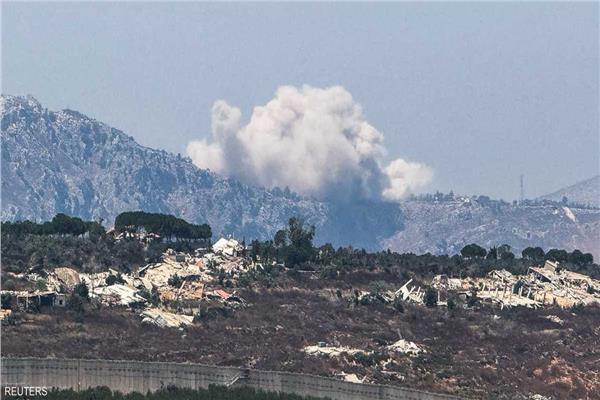
In southern Lebanon, Al-Manar TV said Israeli occupation forces carried out bombings in the village of Tayr Harfa, and it also published a separate item saying the Israeli Army announced carrying out a bombing in Ali Al-Taher Heights, South Lebanon.
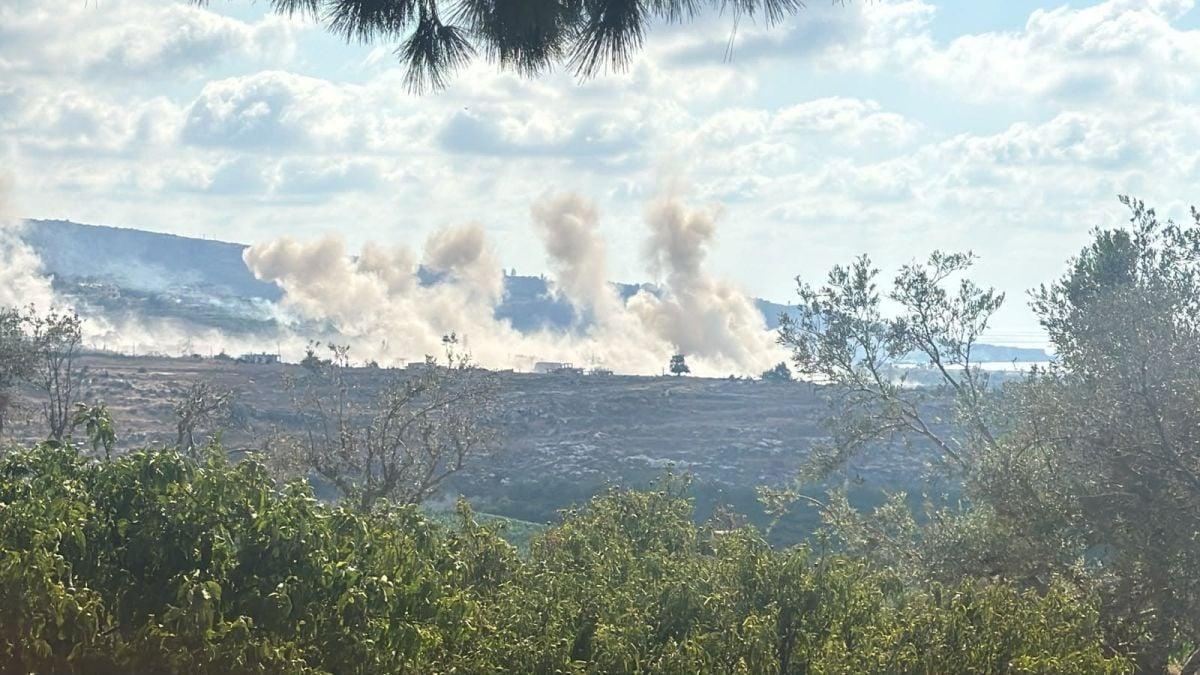
Naharnet said Israeli forces carried out overnight into Tuesday detonations in the border villages of Kounine and Kfartebnit and struck Zawtar al-Sharqiyeh, Nabatieh al-Fawqa, al-Mansouri, Hanine, and al-Qantara.N
Naharnet also reported that the U.S. ambassador to Lebanon Michel Issa was visiting a church in Zawtar al-Gharbiya, a village that recently came under the control of the Lebanese army as part of a framework agreement with Israel.N
Numbers and what’s at risk
Al Jazeera said the offensive has killed more than 4,380 people and drove hundreds of thousands from their homes, while it also reported that more than 810,000 people have either returned home or to places nearby, often to damaged houses with destroyed infrastructure.A
“more than 810,000 people either returning home or to places nearby”
It added that the latest IOM data says some 80 percent of displaced people are concentrated in five districts, with Beirut hosting about 31 percent and Sidon, Tyre, Chouf and Aley hosting 15 percent, 14 percent, 11 percent and 9 percent respectively.
Al Jazeera also reported that 17,566 registered displaced people live in 184 collective sites, and it said that number has likely spiked in recent weeks, particularly with the intensification of Israeli attacks on southern areas including the city of Nabatieh.A
Shafaq News said Israeli military attacks across southern Lebanon killed one person on Monday, citing Lebanon’s National News Agency (NNA) and naming the resident of Baraachit in the Bint Jbeil district who was killed when Israeli forces opened machine-gun fire toward the town.
Shafaq News further reported that Lebanon’s Health Ministry said Israeli attacks since the latest war began on March 2 had killed 4,383 people and wounded 12,406 as of Sept. 10, while it said Lebanon and Israel are expected to hold another round of US-sponsored negotiations in October.