Gaza Genocide26 October, 20254 min read
Israeli Settlers and Soldiers Attack Palestinian Olive Pickers and Block Access to West Bank Lands
Israeli settlers and soldiers violently attacked Palestinian olive pickers, injuring multiple individuals. Israeli military orders and settler violence severely restricted Palestinians' access to their olive harvest lands.

20 outlets told this the same way.
Settler Attacks and Legal Condemnation
Israeli settlers, often supported by soldiers, have increased assaults on Palestinian olive harvesters and blocked access to West Bank lands. Thousands of such incidents have been documented, drawing widespread legal condemnation. Middle East Monitor reports over 7,000 settler attacks on Palestinians and their property since October 2023, including 158 incidents targeting olive pickers in the current month.
“Since October 2023, over 7,000 settler attacks on Palestinians and their property have been recorded, including 158 incidents targeting olive pickers in the current month.”
West Asian outlet Al Jazeera details more than 2,400 attacks on Palestinian property over the past two years that displaced over 3,000 people. Al Jazeera adds that armed settlers, backed by Israeli soldiers, frequently target olive pickers. Anadolu Ajansı and Daily Sabah confirm the figure of over 7,000 attacks and 158 assaults this month, emphasizing coordination between settlers and soldiers and restrictions on access.

These attacks occur amid clear international law findings. Middle East Monitor and Anadolu report that the International Court of Justice declared Israel’s occupation illegal and called for the removal of settlements. Independent Catholic News notes the ICJ’s July 2024 opinion that the occupation is unlawful and must end, urging states to stop materially supporting it.
Conflicts Over Olive Harvests
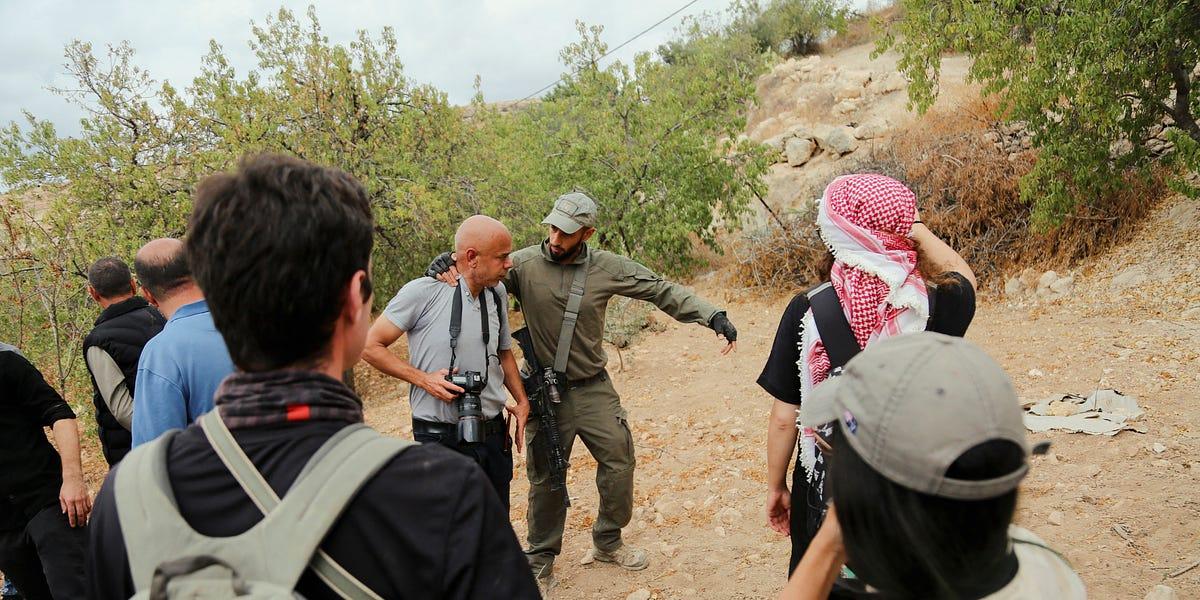
On the ground, settlers and soldiers have directly attacked olive pickers with sticks and dogs, stolen harvests, cut down trees, and sealed off villages. Israeli forces arrested Palestinians and blocked access to groves. Daily Sabah documents armed settlers assaulting pickers in southern Nablus with sticks and dogs, injuring three people.
The report also states that soldiers blocked Palestinians from accessing their olive groves, closed village entrances, and arrested a young man. Middle East Monitor reports similar patterns, including the use of dogs and sticks, vandalism of trees, theft of olives, and restrictions by Israeli forces on Palestinian access to olive groves. Al-Jazeera Net describes settlers storming Nablus’s old city, firing live ammunition and tear gas alongside soldiers, and targeting olive farmers in Bethlehem and Ramallah.

These attacks injured a young man and involved the use of police dogs. Anadolu reports that settlers cut down dozens of olive trees in Bethlehem’s al-Minya. The Arab Weekly adds that in Al-Mughayyir, after a settler was injured, the army uprooted olive trees and installed barriers that blocked Palestinian access to their land.
Impact of Attacks on Palestinian Harvest
These settler-soldier attacks are devastating a central Palestinian livelihood and culture. The UN, cited by The Arab Weekly, reports assaults, theft, and vandalism targeting harvesters. Military orders and settler violence prevent many Palestinians from harvesting at all.
“The UN reported that numerous West Bank villages have faced assaults, theft, and vandalism targeting olive harvesters... Military orders and settler violence have severely limited Palestinian access... In Al-Mughayyir... the army uprooted olive trees... This year's olive harvest... the worst in 60 years, worsened by poor climate conditions and unprecedented violence.”
The Palestinian agriculture minister calls this year’s harvest “the worst in 60 years,” also affected by climate and unprecedented violence. Middle East Monitor warns the harvest—a vital income source for many Palestinian families—is collapsing, estimating output at only 15% of average due to attacks and access closures.
Al Jazeera highlights that settlers, often accompanied by soldiers, frequently target olive pickers to undermine a key economic and cultural activity. Al Jazeera also notes a broader toll this year of over 1,000 Palestinians killed and 10,000 wounded, underscoring the lethal environment in which farmers are being targeted.
Ceasefire and Gaza Violence
The attacks on farmers are unfolding alongside Israel’s killings in Gaza during a declared ceasefire. Some sources explicitly describe those Gaza actions as genocide. Morocco World News reports that since the ceasefire began on October 11, 2025, Israeli forces have killed at least 93 Palestinians and injured 324 in Gaza.
Zeteo states that Israel violated the ceasefire shortly after it began, killing at least 93 Palestinians within two weeks. The National News reports that genocide scholar Omer Bartov calls Israeli military actions in Gaza genocide and warns that societies committing genocide but refusing to admit it remain in denial.
Haaretz, by contrast, presents the Israeli Defense Forces as conducting a targeted strike in central Gaza while continuing operations under a ceasefire. The New Yorker frames the U.S.-brokered ceasefire as the least worst option in a landscape where violence continues.
International Law and Conflict Dynamics
International law and accountability increase the importance of the situation. The International Court of Justice determined that the occupation is unlawful and called for its end along with the removal of settlements, as reported by Middle East Monitor and Anadolu. Independent Catholic News adds that states must cease material support.
“The International Court of Justice has declared Israel's occupation of Palestinian territories illegal and called for the removal of Israeli settlements in the West Bank and East Jerusalem.”
Western Alternative outlet Informed Comment describes international volunteers providing a protective presence and compares settler attacks to historical pogroms, warning of ethnic cleansing. It also notes U.S. policy changes that lifted sanctions on far-right settler groups, which contributed to increased violence. Arab News PK reports that Netanyahu stated Israel will decide which foreign troops may join a planned multinational Gaza force, indicating Israel's control over security arrangements.

Greatreporter uniquely alleges that Azerbaijan secretly supplies over 60% of Israel’s oil, fueling Israeli operations even as Baku publicly supports Palestinian independence. This highlights geopolitical enablers of repression on the ground.